
Baptiste Chassagne returns to the SaintéLyon lighter, but just as hungry to win it
 © UTMB
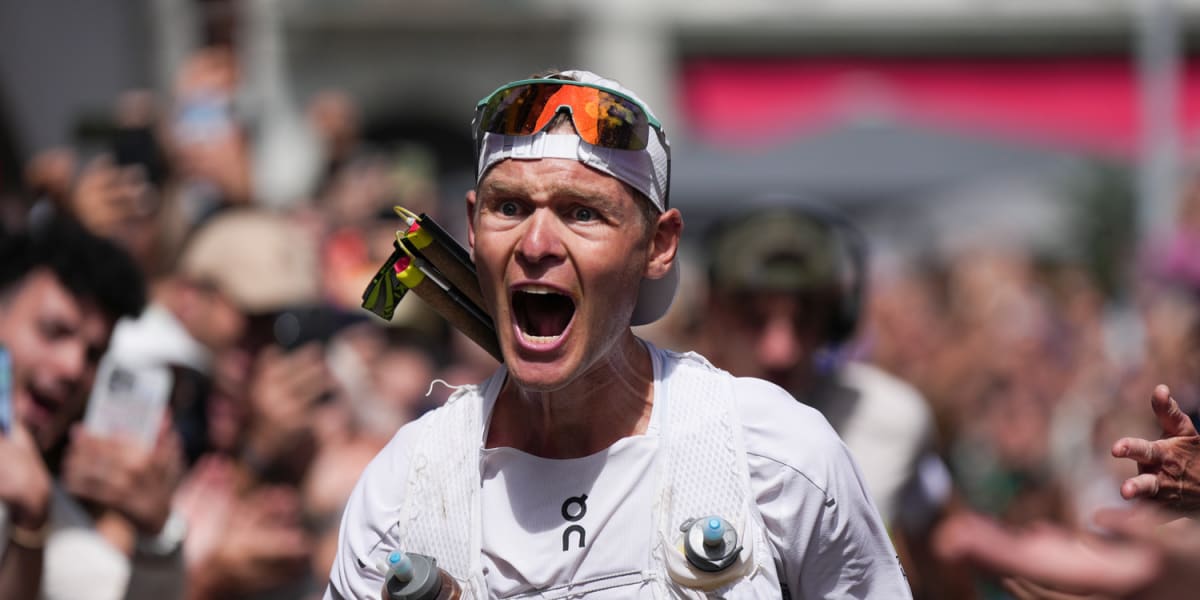
Runner-up at UTMB 2026, Baptiste Chassagne was slow to confirm his place at the SaintéLyon, a race close to his heart where he has twice finished on the third step of the podium (2022 and 2023). But the Saint-Étienne native, who passed through Lyon and now lives in Combloux, will be on the start line.
After a mentally tricky stretch in the wake of UTMB, the French international will tackle this night race relaxed, unburdened and eager to conquer. Now fully aware of his strengths, the 33-year-old trail runner can legitimately eye the top step of the podium this time. The race could also serve as a stepping stone toward bigger, more iconic goals in the four-year cycle he has set for himself.
Baptiste, you're back at your race of the heart, the SaintéLyon. What's your frame of mind, and how are you doing physically and mentally going in?
I feel good. I went through a foggy patch after the UTMB 2026, because I had been preparing that project for two years. I'd poured a lot of energy into it, and inevitably there's a small empty period afterwards. It was made worse by the sense of unfinished business UTMB left me with. A bittersweet feeling: I was satisfied with the performance, but a little disappointed I didn't take more risks to push Ben Dhiman a bit harder. I'm not saying I would have won UTMB, but I think I could have been bolder, even risked second place to go for the win, and that stuck with me.
Did you expect such a difficult mental phase?
I think we're taught a lot about climbing, but not nearly enough about landing. We prepare a lot for the lead-up and the race itself, but not so much for the aftermath, especially in a sport where the level keeps rising: performance, demands, media attention. The hangover, or the landing, is all the harder for it, and that's pretty much what I went through. So I had that foggy patch in September, and once I'd digested it, I focused on preparing for the SaintéLyon, which I'd already planned from the start of the season.
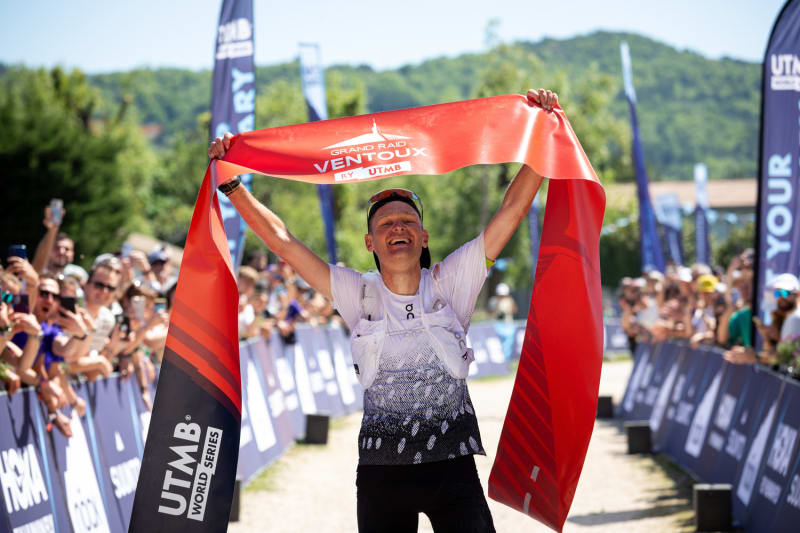
That's why I took a big break in May, after my first target at the Grand Raid Ventoux by UTMB, so I could string together UTMB and the SaintéLyon and be fresher in the autumn. I really enjoyed this training block, so physically I'm in good shape, and mentally even more so. I'm hungry, and that's what matters most.
 © UTMB
In 2024, I wasn't ready for another battle at the SaintéLyon after my second place at UTMB. This time, I feel better armed.
Your last UTMB-SaintéLyon double dates back to 2024. You had a tough time at the SaintéLyon (15th) after your second place at UTMB. Are you worried about replaying that scenario, and what have you done to avoid it?
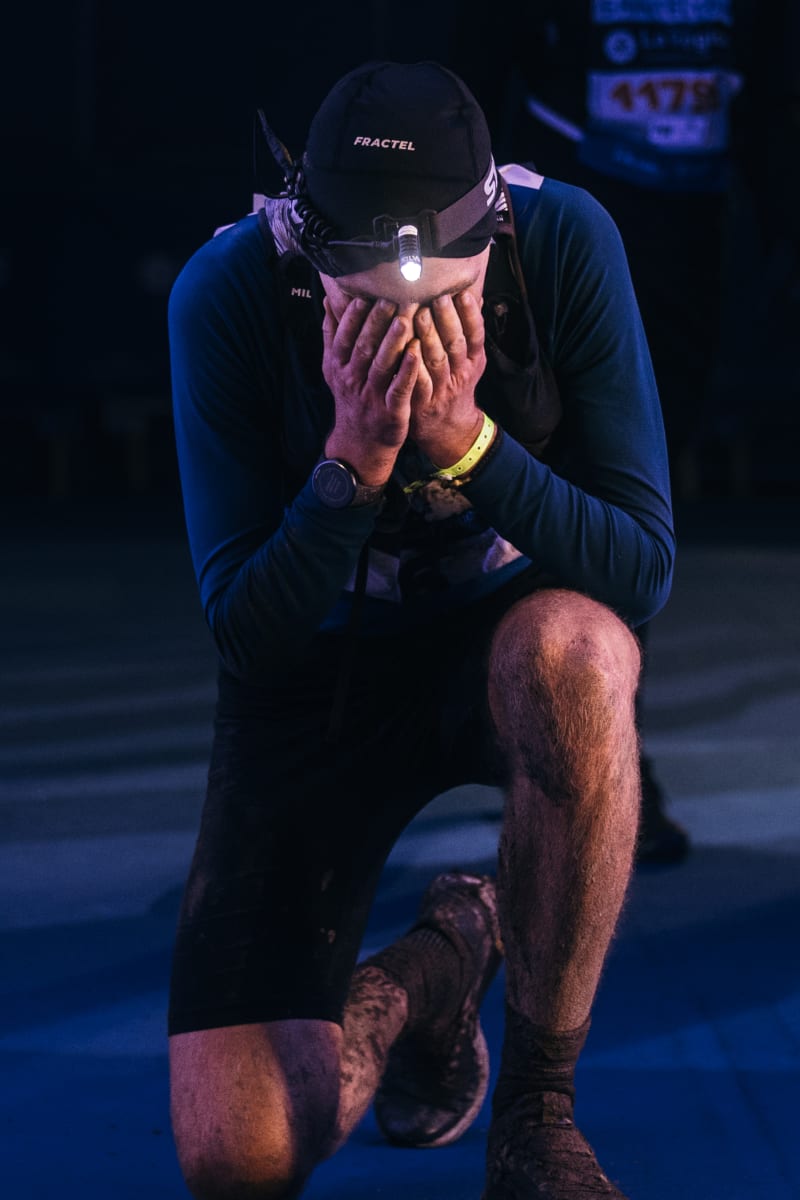
When you finish second at UTMB, it shakes you up. You reveal yourself, you learn a lot, there are huge demands on your time, new levels of recognition, a bit more pressure and expectations, and it takes a while to rebuild your balance. It takes a bit more than three months. So in 2024, going straight into another race after my first second place at UTMB was maybe a bit ambitious. I wasn't ready for another fight. I should have digested the shockwaves of UTMB better that year.
This time I feel better armed, because I know what a second place at UTMB does. I also won the Diagonale des Fous in the meantime, so I didn't feel I was upsetting my balance by finishing second at UTMB 2026, whereas the first time was a completely different story.
I'd also anticipated this back-to-back, which is why I took that big break in May. For the desire and for the body, I think that was crucial.
 © Infinity Media
We know the SaintéLyon means a huge amount to you. Doesn't it end up weighing heavily on you psychologically, since everyone, you included, expects a win from you?
This race does carry huge symbolic weight for me. I've lived in the mountains for two or three years now, and that has detached me a bit from the emotional side. I still want to win it just as much, but I approach it with more lightness and less gravity. And I've proven I belong in this sport, so there's less need to succeed at all costs or prove something at the SaintéLyon. It remains a very special race, and I just want to deliver my best, live the emotions and enjoy myself.
In my SaintéLyon preparation, I took it day by day, and if I had to adjust a session, no big deal. The SaintéLyon is a bonus. And those hard sessions will serve me one way or another someday.
Is that why you announced your participation quite late?
There are two reasons. The main one is that planning what comes after a UTMB is so hard, given the emotional jolt and the physical impact too, that it would be arrogant to say you can just go straight into the next thing. You have to take it day by day, and I think that's what brought a lot of lightness into my training. I took each session as it came, without telling myself, “I have to be ready, I have to nail this session, I can't be tense,” and so on.
If I had to adjust my sessions, it didn't matter. The SaintéLyon was a bonus. I felt lucky to have a race that motivated me enough to add a brick to my overall structure this autumn, which is my career. That race goal let me do hard sessions because I was motivated, and those hard sessions will serve me someday. I also wanted to wait until my body validated it, until it was ready, because I want to keep the spark alive.
The second reason is that I didn't want to make an announcement and end up under pressure to race when I wasn't sure I could. I wanted to be certain I could take part, so I'd never have to feel I had to.
 © Alexis Berg/ SaintéLyon
Like your triathlon friend Vincent Luis, who says “triathlon is the Olympics and Hawaii, and the rest is literature”, would you say “trail is UTMB and the SaintéLyon, and the rest is literature”?
Not at all. In trail we're lucky to have so much that isn't literature: the Diagonale des Fous, the Western States, the World Championships, the Hardrock 100. There are some beautiful Grand Slams, but also some beautiful Masters 1000, to borrow a tennis image. That's what I find truly incredible about our sport: we have the chance to race long careers, because we never really get bored.
When you prepare for the Western States, it's not at all the same kind of preparation as for UTMB or the Diagonale des Fous. That diversity is what makes trail special, so the “rest” isn't literature. There are plenty of races other than UTMB or the SaintéLyon, even if for me those are the two that move me the most. Although the Diagonale hit me hard last year, and I also want to race internationally, so the Western States is somewhere in the back of my mind.
People often say footballers lose their rhythm when they're injured, and that's pretty much how I feel when I skip UTMB for a year. I gain appetite, sure, but I lose a bit of rhythm.
Some athletes have said they need to step away from their favourite, most draining races to come back more enthusiastic and hungrier. Is that your case, or do you struggle to hold back from what drives you?
The UTMB chapter was built over two years, in 2024, and another one over 2025-2026, with the aim of coming back two years later, whether at UTMB or the SaintéLyon. Now I'm opening another one next year. It will still revolve around UTMB, because I really want to string together two UTMBs and then take a one-year break.
People often say footballers lose their rhythm when they're injured, and that's roughly what I felt when you skip UTMB for a year. You gain appetite, sure, but you lose a bit of rhythm. This year, I felt I didn't quite have the rhythm anymore, of racing already, because an ultra moves fast, but also of the event and its media side. So you have to find the balance between appetite and rhythm.
 © UTMB
The SaintéLyon makes you pay for your cockiness if you underestimate it.
Not so long ago, it was almost frowned upon for a trail runner to line up at the SaintéLyon. Today, it's nearly a rite of passage for the best, at least once in a career. How do you explain this shift?
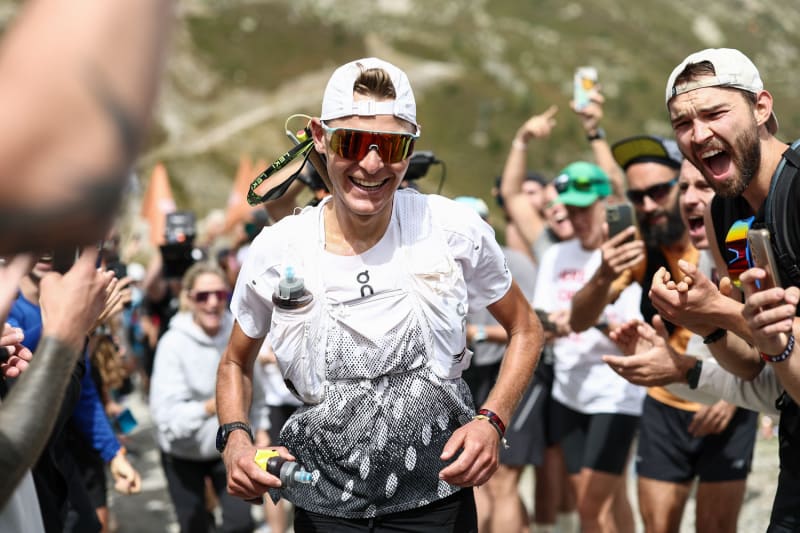
Personally, I've always defended this race. And anyway, it makes you pay for your cockiness if you underestimate it. I really think the SaintéLyon is a tough race because of its conditions, and because the trails are steeper and sometimes more technical than you'd expect.
I also put this shift down to its media power. It also has a strategically interesting spot in the calendar. And it's a bridge for road runners who want to get into trail. I think that's great, it's a brilliant gateway into the sport. It's popular, accessible, and for me those values reflect the spirit of trail very well.
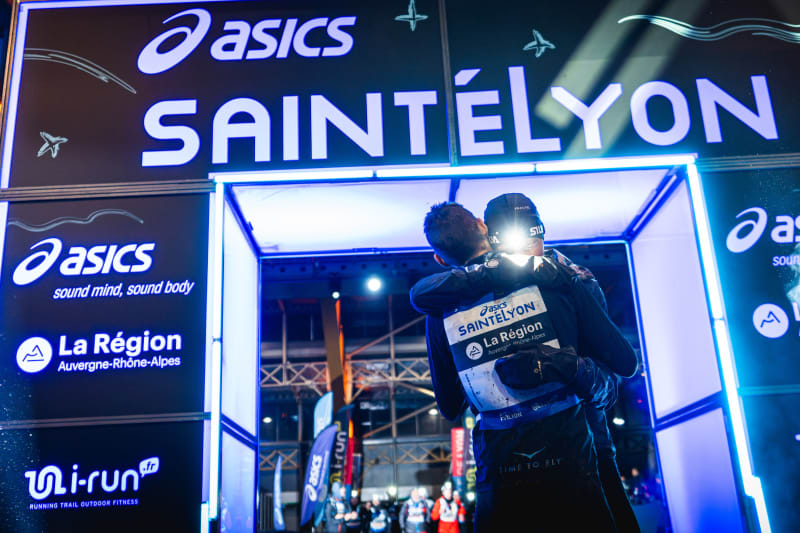 © Infinity Nine Media
Pure mountain specialists have performed very well at this SaintéLyon, like Maud Gobert, Caroline Chaverot, Camille Bruyas and, more recently, Ben Dhiman, even though these are supposedly two completely opposite worlds. What's your analysis of that?
The first time I ran it, I hadn't done the recon. When I finally reconnoitred it before racing, I understood why my result hadn't lived up to my expectations. I was running the wrong way round, running on emotion, too hard, and I burnt my wings on the first part.
It's a race that rewards patience, and leg strength and muscular endurance, qualities you find very much in athletes like Ben Dhiman or in ultra runners. But you still need speed, so it's a balance to find. You can't go out too fast or too slow. It's a “fast for a long time” kind of race, but really it's more “fast” than “long”.
I give myself four years to try to win UTMB and the Western States.
You wrote that this second place at UTMB 2026 closed a two-year project. Do you have the outline of the next cycle?
Yes, it's a cycle I'm going to set up over four years. Until now, I felt I'd benefited from favourable conditions in 2024 and 2025, for my second place at UTMB 2024 and my win at the Diagonale des Fous in 2025. But with my time at UTMB 2026, I've proven I have the potential for ultra-trail. Now the idea is to make the most of that potential. I give myself four years to try to win UTMB and the Western States, and ideally to win the Diagonale des Fous again. That's what will drive me. I'm not saying I'll manage it, but I'll put everything in place to make it happen.
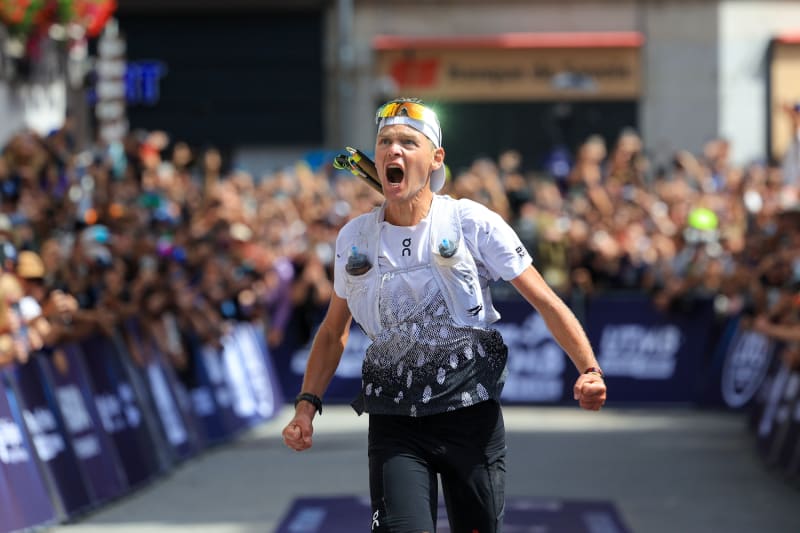 © UTMB
What little treats has your friend and head chef Alex prepared for your aid stations at the upcoming SaintéLyon? (*)
The little recipe Alex has made for the SaintéLyon is a sweet potato and reblochon velouté. It might sound strange, but it's worth a go (laughs). He's also made a rice pudding with chestnut cream. I don't know if I'll have time to eat it during the SaintéLyon. We've tried some slightly crazy pairings, out of the ordinary, that break the codes, but they're incredibly indulgent. For a possible third aid station, from Soucieu, I'll have an apple compote with fleur de sel caramel. It's far too good, and it really complements the race nutrition from my partner Näak. It brings the natural side and the indulgence that always feels good in a race!
(*) Baptiste has been a partner and co-manager of the restaurant Alexpérience, in Combloux, for six months. Alex, the chef, cooks up little snacks for his races.