
Ben Dupont on building Kotcha with Eliud Kipchoge and Kilian Jornet
Published on Wed, October 21, 2026
 © Kotcha
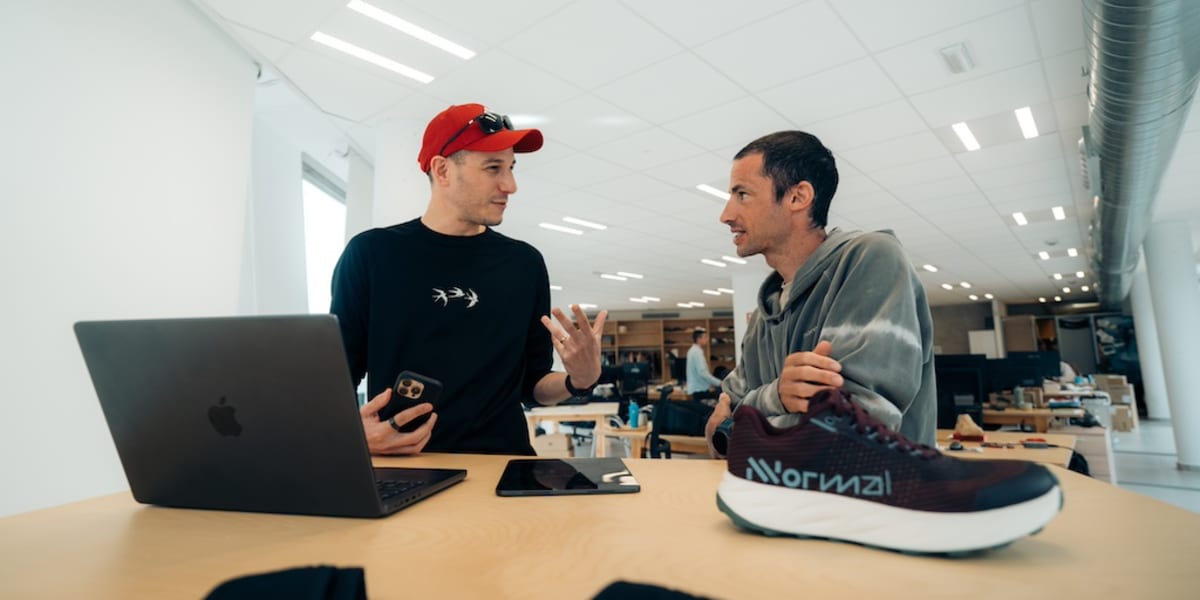
Kotcha entered the running-coaching app market just under a year ago with two heavyweight names behind it: marathon legend Eliud Kipchoge and trail-running GOAT Kilian Jornet, both shareholders in the company. Far more than figurehead ambassadors, the two champions are actively involved in shaping the app, sharing and adapting their training philosophies for a wider audience. Ben Dupont, one of Kotcha’s co-founders, explains how it works.
Ben, tell us about your journey to creating Kotcha, the coaching app.
I have two engineering degrees, one of them from the United States. I spent 15 years working in mobile app development, mainly for consumer-focused start-ups. I had always wanted to start my own company. After 15 years of learning how everything worked, I felt the time was right to take the plunge. At the same time, I’m passionate about running and have been running for 15 years. So I brought my two passions and skill sets together, met the right investors and some great champions, and we started working on Kotcha at the end of 2024. Today, in less than a year, the app has been downloaded 150,000 times, 15 million kilometres have been logged and it is available in 100 countries. We have a particularly strong presence in the Americas, while France accounts for less than half of our activity.
One of Kotcha’s key selling points is that it aims to “reinvent running coaching”. What does that promise actually mean?
There are three parts to it. The first, and the one at the very heart of the project, is that before we had a product to offer, we went to meet Eliud Kipchoge and Kilian Jornet because they have unique expertise when it comes to training. We broke down the way they train with them and their teams, to understand what makes it so distinctive and effective. We had the technical know-how to build an app, that has been our business for 15 years. But we didn’t have the sporting expertise. So we combined our technical skills with the unique knowledge of these champions to build Kotcha together and make their training methodology available to as many people as possible.
At the end of each week, you rebuild your training plan based on how you’re feeling. Kotcha is the only app on the market that allows you to do that.
The second part is that Kotcha is currently the only app to integrate generative AI. It’s the only app where, after your first workout, you can talk to the AI as you would talk to your coach, tell it how the session felt and then rebuild your training plan at the end of each week based on that feedback. It’s the only app on the market that does this. All the others give you a seven-, eight- or 16-week plan upfront, selecting one from a library after asking you four or five questions about your profile, goals and background. They don’t adjust it afterwards.
The key word guiding our coaching is adaptation. When we talk to the champions, we realise that not a week goes by without them adjusting their plan or a particular session. The other apps are completely rigid. We wanted to put adaptation at the heart of the product, using AI.
The third part, which we’re still launching, is the social side of coaching. No app currently allows you to train with your friends, colleagues or family. Yet most runners enter races as a group. That doesn’t mean doing the same workouts. It means motivating each other towards a shared goal, making sure that even when it’s raining, you still get your session done because you don’t want to let your training group down. Our aim is to develop the social experience of training. That was very much at the heart of Eliud Kipchoge’s approach. He was always with other athletes, always part of a team. We have a very clear vision of how we’re going to build this into the app and create highly motivating features for users.
 © Kotcha
I imagine it’s difficult to stand out from the competition, even when it comes to AI, which must be almost universal by now.
All the other apps have the same architecture, built around a catalogue of plans. Based on the five or six questions they ask users, they choose the plan they consider closest to their needs from the 200 or more plans in their library. If, after two weeks, a user is outperforming the plan because they underestimated themselves in the questionnaire, or if the plan is too hard for them, they can’t correct or adapt it. I prepared for my last marathon with an app. After three weeks, I wrote to customer support to say that the plan wasn’t working for me. But there was nothing they could do. It didn’t have generative AI that could answer my questions like a coach would. At the moment, Kotcha is the only app that can do this. For competitors, offering that kind of functionality means rebuilding the entire app architecture, not just changing the paintwork, if you like.
Eliud Kipchoge and Kilian Jornet were involved in building the product from the outset, before becoming ambassadors. Most brands that partner with athletes arrive with a product and then look for ambassadors. We did the opposite.
How exactly did Kilian Jornet and Eliud Kipchoge contribute to the design of Kotcha?
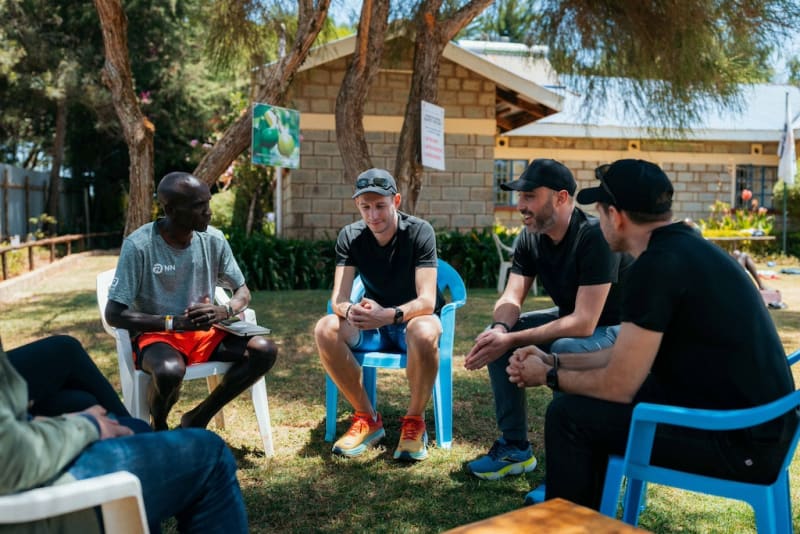
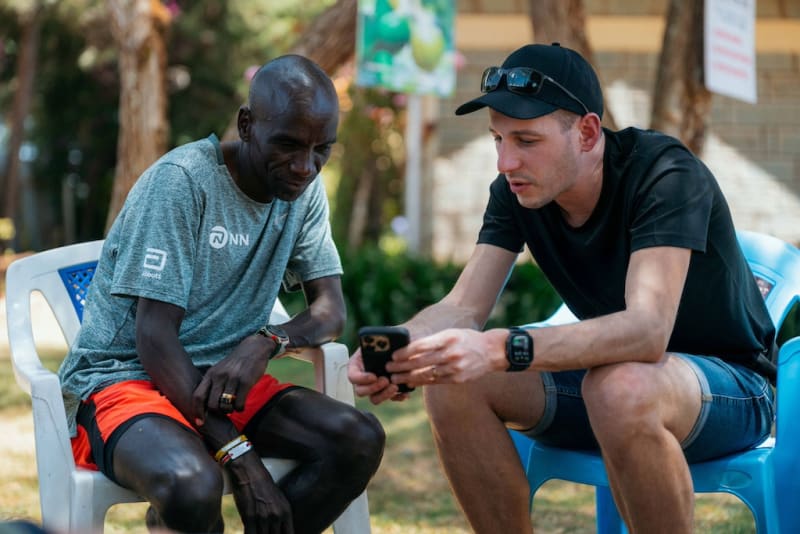
First of all, both athletes are co-founders of the company. They are shareholders and they’re here for the long term. They were involved in building the product from the beginning, before taking on any representative role. We started working on the project at the end of 2024, and travelled to Kenya in early 2025 to meet Eliud Kipchoge and members of his staff. We had nothing concrete to show them. We held weekly working sessions with Kipchoge’s coaches until the middle of the summer. Once we had all the building blocks of Kipchoge’s training principles, we built the product. Most brands that partner with athletes arrive with a product and then look for ambassadors. We did the opposite. We knew how to build the technology, but we wanted the best practical expertise to fill it with content and make it available to as many people as possible.
We took the same approach with Kilian Jornet. In December 2025, we went to meet him and his team. We told him that we wanted to be present in trail running, that we knew how to build the road-running side and wanted to create the same thing for trail, using his expertise.

We know amateur runners shouldn’t try to replicate elite athletes’ training. Were you careful not to send that message?
Yes, of course. We’re not giving people Kilian Jornet’s training plan, which would be out of reach for the vast majority of runners. Instead, we’re making his training principles available through Kotcha. Adaptation is one of them, and it is both central to and ever-present in his training and his thinking. It is the guiding principle of his philosophy. He has an exceptional ability to understand what he did well during a week of training, what he did less well, where he can improve or make adjustments, and how he can stimulate his body through training to make those adaptations. He talks about it constantly. That’s why Kotcha offers plans that are adjusted week by week.
We spoke to Kilian recently because our trail users had completed their first training cycle. We reviewed the problems our members had encountered, what they liked, what they were asking for, and found solutions to meet their expectations. We work directly with Kilian because he coaches himself. Week after week, we try to understand how each person’s body responds. One runner might need to work on endurance, another on downhill running or road speed. We identify everyone’s strengths and weaknesses and adapt the training accordingly.
 © Kotcha
 © Kotcha
 © Kotcha
Tell us about the social dimension of training you want to offer. What will it actually look like?
When you join a club, there’s a coach looking after 15 athletes. None of them necessarily has the same race goal or the same level. But they train together, with a coach who individualises their sessions. They run together because it’s an incredible source of motivation, and once that dynamic gets going, you don’t want to let your group down. That’s what we want to recreate in Kotcha. Every training day, we want to build in motivation, shared goals, workout comparisons and encouragement, so that when it rains, you still get your session done. Training can be addictive, but even champions have days when they’re less keen to head out. The group dynamic, as with Eliud Kipchoge, is crucial. That’s what we want to bring out. It seems to us like an incredibly positive way to push yourself. None of our competitors offers this, and it’s hugely exciting for us to be able to do it because we’ve been creating this kind of experience in other fields beyond sport for the past 15 years.