 © Jean Despiau et Maxime Audouard
Aurélien Sanchez, the only French runner on the Barkley winners list
To this day, he’s the only Frenchman to have carved his name into the Barkley record books, America’s most mythical race. Winner in 2023 and just the 16th finisher of a trail widely seen as the hardest on the planet, Aurélien Sanchez isn’t done exploring his limits. We sat down with the man who has just obliterated the Pacific Crest Trail record, one of the most extreme routes out there…
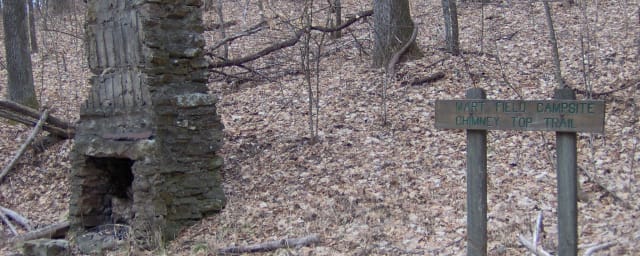
Since it was created in 1986, only seven runners have finished the Barkley on their first attempt: Mark Williams in 1995, Ted Keizer in 2003, Brett Maune in 2011, Jared Campbell and John Fegyveresi in 2012, Aurélien Sanchez in 2023 and Ihor Verys in 2024… On the flip side, 2025 and 2026 were years with no finishers. That tells you a lot about the guy. When you meet him, you wouldn’t necessarily picture the unbelievable athlete behind that calm smile and unshakeable composure. Aurélien Sanchez is grounded. Just not always on the most stable ground, let’s say. Like the terrain that makes up the playground of the Barkley Marathon : the mountains of Frozen Head State Park, in Morgan County, Tennessee, not exactly known for rolling out the welcome mat… Quick refresher: this race in the southeastern United States covers roughly 200 km (the exact mileage varies by year), with around 20,000 meters of elevation gain, over five loops, with a 60-hour time limit, and in the cold part of the year. In 2026, nobody completed all five loops. And the race’s creator, the inimitable Gary Cantrell, aka “Lazarus Lake”, designed it to be virtually impossible to finish. It took until 1995 to see a first finisher, nine years after the event was born. Which, if you needed reminding, puts into perspective what Aurélien Sanchez pulled off in 2023.
Before shining at the Barkley, Aurélien Sanchez had already logged some serious feats in the ultra world: in 2018, while living in the United States, the runner from Occitanie won the well-known John Muir Trail (359 km, 14,000 meters of elevation gain) in 3 days, 3 hours and 55 minutes. Same story the following year at the Baldy Marathon in California (160 km in under 60 hours). Back in France in 2020, he made his mark in Vendée at the Dernier Homme Debout in Saint-Laurent-sur-Sèvre (127 km and 4,420 m of elevation gain) in 13 hours and 54 minutes. That same year, he took on the challenge of crossing the GR10 (Pyrenees) from Banyuls-sur-Mer to Hendaye, finishing in 12 days with no outside support whatsoever. Exactly the kind of fight he loves, and it had a purpose: “Everything I’ve done for the past three years is to be accepted into the Barkley,” he said in 2020.
We’re now in 2026 and Aurélien is still chasing big sensations through ultra. Met in Paris during a conversation about the Barkley with director Fabien Duflos, the runner from Aude was more than happy to talk about his 2023 win, but also the struggles he faced in the editions that followed. With his eyes now on the next mission: the Pacific Crest Trail (PCT). See? That calm face is hiding plenty…
Aurélien, what’s the first image that comes to mind when people bring up your Barkley win in 2023?
The image I carry with me, and mind you, I’m not nostalgic, it’s in the past. It’s a moment behind me now, even if I have to admit it’s still pretty deeply rooted (smiles). What I see is the finish of the fifth loop, when I touch that famous yellow gate, when we all congratulate each other with Laz’ (editor’s note: Lazarus Lake, the race founder, pictured below) and with the community. It had been six years without a finisher. And beyond my own performance, you could see what we were celebrating: the fact that there was a finisher at the Barkley. It’s almost a collective victory against the race itself. It’s not necessarily my finish that gets celebrated. Beyond that image, it was a long-term project that shaped me, and it was a real milestone in my life as an athlete.
 © Michael Hodge
You mentioned Lazarus Lake, the founder of the race. After all the editions you’ve run (editor’s note: 2023, 2024, 2025 and 2026), have you cracked the mystery around him?
Laz’, the media doesn’t always paint him in a way that really fits. People sometimes see him as some kind of cult guru, a guy who wants to make us suffer, or a bit of a weirdo. It’s the complete opposite: he wants what’s best for us, and he’s incredibly smart. Why did he invent this race? He’s been an ultra fanatic forever. He’s created a ton of races. Why does he love ultra so much? I think for two reasons: to feel emotions, and then to have stories to tell. That’s why we all do ultras, to feel something and then say, “we lived through this, and this.” And the Barkley is exactly that, pushed to the max. You experience the most extreme emotions possible, negative ones but also positive ones. That’s why Lazarus sets the finisher rate at about 1%. Most years, the Barkley doesn’t get finished and it’s failure. But when it does get finished, the emotions are insanely positive, like almost nowhere else. That’s the whole concept: a 1% finish rate that gets celebrated like crazy. Of course, it means failure, learning, humility. And that doesn’t hurt. And then it’s about the stories. When we all get together at the Barkley, Lazarus loves telling stories from past editions. It cracks him up. For him, life is just a game. It’s not more complicated than that.
You were born right by the Pyrenees, and before trail there was hiking. Did your childhood set you up for ultra?
No, not at all. I was actually pretty far from it. As a teenager, I was 100% into soccer. And for me it’s not the same values, not the same world at all. I remember little hikes with my dad to go pick mushrooms. I didn’t really feel at home. I’d rather be on a soccer pitch than in the woods, alone, off-trail. I was probably too young to appreciate those moments for what they were. Hiking wasn’t really my thing, let’s say. But I think it’s like for a lot of kids: those things stay somewhere inside you and you rediscover them later, when you’re older, when you enjoy being out in nature, soaking up the scenery and everything around you. I was very sporty, so that obviously gave me a base. If I hadn’t been athletic, it would’ve been harder to get into ultra. Ultra and hiking came later. And after that came the urge to push myself. On that front, I was “wired” for it, because I’ve always had a competitive streak. When I was young, I wanted to be the best. Today, I really want to be the best version of myself; I compare myself to others a lot less. Back then, I was genuinely competitive against other people. But that competitiveness, deep down, I’ve always had it. Always the ambition to do better, and so on. It’s very personal. Some people don’t necessarily want to push their limits and step outside their comfort zone. And that, I can’t really explain. I think it depends on the person.
 © Jean Despiau et Maxime Audouard.
After that phase, you went to the United States. Is that where the trail-running seed was planted?
Absolutely. And totally naturally too, I didn’t even choose it. I tried playing soccer there, but it wasn’t the same. It’s less structured than in France, so I didn’t like it. And naturally, the hikes are just there. You can’t miss them. You can’t miss the amazing walks in Arizona, the Grand Canyon, and so on. Even if you’re not into hiking, you end up doing them. It’s almost forced! So I got into hiking, with the desire to explore all those wide-open spaces in Arizona and the American West. I started spending every weekend doing that, and I went from soccer player to hiker. Back in France, trail running came gradually as a way to extend that hiking practice I’d started in the U.S. I started putting words to ultra, getting interested in the whole ultra community, the different races…
Where did the “click” come from? Do you remember it?
I remember it precisely because it was a hike I did in the Grand Canyon. I’d asked on social media if people wanted to come with me because I was going alone and I knew it was a very committing route. Lots of people told me it was reckless to go alone, and reckless to go with others too, because it was off-trail, there was no water, it was serious stuff. Basically, they thought I was trolling, like people say online. So it’s like, okay… I don’t really know what I’m getting myself into. At first I listened to those opinions. Then I thought, whatever, let’s go. If I do things properly, I’m going to try it, I’m going to do it. And worst case, I’ll turn around at some point. In the end, I managed it in 13 hours, hiking and running. And afterwards I realized we were talking about two completely different things. They were hikers with big backpacks. Me, without realizing it, I was more like an ultra trail runner, moving by running.
Is that when your obsession with the Barkley started?
I wanted to do the most extreme hike that could exist, to get out of my comfort zone and test myself. Naturally, as I looked into it, the most extreme hiking effort out there is the Barkley. It’s clearly not a race where you run a lot. It’s rough, it’s a grind, a “boar race” as some people call it. And that’s when it clicked. I thought: perfect, that’s the ultimate hike where I want to test myself. That’s why I say I didn’t even go through ultra-trail or road running. I went straight from hiking to the Barkley.
When did you start thinking there was something big to pull off, athletically?
I eventually started asking myself how to get into the Barkley. That’s when I saw someone had set the John Muir record… so I thought, that’ll be it. I failed once, failed twice, and did it on the third try. From the outside it looks pretty wild, but in reality it’s work and consistency. There’s no “magic.” Those were big failures, and I learned a lot. The first time I realized I could do something substantial was when I set the John Muir Trail record in 2018. It was my first big project, the first one built specifically to reach the Barkley. But when I got the record, unsupported, I told myself: okay, now it’s getting interesting, I’m starting to do things like the people who inspire me. I’ve got resilience, at least. That was my first real thing.
 © Wikipedia / CC BY-SA 4.0
You call the Barkley a “boar race”…
It’s so uncomfortable in terms of trails, paths… you’re fighting almost every step. You’re off-trail 40% of the time. It’s no coincidence you often see wild boar tracks. Actually, even this year some runners stumbled onto a big boar nest. You’re out there with them, using their lines. It’s clearly their turf…
This year, did the bad weather late in the race become too big a barrier?
We’d had three years of ideal weather at the Barkley, and still two of those editions had no finishers. The course has changed a lot over the past two years. So even without talking weather, it’s very tricky, very demanding. When weather gets involved, it becomes close to impossible. With this course now, everything has to line up. You need the physical training, the mental training, the gear, the navigation skills… and on top of that, luck with the weather. Because when it’s a disaster like this year, I think it’s simply impossible. Maybe it depends on how long it lasts, but if it’s terrible for 60 straight hours, it’s impossible. With 40% gradients in dirt, or rather in mud… the climbs are on all fours. You don’t move at all.
When you crossed the Pyrenees in 2020 in 12 days, unsupported, you carried very little gear and trained in a minimalist way. But you talk a lot about visualization, as in psychological prep for negative scenarios… Can you tell us more about that?
That’s the key thing for me: being able to face situations that are inevitably hard. How I prepare for them. Maybe I need it more than other runners. I feel how important it is to visualize the goal, the conditions, what could potentially happen. Because in ultra, everything is adaptation. Everything changes: terrain, weather, how we feel physically, mental motivation… and you have to adapt constantly. The more energy that takes, the harder it becomes to actually get something done if you’re not ready. If you’re not a flexible person, there’s no point jumping into this kind of adventure… The idea is to anticipate as many scenarios as possible and reduce the amount of adapting, so you can focus on the stuff you have no choice but to adapt to. Even the weather, for example, you can visualize it: if it’s cold, you bring extra pairs of gloves; if it rains, you bring rain pants, etc. You have to run through it in your head because at least when it starts raining, you don’t debate it, you put on the rain pants and the jacket and it’s done. If you didn’t plan for it, mentally you’ll already be thinking: “Oh no, it’s raining, this is hell, I was expecting sunshine”…
 © Jean Despiau et Maxime Audouard
What happened for you at this year’s Barkley?
I hadn’t visualized the effort well enough. And when I had to fight, I wasn’t able to fight more than that. Looking back, I wish I’d visualized the effort even more, and the difficulty I’d have to get through. This year the effort was really the cold, the wind, everything at once. Specifically preparing for that moment in the race when I’ll be cold, I’ll be tired, I won’t want to keep going, I might not even manage to eat properly… when I might lie down on the trail because I’m too exhausted. You prepared for it, you know it’s coming, so you move forward. But personally, I hadn’t prepared enough yet. So when I saw that the return to camp was to the left and to the right it was a very gnarly trail, I wasn’t ready to take it. If I’d visualized it like that, accepting before the race that I’d end up in that situation and that it was part of the game, maybe I would’ve kept going a bit longer. But I had a big low point that cost me my race. Mental visualization beforehand is essential in ultra, it’s 90% of the job. You can be trained or not, but without that, for me, you’re done.
Where does the pleasure come from in ultra?
It’s true it can look like a bit of a masochistic sport, where you hurt yourself. But when the sun comes up and when the finish line finally arrives, it makes the effort and the accomplishment that much sweeter. I’ve never felt emotions as transcendent as when I’ve managed to visualize things, then meet the difficulties, then push my limits. That’s the trio, really: visualizing, living it, and then accepting it. Easy to say like that. There are times when I can’t do it, like this year at the Barkley.
Do you remember moments in the 2023 edition when you doubted?
There were plenty. The main one was after 38 hours of racing. That’s the last night. I start staggering, my vision blurs, I’m falling asleep on the trail… total chaos. It was around midnight, with about seven hours of night still to go. I also started having auditory hallucinations. I thought it was the beginning of the end. I leaned on what I knew. In those moments, what do you do, at least for me? Take caffeine, it helps; eat… hydrate properly, fuel properly. And after 30 minutes, I felt better. But clearly, that was a very, very rough moment when I was falling asleep on my feet. The rest of the night went well…
In a moment like that, when you’re staggering and basically hallucinating, how do you handle navigation?
It turns out I wasn’t alone at that point. I was with the Belgian Karel, who also finished the Barkley that year. But with Karel, we didn’t have the best teamwork because he was exhausted too. So he was relying on me, and I was relying on him. In that context, we made a navigation mistake. Then when I felt better, I decided to take charge and go off alone. It’s better to stop and get your head back, if you can. The question every time you get off-route is: how late is too late? It’s better when the mistake costs you five minutes. Luckily, that was often the case. Because if it’s 30 minutes, you’re really not lucid. Thankfully it was often 5 to 10-minute errors. And when you’re in a place you don’t know, you’re basically making bets with yourself. You try to pick the most logical, fastest direction. They’re small bets you know tend to work. There’s always that 5-10 minutes of stress wondering if you’re going the right way. And when you eventually find yourself again, which usually happens, you feel better. You use landmarks: the terrain, a ridge, along a river, certain vegetation. You mostly navigate by the terrain, ridges, ravines. And at the Barkley, when you find the book, you know for sure you’re on the right line.
Where did the idea of those books come from (editor’s note: runners must bring back pages as proof of their route)?
In the beginning, there weren’t any books at the Barkley. Basically Laz’ would say, “Do the route and come back.” But he had no way to verify who actually ran the right course. It was a runner, Ed Furtow, who came up with the idea of placing books and tearing out pages… Lazarus liked it.
Back to the 2026 edition. You built a real “French connection” before and during the race…
On my initiative, the five of us French guys did spend the whole week together. We’d already organized things in advance with Guillaume (Calmettes) and Ronan (Pierre), and then Sébastien Raichon joined when we suggested it. Mathieu (Blanchard), who we knew less, completed the group. It was his first time at the race. I suggested we share that whole first week together as French runners, and honestly it was super cool. We didn’t act like rivals, more like buddies, like it often is at the Barkley. Again, it’s not a race against other people, it’s a race against the race, all of us together. It went really well between us. During the race too, we shared a good chunk of it all together. After that, the race effect means everyone goes more or less far. But we genuinely don’t care about that. There’s zero guilt in going less far than someone else. We built a great little community there. And that was really awesome… a great memory!
You had some pretty strong words at the end of the 2026 edition… Are you truly done with this race?
(Smiles) No, I don’t think it’s closed… It’s true I reacted in the heat of the moment. But with a cooler head, I don’t think it’s over. Never say never, really. Clearly I need a break, that’s for sure. Because committing beyond… For me, it’s not the result itself that drives and motivates whether I come back or not. It’s the commitment. It’s a project that, each time, takes 2-3 months of the year, where you have to train like a maniac, and then you have to go to the U.S., etc. It’s at least a ten-day trip, and luckily I do it with my partner. It’s a huge commitment. Even if it’s a passion, I’m not going to complain, it’s a choice. It’s a passion that takes up space day to day. And for me personally, I haven’t found the keys to unlock those extra little drawers of mental strength I’d need to go further in this race. That means I’ve got things to go live elsewhere, to go look for, to improve, to take inspiration from other people, to try to find those keys through other projects.
You don’t look satisfied, despite your successes…
With the Barkley, I realize that finishing it in my first year locked up quite a few mental drawers, and I struggle to go as far as I might have if I hadn’t finished it. And that’s something I have to accept. It’s not from lack of desire or commitment, because I’ve thrown myself into it massively every time, but because I need to step back from running that event, because it’s too demanding. It takes so much out of you on every level. So it probably won’t be my last, I hope. But not right away. Life is long, I hope. I’m 35. In running in general, you can keep going for a long time. In ten years I’ll be 45. If I want to go back then, or before, or after, I don’t know. So never say never. But I can clearly feel it’s the end of a cycle. That’s for sure. The cycle where I got to enjoy this race for four years. Now I’m going to focus on other adventures to keep progressing.
What does two or three months of Aurélien Sanchez training actually look like?
It’s a lot of volume, a lot of weekends in the Pyrenees. Just to give an example, over two months I did 80,000 meters of elevation gain, so 10,000 meters per week. That takes time. It’s also a lot of physio sessions, strength work, and so on. It’s around 25 hours of training per week. I’m preparing for the Pacific Crest Trail. That’s crossing the United States from Mexico to Canada, a mythical U.S. trail. I’m getting ready for that, it’s going to take a month and a half, two months. So yeah, 4,200 km of logistics. I’m going with my partner Lucille and her cousin Martin. I’m going all in, because I’ve never done something that long in terms of mileage…
EDIT July 25, 2026
This article was written just before Aurélien left for the Pacific Crest Trail, a 4,240-kilometer “trail” that runs across the United States from the Mexican border to the Canadian border. The French runner once again showed his toughness and exceptional mental endurance by breaking the PCT record in 45 days, 20 hours and 15 minutes, chopping 16 hours and 35 minutes off the time set by Belgian runner Karel Sabbe in 2016.