
UTMB Mont-Blanc: Is the trail running crown jewel at risk?
 © UTMB
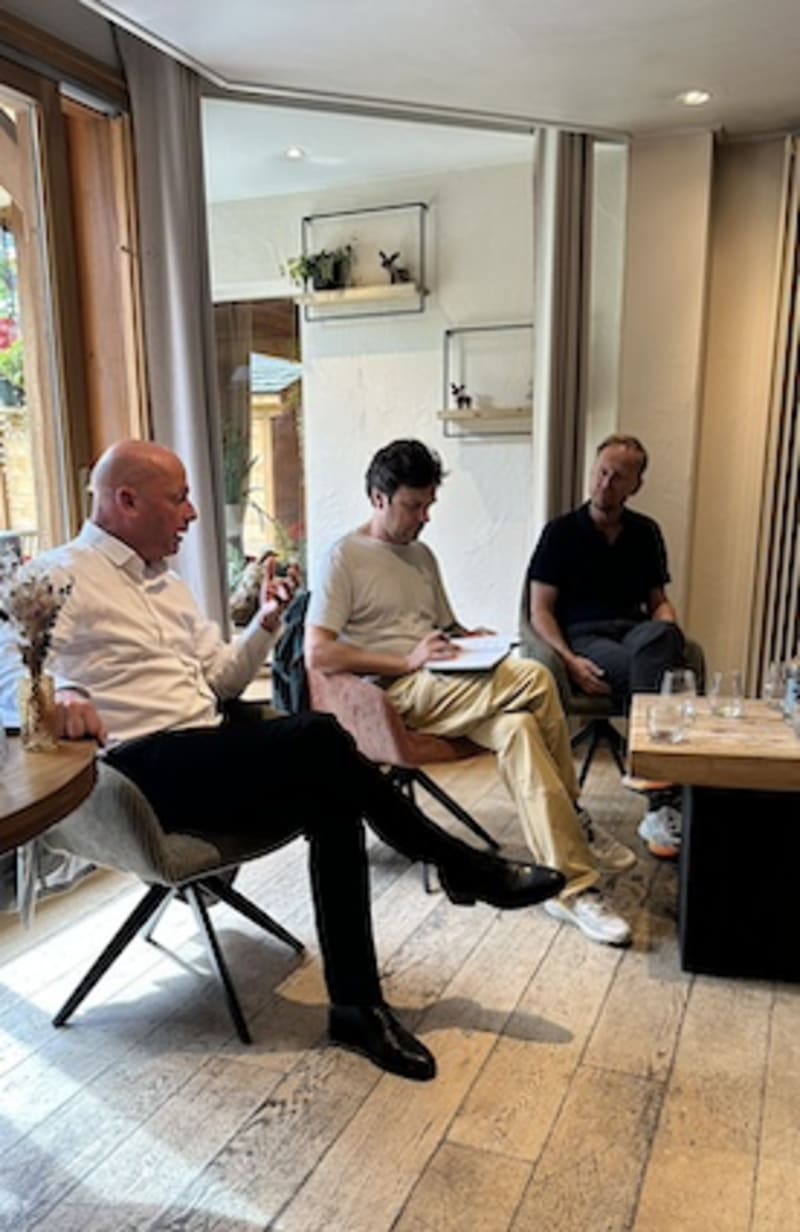
Beyond the wild sporting story of this 2026 edition, UTMB Mont-Blanc has become a lightning rod for the “too big” label now attached to the sport’s biggest event. And yet numbers are slightly down, train travel has been pushed, the race-week Mobility plan is substantial, the brand village has been scaled back, and the event’s carbon footprint fell 3% in 2025 versus 2024. Still, Chamonix has turned into a target. The last-week-of-August frenzy in a town of 9,000 only sharpens tensions between locals at their limit and a minority of runners or visitors who don’t always play by the rules. The new municipal team has repeatedly said UTMB will have to go on a diet in the coming years, or risk no longer being welcome in the city where it was born. In the meantime, talks appear to be underway between the key stakeholders, notably Chamonix Town Hall and UTMB Group. As part of the race week, Protect Our Winter (POW) hosted a three-way meeting to put these issues on the table and keep ideas moving toward solutions.
Few events are scrutinised like UTMB Mont-Blanc. It’s probably the price of success when you position yourself as the pinnacle of global ultra-trail. That means setting the example at every level, especially on the environmental impact of an event like this, all the more so because it unfolds in the mountains, an environment battered by climate change where its effects are glaringly visible (glacier melt, rockfalls).
After the barrage of criticism fired before and during the event (oversized, disrespectful toward locals and the area, etc.), UTMB felt its efforts weren’t being recognised, or were being dismissed as nothing more than greenwashing.
A downward trend has started, but it needs to accelerate
The environmental non-profit Protect Our Winter (POW), which works alongside UTMB to reduce the event’s impact, published the key findings of the 2025 carbon report a few days before race week began, noting “timid progress, and a trajectory that remains fragile if the goal of a 20% cut in emissions by 2030 is to be reached.”
 © MRP
© MRPThat carbon footprint fell by 3% (24,400 tCO2e in 2025 vs 25,200 tCO2e in 2024). The drop is mainly down to fewer participants and on-site stakeholders (280 fewer runners in 2025, a 2.5% decrease), and fewer media, guests and partners (down 560 people).
A drop in the ocean, sure, but it has the merit of starting a trend, which seems to have continued in 2026 with the introduction of a +30% lottery bonus for athletes choosing to arrive via low-carbon transport (train). Still, that effort is again deemed insufficient given how dominant air travel remains: 38% of runners fly in, and 50% arrive by car. And 84% of transport emissions are generated by the 25% of runners coming from other continents.
Against this worrying backdrop, POW has suggested four avenues for improvement for major international sporting events, including UTMB:
Space out editions (run certain races every two years or more).
Reduce the number of participants, spectators, partners (a lever UTMB used in 2025).
Encourage and prioritise low-carbon travel (a measure adopted by the Marathon du Mont-Blanc since 2024, and by UTMB for 2026).
Limit transcontinental and continental flights, while guaranteeing fair international participation.
We can’t keep welcoming more and more people. We have to set limits.
On the side of Chamonix’s new municipal team, elected last March, the message is clear: adapt. “We don’t live in the same world as before,” hammered home the town’s new mayor, François-Xavier Laffin. “As an elected official, adaptation is a major issue, especially here, given the climate disruption affecting skiing and the mountains in general.”
“Managing visitor flows is a huge issue for the Valley. And it’s not just UTMB. For example, regulating access to Lac Blanc is another major issue right now. We’re wondering whether we’ll have to limit the number of passes sold to control access,” the mayor continues, as if to show he’s not singling UTMB out. “We can’t keep welcoming more and more people. We have to set limits.”
 © UTMB
Before getting into the specific case of UTMB Mont-Blanc: “When UTMB was created, locals’ affection for it was at its peak, especially among residents who got involved in organising it. For several years now, the event has instead triggered rejection from them,” the mayor notes, even though he has no hard survey data to quantify that shift, only feedback from conversations with some residents. “We don’t have difficulties working with the organisers, and we’re not in conflict with them,” the newly elected mayor is keen to add.
“UTMB’s sporting side is remarkable. I’ve run this event myself, and I know the emotions it brings. But if it’s going to endure, we’ll have to work on three main areas. First, we can’t rule out reducing the number of participants or the number of races. We’re also overwhelmed by the brands and activations. We need to quickly decide what’s acceptable and what must be banned. As for spectators, the message has to be that we can’t all be in the same place at the same time,” he adds, with the possibility that some areas may need to be off-limits. “All of it with sharper communication toward the local population, which is finding this last week of August harder and harder to live with.”
Adaptation is our day-to-day reality all year long. We have a team working year-round on Plan Bs. Adapting is part of this sport’s DNA.
On UTMB Group’s side, the message has landed, as confirmed by Fabrice Perrin, UTMB Chief of Sports, Communities & Sustaiddnability. And the conversation with opponents seems fairly smooth. “Adaptation is our day-to-day reality all year long. We have a team working year-round on Plan Bs. Adapting is part of this sport’s DNA.”
The challenge now is to find common ground on the adaptation measures proposed by the Town Hall and POW. “We’re not really aligned right now on reducing the number of runners, for example. And it’s not a revenue question. It’s more a question of philosophy. For the founders of the event, it’s essential to bring people from all over the world together. We don’t want to retreat into ourselves. And if you take 5,000 participants out of the event, Chamonix will still fill up in some other way,” Fabrice Perrin argues. On the other hand, we’re more open to how we schedule the races, possibly changing start and/or finish venues, and the way events are spread across the week.”
It’s the whole ecosystem around the event that also has to adapt
As things stand, UTMB Mont-Blanc feels like a masterpiece in peril. The coming weeks could prove decisive, and the 2027 edition may well be disrupted with the UCI Cycling World Championships in Sallanches, from 24 August to 5 September 2027 (with UTMB scheduled from 23 to 29 August 2027), which would further clog up the valley.
Saving this trail running monument will likely require everyone involved to shift, and a collective wake-up call, starting with the organisers. But not only them. Because what has ultimately made the event fragile is the ecosystem orbiting around it.
Brands, partners or not, which rolled out more than sixty activations during race week in 2026, will for example have to scale back, even if it means losing one of their golden geese.
 © UTMB
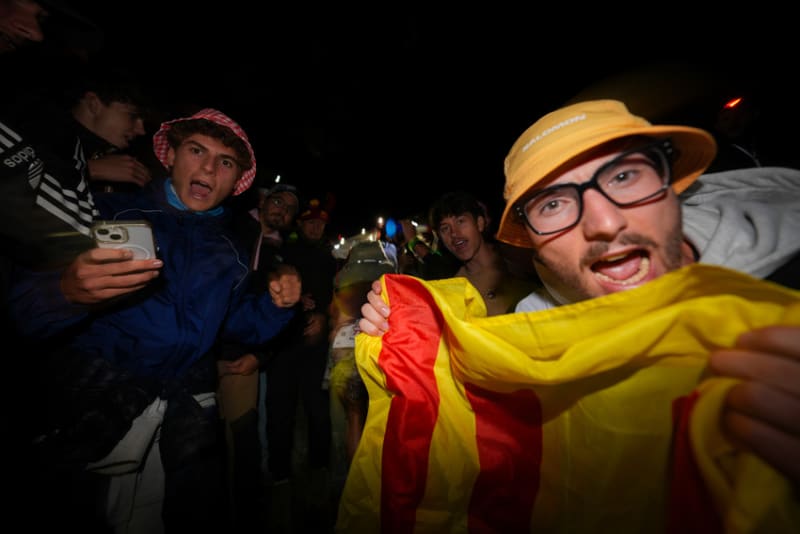
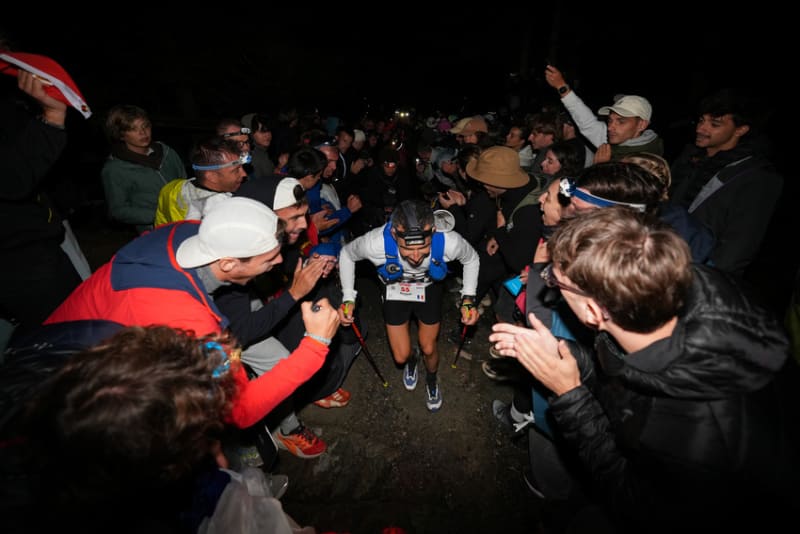
Spectators, sometimes hysterical on the trails, at the trail edge or in town, will also need to behave in a way that matches the fragility of the place, or risk seeing a monument disappear.
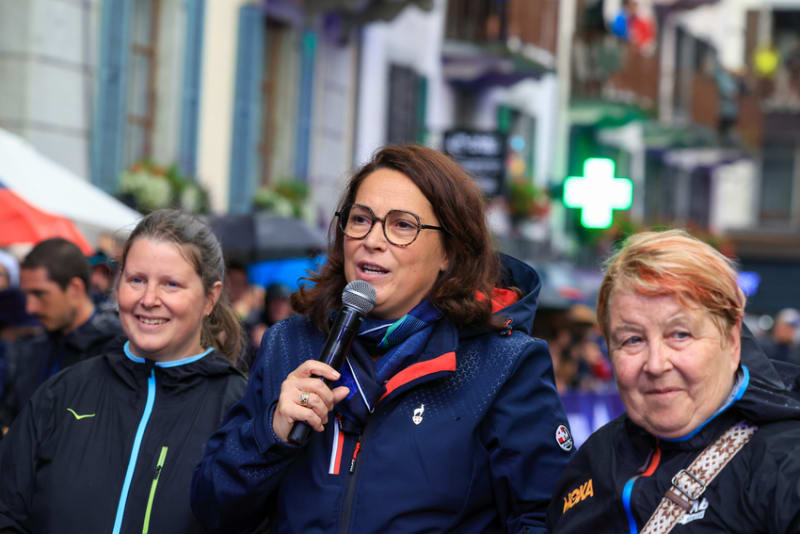
Marina Ferrari, Minister for Sports, Youth and Community Life, was the surprise guest at the start of the 2026 edition. She spoke of “national pride” when talking about UTMB Mont-Blanc. Clearly, that feeling has faded in the valley. It’s on every stakeholder to help rebalance the scales, so that staging the world’s biggest trail running event is no longer seen as a burden, but as a source of pride and a success story.
 © UTMB