
 © Imaz Press
Grand Raid de La Réunion: The Story of a Legend
Published on Thu, October 8, 2026
From October 15 to 18, the Grand Raid de La Réunion will stage its 34th edition. Long before ultra-trail became mainstream, this race forged its legend on the tortuous trails of the Intense Island. Its terrain, atmosphere and unique spirit make it an event unlike any other. Thousands of trail runners take it on, sometimes come up short, then return again and again until they finally conquer it. Here is the story of this overseas monument, a race every trail runner should have on their bucket list at least once.
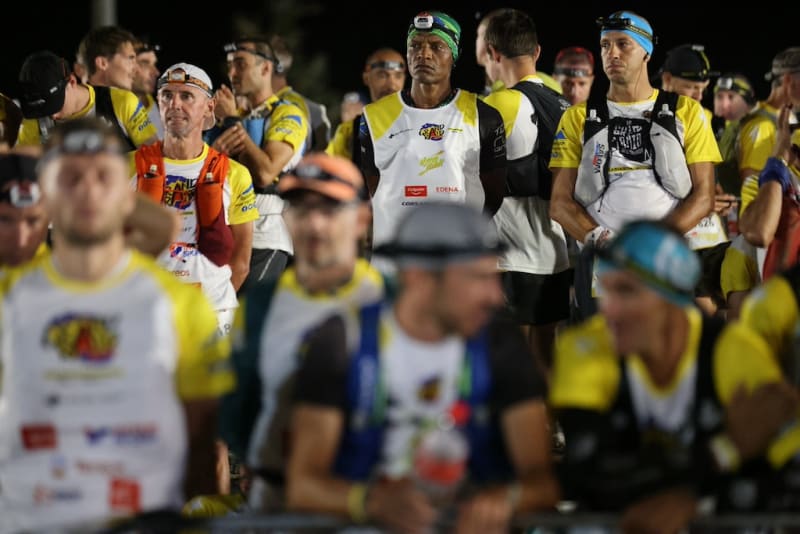
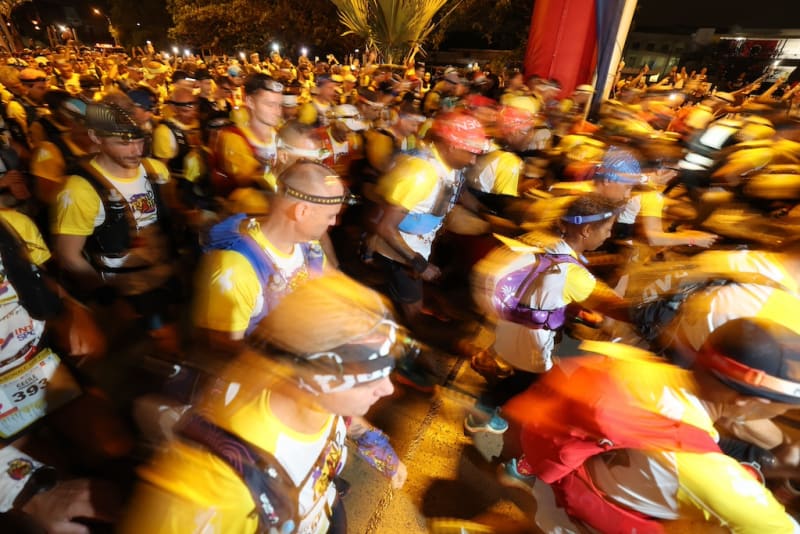
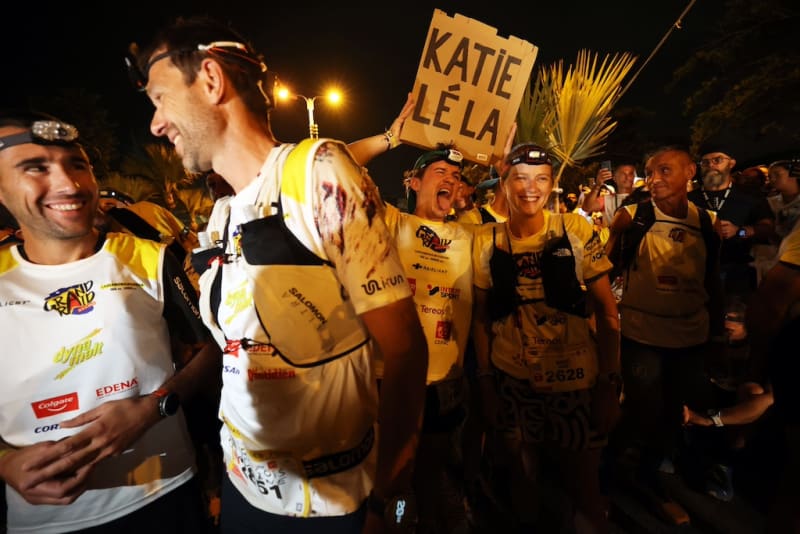
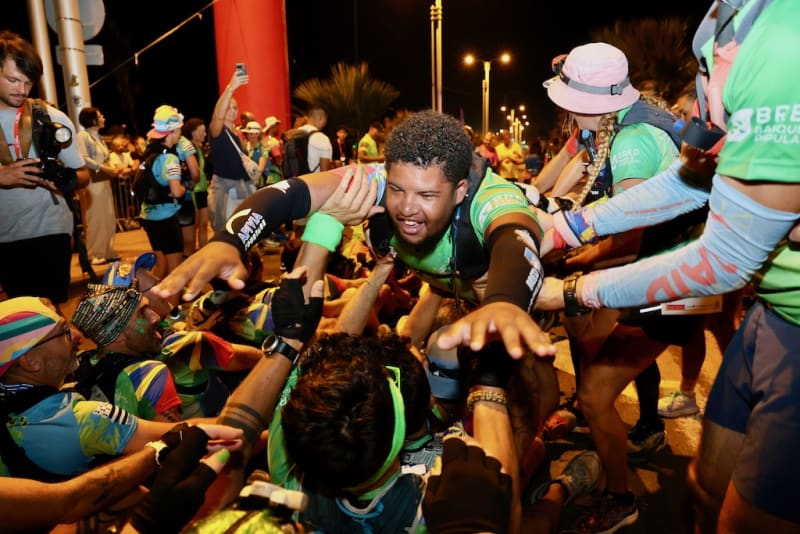
The Grand Raid de La Réunion is unquestionably one of the most iconic ultra-trail events on the calendar, thanks to its distinctive character, incomparable atmosphere and the difficulty of its five races. The best-known and most feared of them is the Diagonale des Fous, which crosses the island from south to north over roughly 100 miles, depending on the edition. This year, it is set at 180 km with 10,200 m of elevation gain. And despite the hardship, it remains a celebration.
 © Imaz Press
 © Imaz Press
 © Imaz Press
 © Imaz Press
 © Imaz Press
An event inspired by the Cross du Mont-Blanc
The event was the brainchild of Jean-Jacques Mollaret, a former member of the Chamonix high-mountain gendarmerie rescue unit (PGHM). Having lived on the island for several years, he drew inspiration from the Cross du Mont-Blanc to launch the Cross du Piton des Neiges in 1988, the first mountain race held on Réunion.
Convinced that it was possible to go farther and cross the island from one side to the other, he joined forces with friends and, after scouting a route using sections of the GRR2 (Grande Randonnée R2 long-distance trail), created the Marche des Cimes in 1989. It crossed Réunion in its entirety. Five hundred runners covered the 112 km and 5,400 m of elevation gain. A year later, the race was renamed the Grande Traversée (126 km, 5,000 m of elevation gain), with almost twice as many runners. In 1993, it became the Course de la Pleine Lune (129 km, 6,600 m of elevation gain). Fewer than 450 runners started. In 1994, it took its definitive name, the Grand Raid (130 km, 6,900 m of elevation gain). A journalist nicknamed it the “Diagonale des Fous”, a name that would last forever and perfectly capture the race’s difficulty.
An ultra-demanding, highly technical course
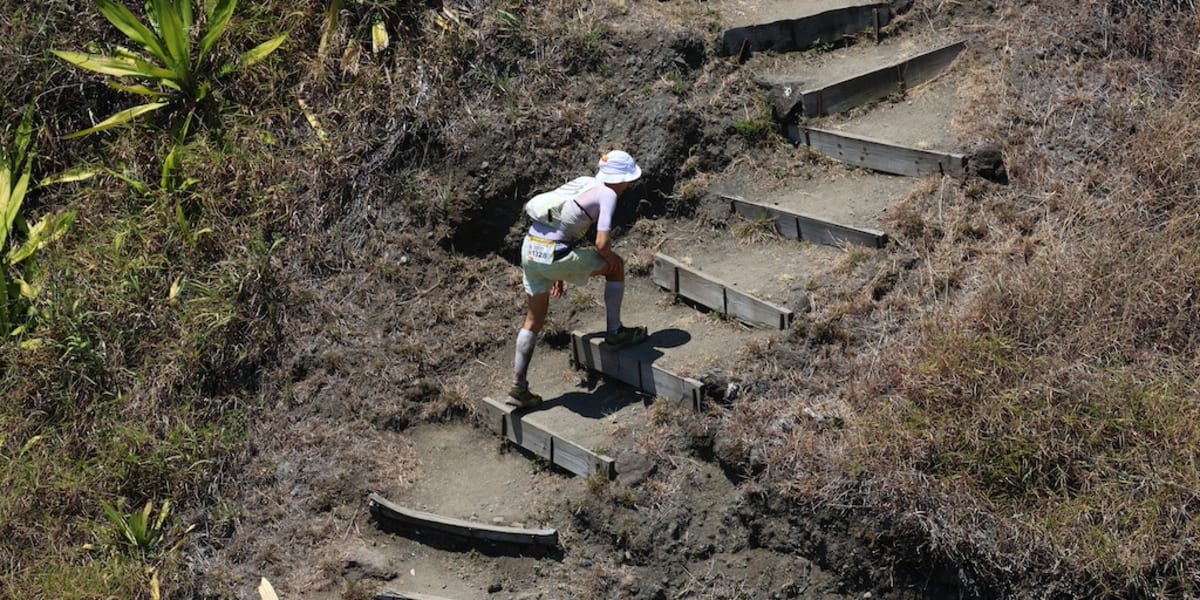
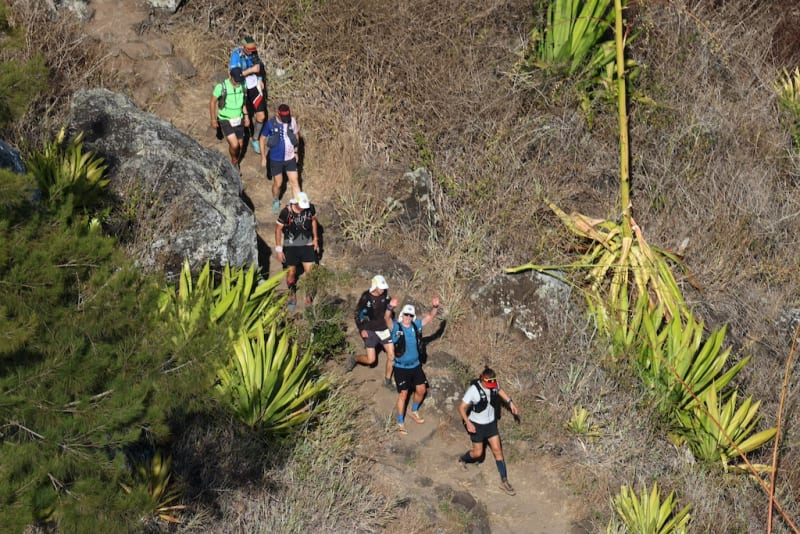
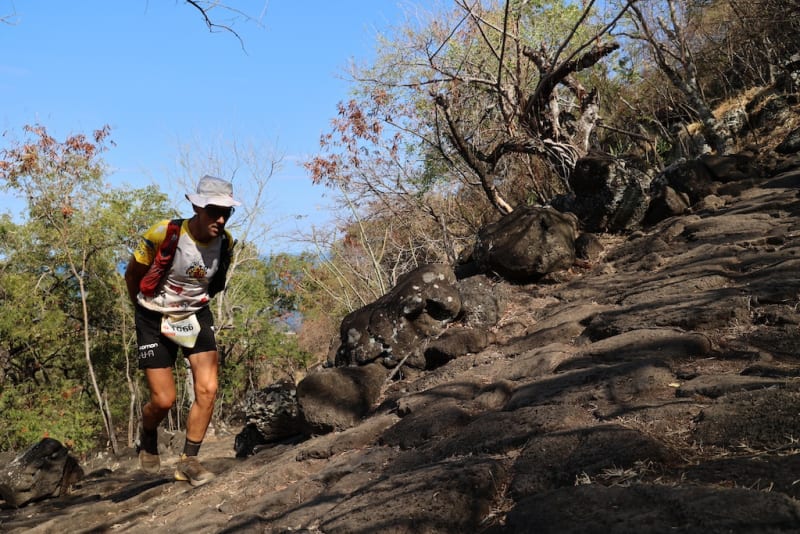
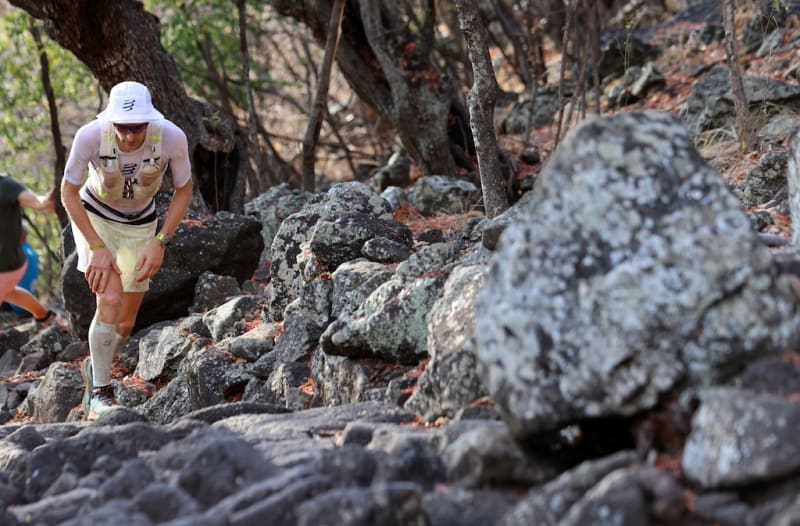
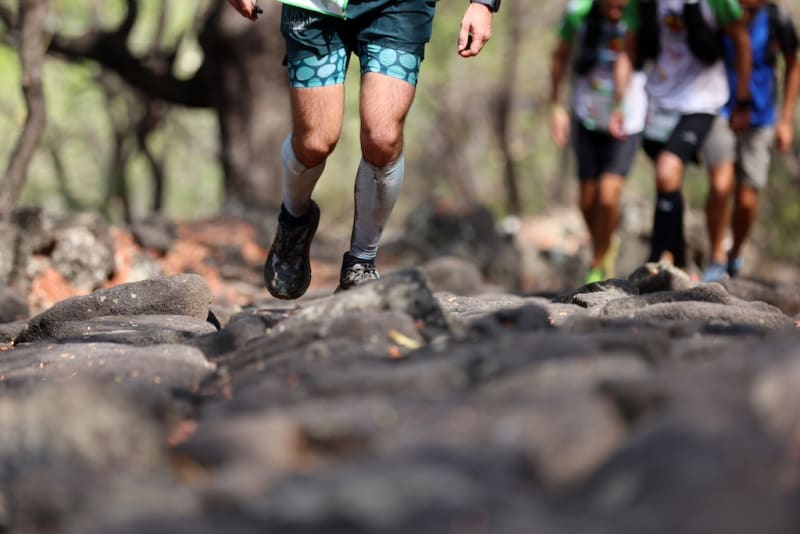
Réunion’s terrain is highly specific to the island and bears little resemblance to the runnable trails found at the UTMB Mont-Blanc, for example. The trails are littered with roots, rocks, paving stones and uneven steps carved into earth or rock. On this course, people often say you can move faster uphill than downhill. Then there are the microclimates: over just 200 metres of elevation gain, you can go from stifling heat to biting cold, sometimes with dense fog thrown in for good measure.
 © Imaz Press
 © Imaz Press
 © Imaz Press
 © Imaz Press
 © Imaz Press
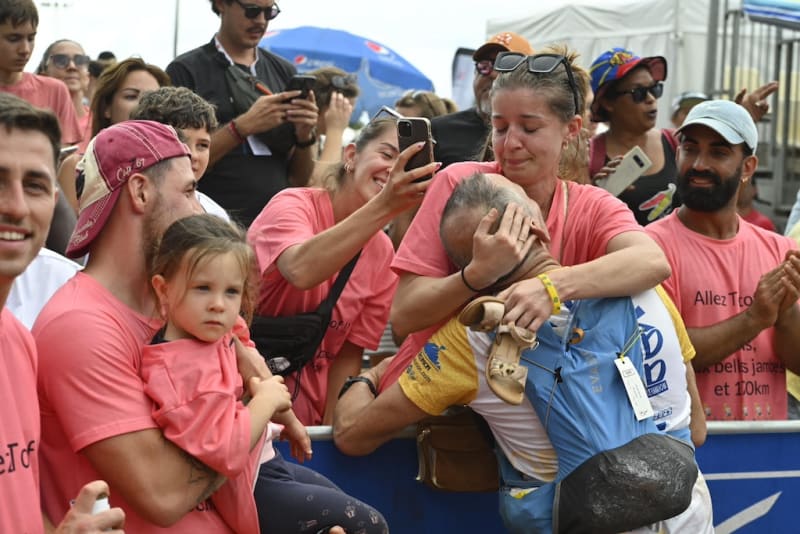
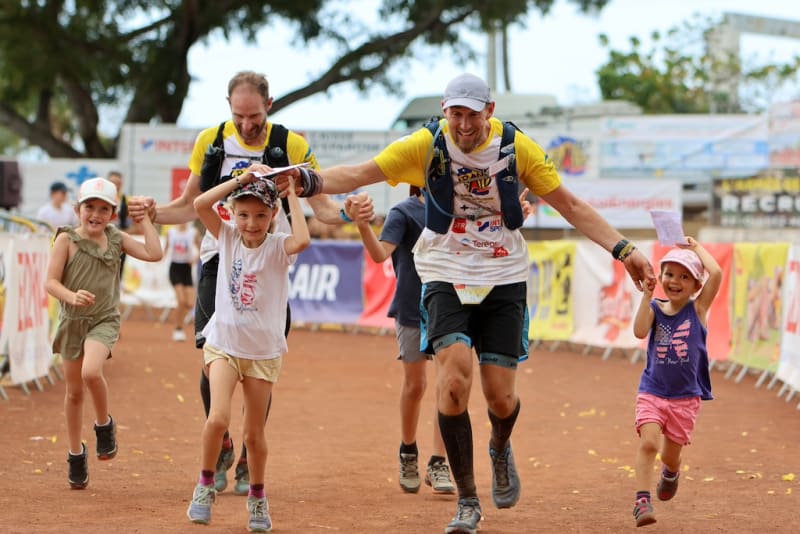
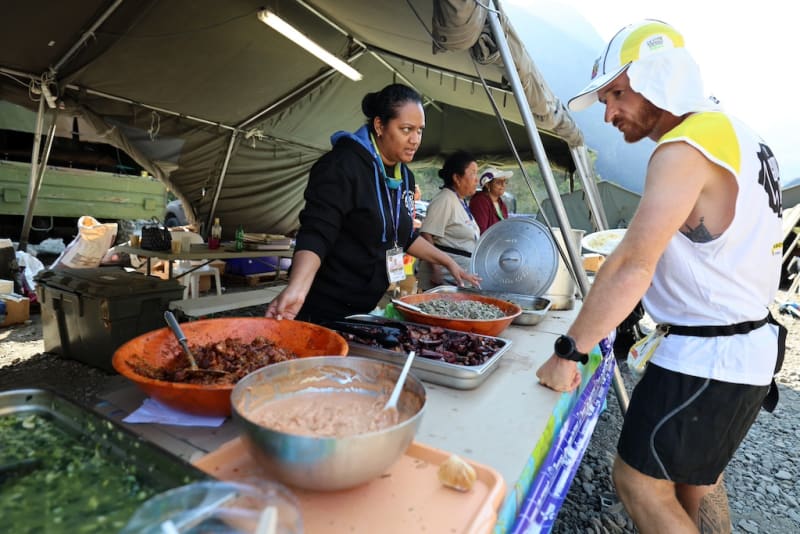
In these constantly changing conditions, the body takes a beating, and not only from the sharp terrain. Fortunately, runners tackling this inferno can count on the incredible, indescribable support of the local population, which has turned the Grand Raid into part of the island’s heritage over the years. Around every bend in the trail, locals are there to cheer you on, sometimes seeming to appear from nowhere.
No poles, no easy way out
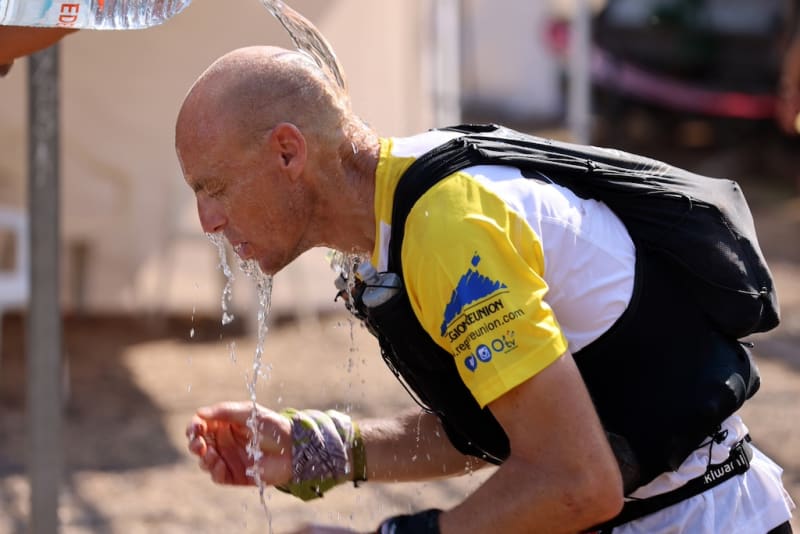
To triumph here, or even simply reach the finish, a few precautions are essential. First, runners have to contend with oppressive humidity and heat, which limit effort and force a slower pace. Once you enter the cirques, the slopes become steeper and more slippery, often covered in roots, rocks and other hazards that demand constant focus, especially on descents. And on Réunion’s races, poles are banned to protect the trails, a key factor to account for in training.
 © Imaz Press
 © Imaz Press
 © Imaz Press
 © Imaz Press
 © Imaz Press
It is also worth working on surges, so you can switch back into race mode when the terrain allows it. Steep, technical, long and hot: that is the training recipe if you want to survive the Diagonale des Fous. The GR20 in midsummer, for example, can be excellent preparation, as can the Pyrenees, the Beaufortain slopes and the trails of the Caroux massif, which Antoine Guillon knows by heart. He is one of the Grand Raid’s leading figures, with a win in 2015 and seven podium finishes.
From local dominance to the world’s biggest stars
The Grand Raid’s roll of honour speaks volumes. For years, this highly specific race was effectively the preserve of local runners, accustomed to its treacherous and distinctive terrain.
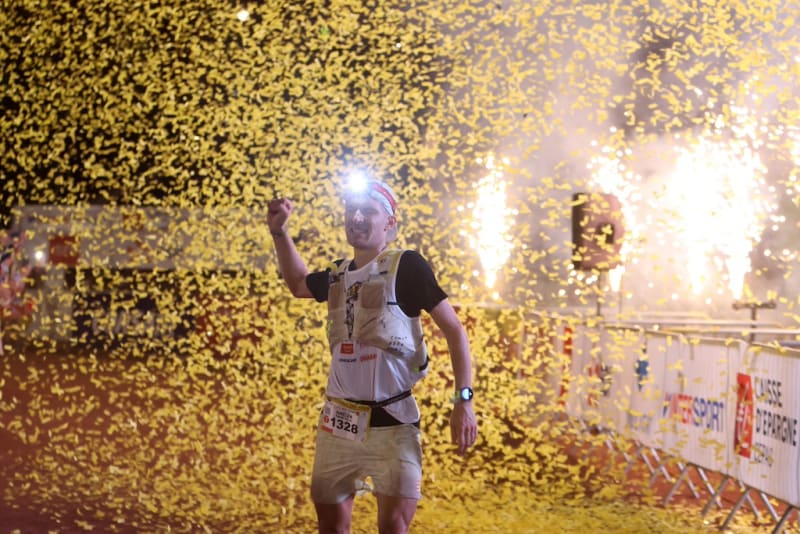
Gilles Trousselier (two wins), Jean Philippe Marie-Louise (four wins), Patrick Maffre (three wins), Paul-Cléo Libelle (two wins), Richeville Esparon (two wins), Thierry Techer (two wins), Thierry Chambry, and Pascal Parny (two wins), all locals, dominated the first 20 editions of the Diagonale des Fous before the stars of modern trail running began taking over the island in the late 2000s.
 © Imaz Press
 © Imaz Press
 © Imaz Press
 © Imaz Press
Julien Chorier (two wins), Kilian Jornet (two wins), Benoît Girondel (two wins) and François d’Haene (four wins) are among them. Ludovic Pommeret, Aurélien Dunand-Pallaz, Benat Marmissolle, Mathieu Blanchard and Baptiste Chassagne have since joined them in the record books.
Among the women, heroines such as Corinne Favre (three wins), Karine Herry (two wins), Nathalie Mauclair (two wins), Andrea Huser (two wins), Emilie Lecomte (two wins), Jocelyne Pauly, Emilie Maroteaux, Manon Bohard, Blandine l’Hirondel and Americans Katie Schide and Courtney Dauwalter have yet to eclipse Marcelle Puy, the local icon who won the event five times, in the hearts of Réunion’s people.
Five race formats for every kind of runner
Today, the Grand Raid de La Réunion offers five race formats for every level, from the flagship Diagonale for the most experienced runners to the Mascareignes, alongside the Zembrocal Trail relay and the Métis Trail, added to the calendar in 2024.
Grand Raid: 180 km / 10,200 m elevation gain
Its route changes almost every year, depending on the organizers’ plans and environmental or traffic constraints. This year, Diag fans suffered something close to a trauma when the route through the Cilaos cirque was removed because of road restrictions, particularly around the Gueule Rouge tunnel. It is a major change for regulars. Salazie and Hell-Bourg are now central points on the course, which becomes the longest in the event’s history in 2026.
After climbing the brutal Coteau Kerveguen, runners will no longer descend toward Le Bloc and Cilaos. They will turn east via Cap Anglais before plunging into the humid Salazie cirque.
They will then climb back toward Plaine des Merles and enter the famous, wild Mafate cirque via the Sentier Scout, before tackling the infamous Maïdo climb (2,000 m of elevation gain over 13 km). From there, they follow the traditional final section to Stade de la Redoute in Saint-Denis, where the finish line awaits.
Trail de Bourbon: 106 km / 6,200 m elevation gain
The race takes its name from the island’s deep history. Called Bourbon Island in 1642, it became a land shaped by cultural mixing and conflict, marked by the arrival of colonists and enslaved people from Madagascar, India and China.
The Trail de Bourbon still starts in Cilaos, with its legendary opening kilometres and an immediate climb over the Taïbit pass. The route has been slightly modified in Mafate: after descending via the Sentier Scout, runners pass through La Plaque, Ilet à Bourse, Grand Place, La Roche Ancrée and Roche Plate before reaching the foot of Maïdo, the Ilet Savannah aid station, the Chemin des Anglais and the finish at La Redoute.
Mascareignes: 74 km / 3,800 m elevation gain
Starting in Hell-Bourg, the route leaves the Salazie cirque via the Sentier Scout and plunges into Mafate. After crossing the cirque, runners head back toward the coast and the finish at Stade de la Redoute in Saint-Denis.
 © Imaz Press
 © Imaz Press
 © Imaz Press
Zembrocal Trail: 160 km / 8,460 m elevation gain
This four-person relay covers the island in teams, with legs of 37 km, 35 km, 49 km and 39 km. Starting in Saint-Joseph, it gives participants a taste of the Diagonale des Fous. The 2026 route is also losing its passage through Cilaos, while its distance and elevation gain increase as a result of the changes.
Métis Trail: 51 km / 2,500 m elevation gain
Created in 2024 to make the event accessible to more people, this race between Saint-Paul and Saint-Denis gives the 700 runners selected by lottery a taste of the Grand Raid. It also offers a unique experience through the spectacular island of Réunion, highlighting historic and scenic locations.
Grand Raid 2026 race schedule (local time)
Thursday, October 15 at 5:00 p.m.
Zembrocal Trail start (Saint-Joseph)
Thursday, October 15 at 10:00 p.m.
Diagonale des Fous start (Ravine Blanche, Saint-Pierre)
Friday, October 16 at 1:00 a.m.
Mascareignes start (Hell-Bourg)
Friday, October 16 at 8:00 p.m.
Trail de Bourbon start (Cilaos)
Saturday, October 17 at 6:00 a.m.
Métis Trail start (Saint-Paul)
DIAGONALE DES FOUS ROLL OF HONOUR
Year | Men’s winner | Women’s winner |
1989 | Gilles Trousselier (France) | Marie Thérèse Maussion (France) |
1990 | Gilles Trousselier (France) | Guylène Calpetard (France) |
1991 | Gilles Trousselier & Patrick Maffre (France) | Marie Annick Laudes (France) |
1992 | Jean-Philippe Marie-Louise (France) | Mireille Sery & Thérèse Derolez (France) |
1993 | Patrick Maffre (France) | Régine Étienne (France) |
1994 | Jean-Philippe Marie-Louise (France) | Mireille Sery (France) |
1995 | Jean-Philippe Marie-Louise (France) | Marcelle Puy (France) |
1996 | Jean-Philippe Marie-Louise (France) | Josiane Catois (France) |
1997 | Patrick Maffre (France) | Émilie Coulomb (France) |
1998 | Paul-Cléo Libelle (France) | Corinne Favre (France) |
1999 | Paul-Cléo Libelle (France) | Mireille Sery (France) |
2000 | Thierry Techer & Gilles Diehl (France) | Corinne Favre (France) |
2001 | Pascal Parny (France) | Corinne Favre (France) |
2002 | Thierry Técher (France) | Marcelle Puy (France) |
2003 | Richeville Esparon (France) | Simone Kayser (Netherlands) |
2004 | Richeville Esparon (France) | Alexandra Rousset (France) |
2005 | Charles Fontaine (France) | Sandrine Béranger (France) |
2006 | Christophe Jacquerod (Switzerland) & Vincent Delebarre (France) | Karine Herry (France) |
2007 | Thierry Chambry (France) | Marcelle Puy (France) |
2008 | Pascal Parny (France) | Marcelle Puy (France) |
2009 | Julien Chorier (France) | Emilie Lecomte (France) |
2010 | Kilian Jornet (Spain) | Marcelle Puy (France) |
2011 | Julien Chorier (France) | Karine Herry (France) |
2012 | Kilian Jornet (Spain) | Emilie Lecomte (France) |
2013 | François D'Haene (France) | Nathalie Mauclair (France) |
2014 | François D'Haene (France) | Nathalie Mauclair (France) |
2015 | Antoine Guillon (France) | Nuria Picas (Spain) |
2016 | François D'Haene (France) | Andrea Huser (Switzerland) |
2017 | Benoît Girondel (France) | Andrea Huser (Switzerland) |
2018 | François D’Haene (France) & Benoît Girondel (France) | Jocelyne Pauly (France) |
2019 | Grégoire Curmer (France) | Sabrina Stanley (USA) |
2020 | Cancelled due to COVID-19 | Cancelled due to COVID-19 |
2021 | Ludovic Pommeret (France) & Daniel Jung (Italy) | Emilie Maroteuax (France) |
2022 | Benat Marmissolle (France) | Courtney Dauwalter (USA) |
2023 | Aurélien Dunand-Pallaz (France) | Katie Schide (USA) |
2024 | Mathieu Blanchard (France) | Manon Bohard (France) |
2025 | Baptiste Chassagne (France) | Blandine L’Hirondel (France) |