
Ultra-running’s irresistible siren call demands patience and restraint
 © Franck ODDOUX
Trail ultra-running is becoming the norm. Yet these extreme distances are anything but harmless. Why patience and restraint are essential.
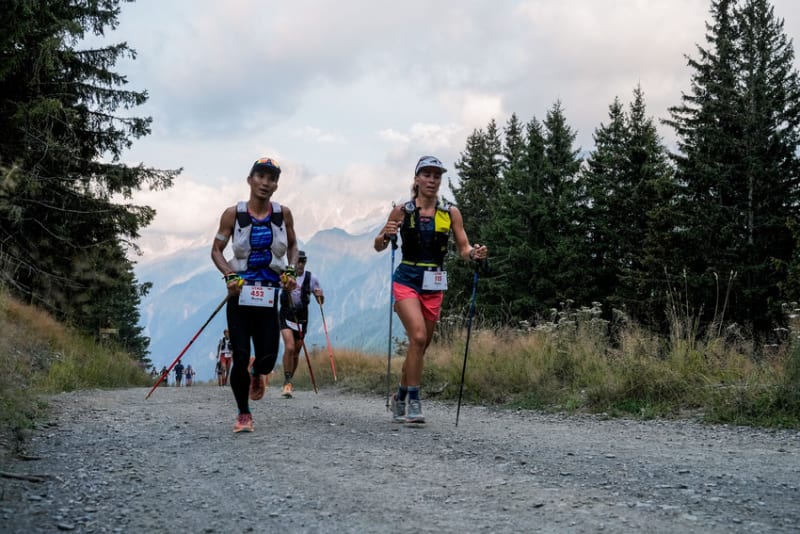
It is part of a broader trend. Whatever the sport, the prevailing mindset is “more is more”. Longer, harder, always. Ultra-running has become the norm in a world where “challenge”, “pushing your limits” and “performance” shape athletes’ lives. In trail running, ultras are becoming increasingly common and increasingly ordinary. Yet these extreme distances are anything but harmless for the body and overall health.
Trail running is a demanding sport
In running more generally, you need to give yourself time to move through each stage so you can progress without sacrificing your health. In trail running, that advice is even more important. Why? Because performance depends on more factors, and because long, repeated races place a heavy strain on the body. Trail running takes place on uneven terrain, demanding a great deal from the muscles and tendons, as well as technical skill, mental strength, equipment management, race strategy and nutrition. Learning to manage all these variables inevitably takes time because you need to learn the sport and understand your own capabilities.
Build your training load gradually
Whatever a runner’s level, the principles of training remain the same. What changes are the training load, what that load consists of and the time needed for recovery. The basic idea is to keep placing stress on the body so that it responds and adapts, becoming stronger in the process... without getting injured, of course!
Progression
Too often overlooked, or simply ignored, gradual progression is a fundamental principle in trail running. Impatience should never dictate your training or the goals you set. Taking up trail running and targeting an ultra within a year is simply unreasonable. Training loads, including volume, intensity and specificity, must increase gradually from one training cycle to the next and from one season to the next.
In practical terms, that means increasing the number of weekly sessions and/or the volume of each session. From one year to the next, it is often recommended not to increase your training load by more than 15%. Start with short, or even very short, trail races, not an ultra. An ultra should only be scheduled after several years of training, once the body has fully adapted to the demands of very long efforts in the mountains.
Think in terms of several seasons
Even when you’re itching to get out there, you need to think in terms of several years, giving yourself the time to progress and achieve your goals. To fully realise your potential, in other words to perform at your best, two or three goals per season are more than enough. Restraint allows you to string seasons together while protecting both your enjoyment and your health. Gradually increasing your training load, season after season, helps keep injuries at bay and build a coherent, healthy and realistic plan. By developing a multi-year strategy, you maximise your chances of success in an ultra.
Mistakes to avoid
1. Giving in to the pull of social media
The ultra boom can be explained by a range of factors: the pursuit of performance and self-transcendence, the search for adventure, albeit a sanitised version given the safety measures put in place by organisers, the desire to belong to a community, social recognition, the glorification of superhuman challenges... and the influence of social media and training apps. Just because an influencer lines up for an ultra every month doesn’t mean you should follow suit. Just because your neighbour runs 150 km a week doesn’t mean you need to run more. Staying focused on yourself, your genuine ambitions, your work-life balance and realistic goals is essential.
2. Throwing yourself into it headfirst
Trail running is highly addictive, pushing people to run further and commit without limits. Yet it is essential to train sensibly to avoid injury. Seeing a sports physician, knowing when to stop if pain appears and taking up cross-training, in other words practising several sports, are all sound ways to keep running healthily for years to come.
Perhaps the worst mistake is signing up for an ultra without considering the consequences, or everything the preparation entails: training volume, the impact on family and social life, whether such a goal is compatible with your professional life, the mental load... An ultra is not a minor race: it is a huge mountain to climb.
3. Focusing on finishing instead of enjoying the experience
Far too many trail runners focus on becoming finishers instead of truly experiencing and enjoying their race. The journey matters more than the destination. Preparing for an ultra and then running it should bring happiness and enjoyment regardless of the final result. Losing sight of fulfilment in sport because all the focus is on the finish line means missing the very essence of sport. It also increases the risk of giving in to impatience, skipping steps... and getting injured.