
Trofeo Nasego 2026: results from the 25th edition

Run between Casto and Famea in Lombardy, Italy, the Trofeo Nasego has become a benchmark on the international mountain running calendar. The race has hosted Italian Championships and multiple World Cup rounds, including again this year as the 13th stop of the 2026 circuit. The start list lived up to the hype, stacking reigning and former world and European champions, World Cup winners and leaders, plus a new wave of athletes looking to break through on the global stage.
At 21.5 km with 1,300 m D+, the Trofeo Nasego course gives runners a wide mix of terrain. The main challenge is a climb of more than 700 m of vertical gain, from Ponte Vrenda up to Rifugio Nasego, sitting at 1,300 m altitude.
The climb starts at the 10 km mark and steadily steepens all the way to the hut at 16 km. The first 10 km, relatively quick and rolling on good trails, can open up early gaps. But everything changes once runners hit that long, steady ascent. It naturally rewards the pure climbers, yet the final four kilometres of downhill, with several technical sections all the way to the finish in Famea, can let other profiles make the difference, or lose it.
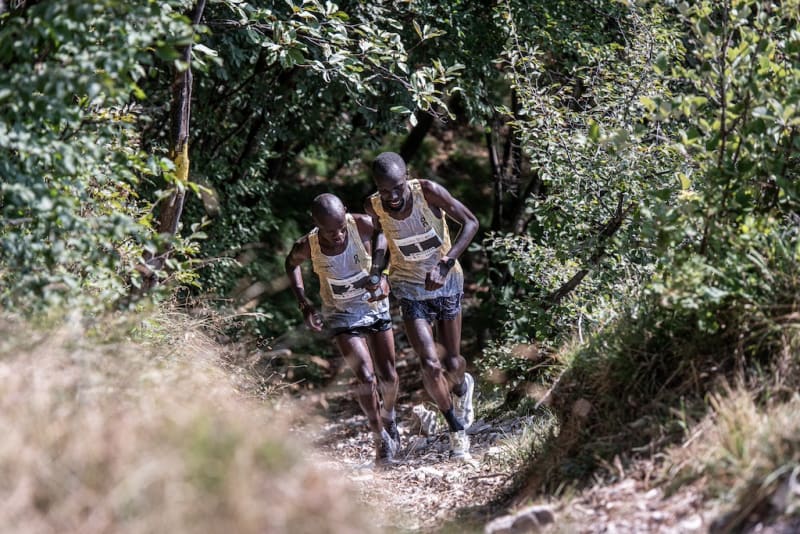
To win the Trofeo Nasego, you have to be well rounded: fast on the runnable stretches, efficient on the climbs, and confident on technical descents.
Kenyan clean sweep in the men’s race
Two clear favourites stood out on the start line: Kenyans Patrick Kipngeno and Philemon Kiriago, both winners of the race within the last four years. The depth, though, was serious, with the Italian contingent in particular looking dangerous.
Kipngeno came in as the course record holder, set in 2022 at 1h30’46. The question was whether that time would hold up against such a stacked field.
Kiriago took control early and moved to the front. At 6 km, in Piani di Alone, he led fellow Kenyan Elija Kamau Kariuki, one of this World Cup season’s breakout runners, while another Kenyan, Michael Selelo Saoli, sat third.
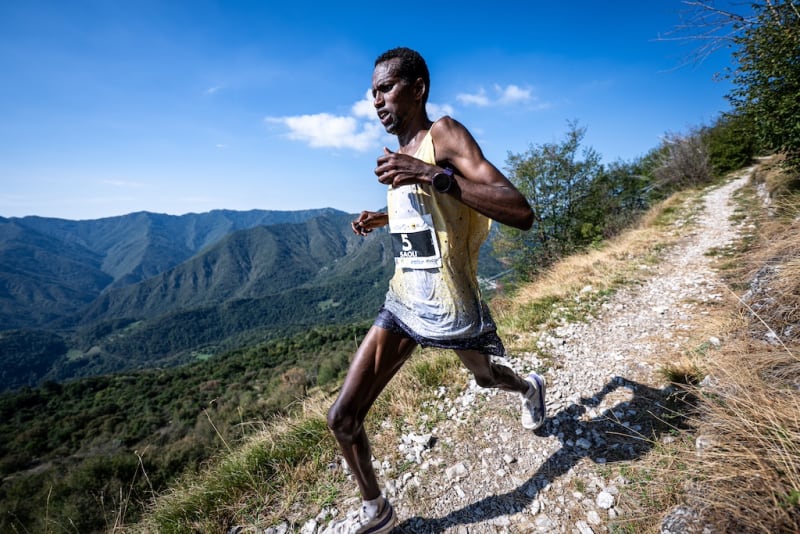 © Marco Gulberti
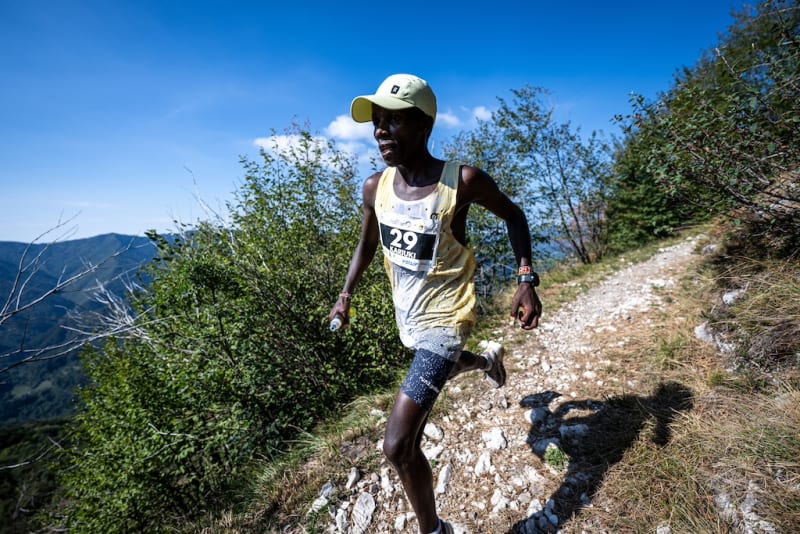 © Marco Gulberti
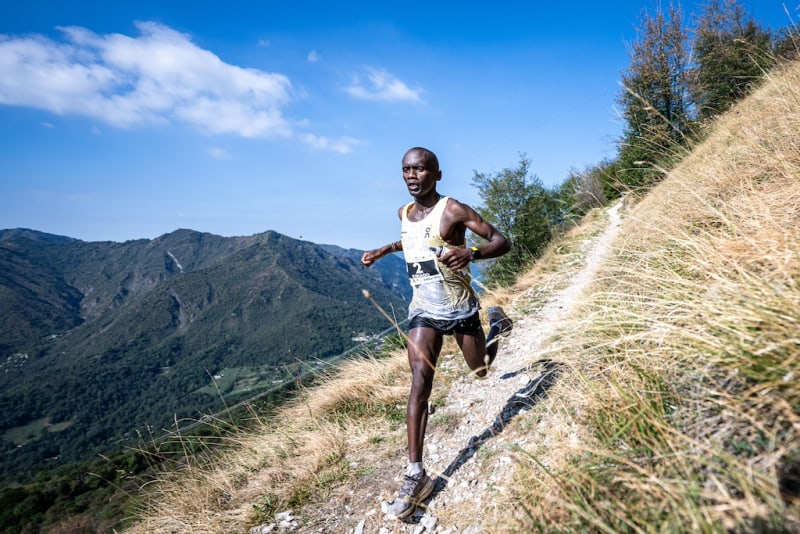 © Marco Gulberti
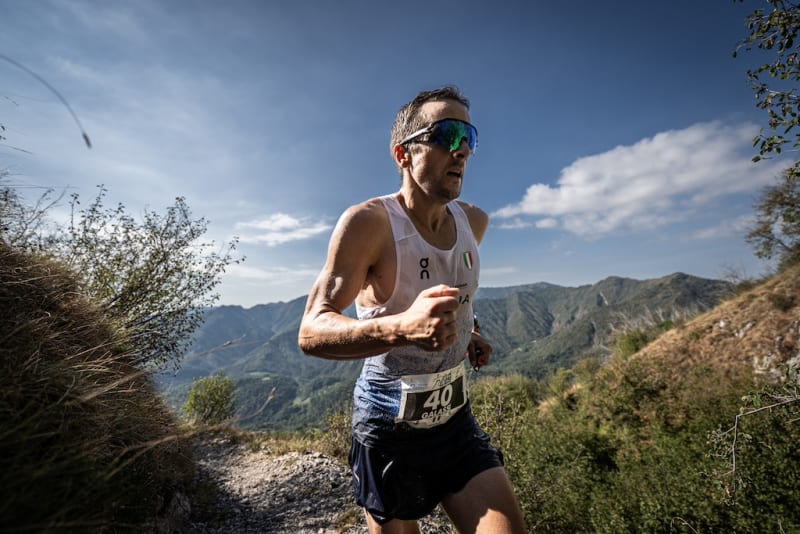 © Marco Gulberti
At Pannelli (11 km), just before the long climb to Rifugio Nasego, the top five was unchanged and the gaps were tiny. As expected, the race would be decided on the climb… and then on the descent.
At Rifugio Nasego, Kipngeno, running in fifth at the time, had put in his move and was down to just a few seconds behind leader Kiriago. Paul Machoka, another Kenyan, had also worked his way up into fifth position.
At the start of the four-kilometre descent, one minute covered the top three, leaving plenty still to play for.
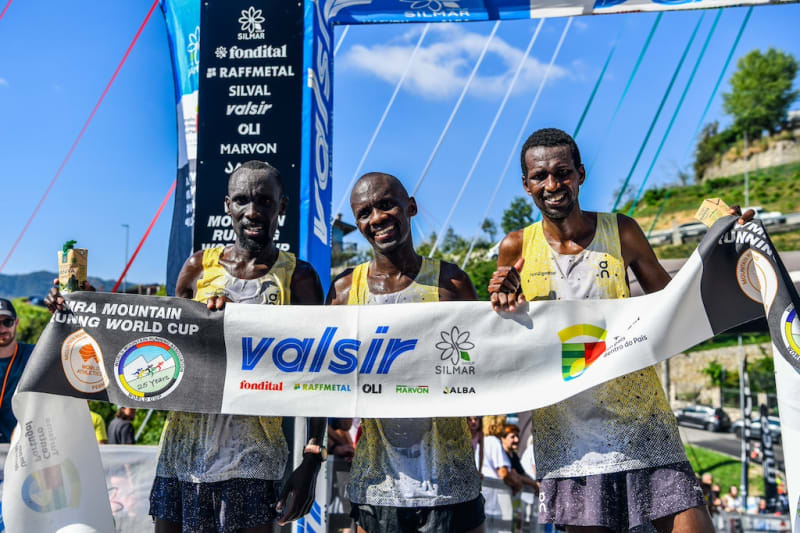 © Davide Vaninetti
In the end, Philemon Kiriago hit the line first in Famea. The Kenyan won in 1h30’08, chopping 38 seconds off the previous course record held by Kipngeno. Kipngeno held on for second, while the Kenyan sweep was completed by Michael Saoli in third, who resisted the late charge from Elijah Kariuki and Paul Machoka to keep his place on the podium.
France’s Maël Henric (Salomon) cracked the top 10 in 1h39’05. Théodore Klein finished 12th, Corentin Capelier 13th, Mathieu Le Fur 18th, and Jules Barriod 24th.
MEN’S TOP 5
Philemon Kiriago (Kenya) 1h30’08
Patrick Kipngeno (Kenya) 1h31’10
Michael Saoli (Kenya) 1h32’13
Elijah Kariuki (Kenya) 1h 33’11
Paul Machoka (Kenya) 1h34’43
World champion Nina Engelhard comes up short
In the women’s race, Kenyan Ruth Mwihaki Gitonga, the World Cup leader, looked tough to beat after winning every Classic-format race she’d started this season. This time, though, she had to deal with Germany’s Nina Engelhard, the reigning world champion in the discipline, who had just edged the Kenyan.
The head-to-head promised fireworks, especially with a stacked field that included two-time Austrian winner Andrea Mayr, Britain’s Kirsty Skye Dickson and Kenyans Miriam Chepkirui, Joyce Muthoni Njeru and Gloria Chebet.
Gitonga quickly took charge. At 6 km in Piani di Alone, Engelhard was the main chaser, with Chepkirui, Njeru and Chebet rounding out the top five.
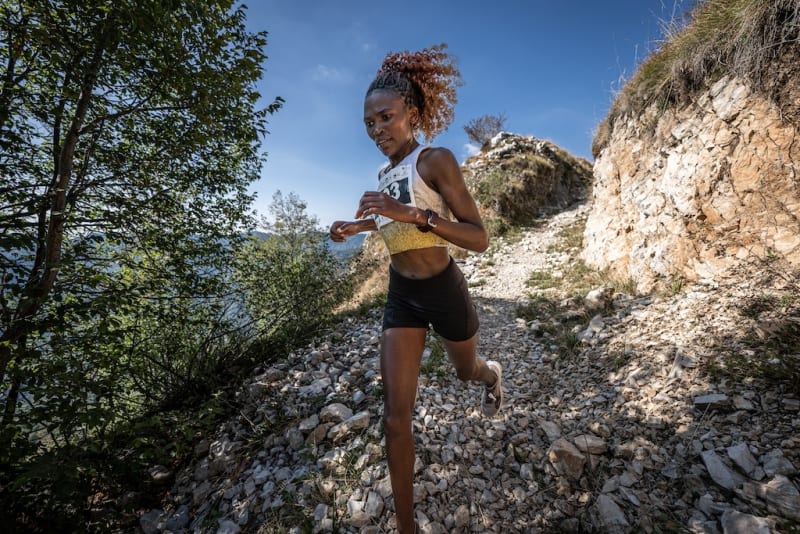 © Marco Gulberti
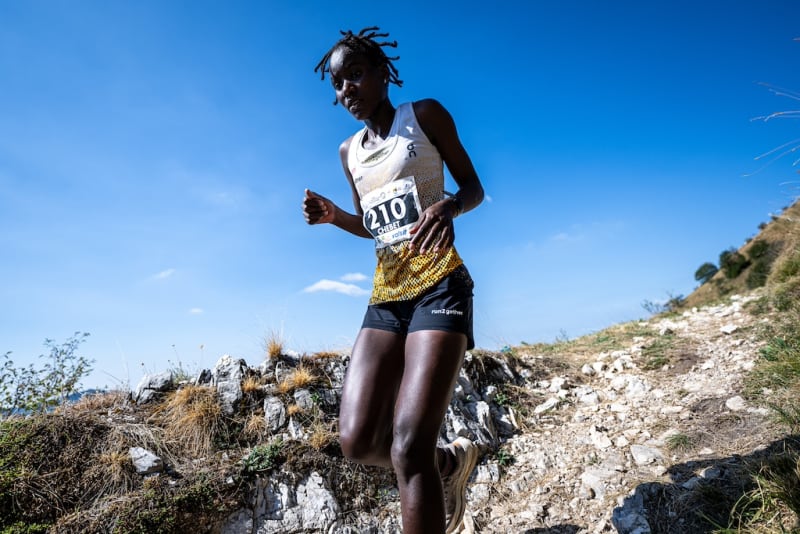 © Marco Gulberti
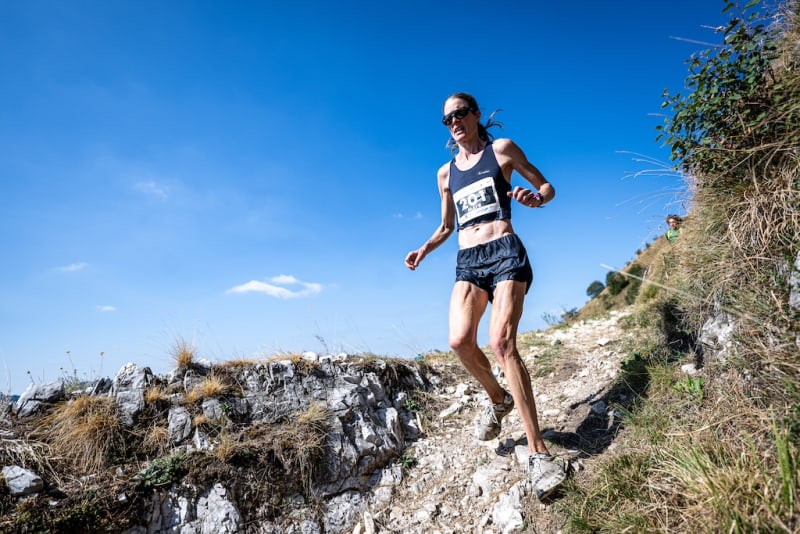 © Marco Gulberti
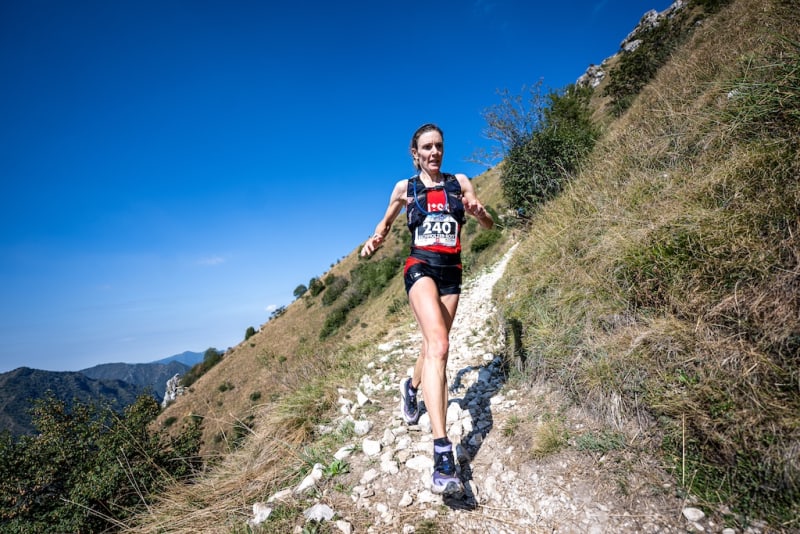 © Marco Gulberti
Approaching the big climb at the Pannelli checkpoint (11 km), the top five was unchanged, although Chebet had moved ahead of Njeru.
The day before, in the Vertical race, Engelhard showed she’d found her climbing legs again after injury. That looked like a real weapon for this part of the course, and the climb did shake up the order.
Gitonga reached Rifugio Nasego first at 16 km, managing to hold a 22-second lead over Engelhard.
Chepkirui stayed third but was now two minutes behind the leading duo, making a comeback highly unlikely.
Kirsty Skye Dickson also made her move on the climb to grab fourth, a little over a minute back from Chepkirui. Italy’s Arianna Dentis, who has posted strong results this season at the Grossglockner and Vauban World Cup rounds, had worked up into fifth. Andrea Mayr had moved up too and was in the chase group at the top.
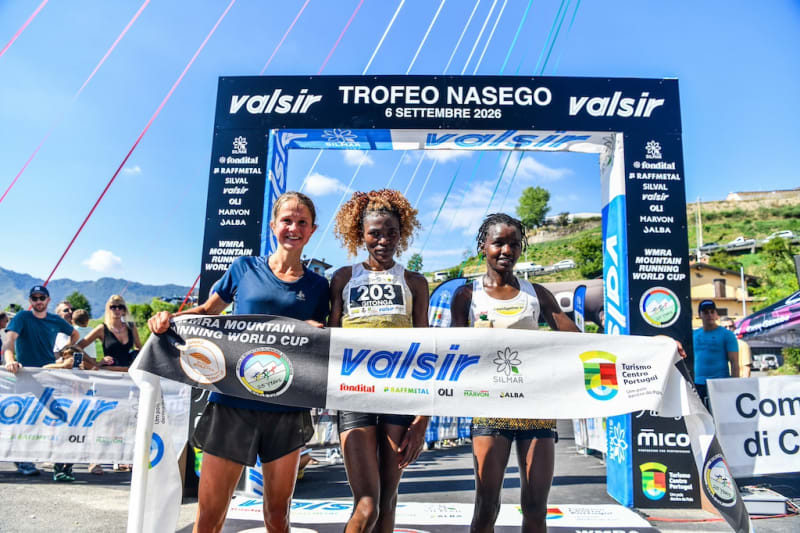 © Davide Vaninetti
The long final descent proved even more decisive in the women’s race than in the men’s. Engelhard couldn’t close the gap, and Ruth Mwihaki Gitonga took the win in 1h47’06, 27 seconds ahead of the German, second in 1h47’33. Chepkirui held on to third. Dentis kept pushing to the line to take fourth ahead of Chebet in fifth.
For the French women, Céline Jeannier finished 18th, Cristel Dewalle 22nd, Rosalie Georges 25th, and Elise Guillo 31st.
WOMEN’S TOP 5
Ruth Mwihaki Gitonga (Kenya) 1h47’06
Nina Engelhard (Germany) 1h47’33
Miriam Chepkirui (Kenya) 1h50’14
Arianna Dentis (Italy) 1h52’51
Gloria Chebet (Kenya) 1h53’12
The Mountain Running World Cup now heads to Poland on September 19, for the final long-distance race of the 2026 circuit at the Maraton Trzech Jezior (Three Lakes Marathon).