
Trail running race formats, from mountain races to ultras
 © Franck ODDOUX
From mountain racing to ultra-trail, with skyrunning and the Vertical Kilometer in between: here’s a rundown of trail running’s main race formats.
Saying you “do trail” is a bit like saying you “run.” Sure, you lace up regularly, but over what distance? Since it took off in France in the early 2000s, trail running has evolved a lot. Today it’s made up of a whole range of formats… and if you’re not in the know, it’s easy to get lost. Here’s (almost) everything you need to know about the different types of races.
Mountain running
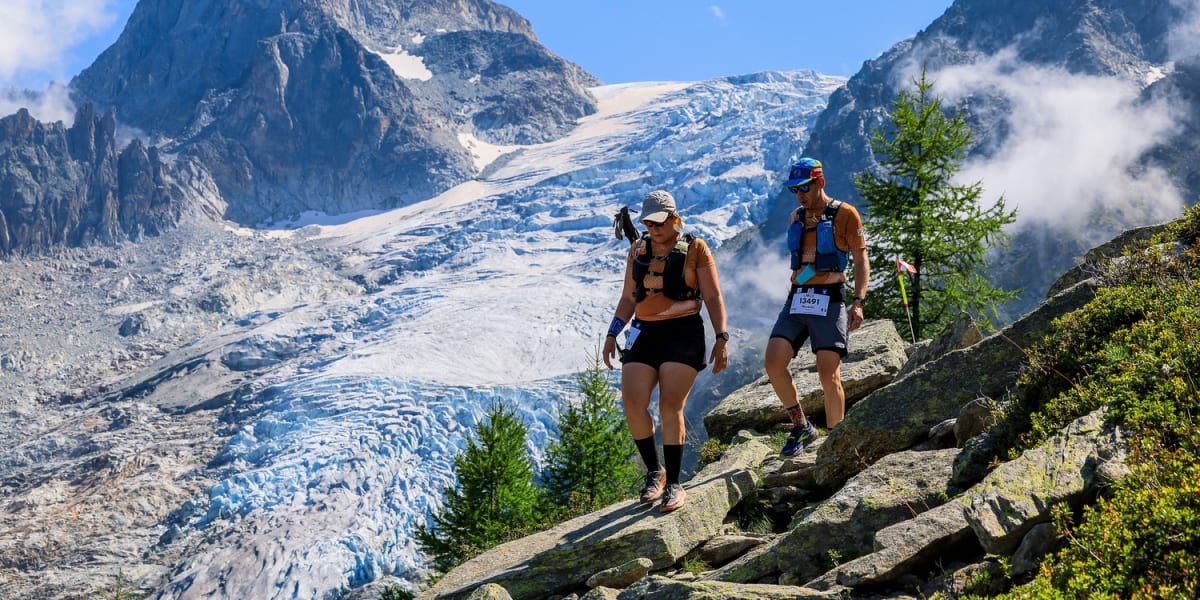
Purists might hit the roof seeing mountain running folded into the trail running galaxy. Mountain running is, after all, far older than trail. High-mountain locals were already racing along alpine paths decades ago, especially in Switzerland, with challenges along the lines of: “first to the summit wins!”
Highly athletic, the discipline is overseen by national and international federations and follows very specific rules. For example, poles are strictly forbidden. The French Athletics Federation (FFA) states that “ mountain races are part of ‘outdoor running events.’ They take place in mountainous terrain, with a minimum elevation gain of 500 meters and a minimum difference of 300 meters between the lowest and highest points. Organizers are advised to limit the distance so that the leaders finish in 1 hour to 1 hour 15, in keeping with the ‘athletic’ format of this discipline as organized worldwide, and above all to avoid any dangerous sections or unstable ground. ”
Short trail
The word “short” is relative, especially these last few years. Originally, according to the FFA, short trail referred to races between 21 and 41 km with more than 1,000 m of elevation gain. Recently, distances have clearly been creeping up: the 2025 world championships short trail course, for instance, served up a hefty 44.5 km with 3,660 m D+! Still, short trail isn’t the “kids’ race” on an event weekend, far from it. It’s a demanding format that calls for all the qualities of a strong mountain runner and a solid runner, with the effort compressed into just a few hours (roughly 2 to 5-6 hours).
Long trail
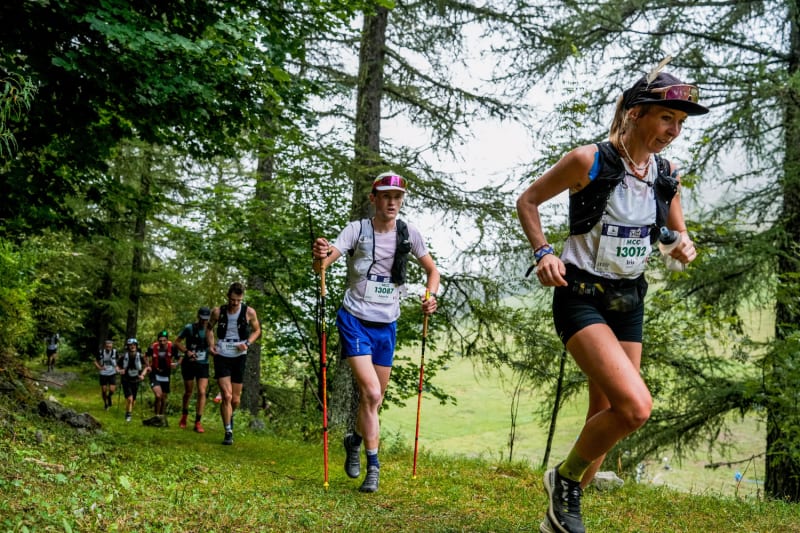
In the early days of the sport, the FFA called anything from 42 to 80 km a long trail. That label covers a huge range of races that don’t demand the same strengths or the same training. Between a maratrail (a trail marathon) and an 80K, there’s a world of difference! Mental toughness, physical durability, fueling and hydration management, and simply having the time to train are all key pieces of the puzzle when preparing for a long trail.
Ultra-trail
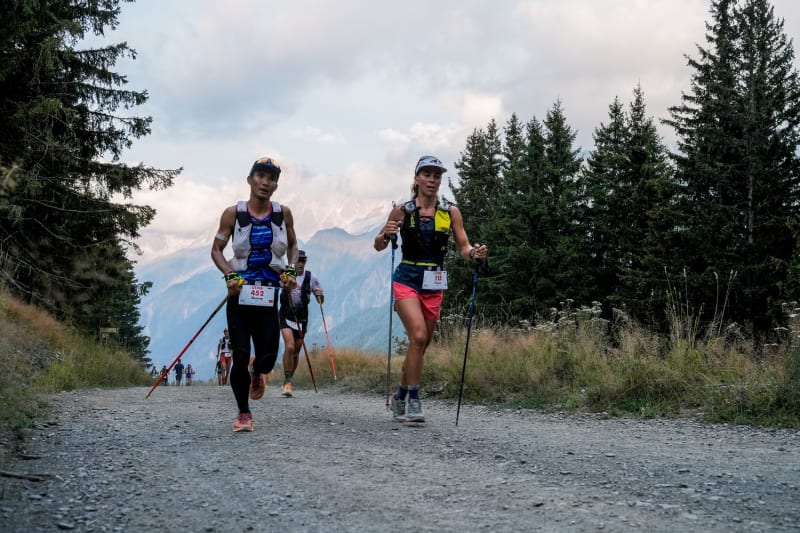
The name alone sparks the imagination. You immediately think of the most iconic race on the circuit, UTMB®, and picture yourself as a hero out on the trails… For years, trail running has been caught in a mileage arms race: longer distances, tougher courses. 80, 100, 150, even 250 km, and 5,000, 8,000, 10,000, even 15,000 m D+: nothing seems hard enough for ultra devotees. It’s a fad, a deep-rooted trend, and a mindset all at once.
This kind of race demands meticulous preparation and should never be taken lightly: very high training volume and a steel mindset (a race is often “lost” the moment your head goes), a well-drilled fueling and hydration strategy, and the physical ability to absorb ultra-long efforts (often 20+ hours, sleepless nights…).
Urban trail
It’s trail running, city-style, sometimes criticized by purists who see trail as strictly an outdoor, nature-based sport. These races serve up green routes through parks, quirky passages through historic districts, technical sections with stairs, and a way to explore a city’s heritage. The courses are often punchy and fast, which means you need to build agility, speed, and the ability to surge and re-accelerate.
Within this broad urban trail family, you can include Ecotrail®, a label that brings together a circuit of races across Europe. The concept is built around urban routes that stick to paths as much as possible, so participants can run on natural surfaces. Distances vary widely, from around 10 km up to 80 km.
Skyrunning
Run by the International Skyrunning Federation (ISF), founded in 2008 and based in Italy, the discipline’s birthplace, skyrunning was officially conceived in 1992 by Mario Giacometti, whose motto was simple: “less cloud, more sky.” The ISF defines skyrunning as “mountain running above 2,000 m where the average incline is 6% over the total distance and at least 5% of the total distance has a gradient of 30% or more”. These formats are high-mountain, airy and committed, with serious technicality. The distance-to-vert ratio is generally very high.
There’s an international circuit as well as national series. The ISF distinguishes several formats within skyrunning, including: Sky (20-49 km and at least 1,200 m D+), SkyUltra (50-99 km and at least 3,000 m D+), Vertical (a straight-up climb of 1,000 m D+ with a maximum 5 km distance), SkySpeed (at least 100 m D+ and a minimum gradient of 33%). SkyMarathon refers to races of at least 30 km and 2,000 m D+ where the winner finishes in under 5 hours. SkyRace is the generic label for skyrunning competitions with at least 20 km and 1,200 m D+.
Vertical Kilometer
Once again, we’re stepping a little outside the strict trail running box, because the Vertical Kilometer (VK, for those in the know) isn’t trail running in the pure sense. The concept is simple: plot a line straight up the slope until you rack up 1,000 m of vertical gain. Poles are allowed and, in general, the gradient is so steep you barely run, if at all. Among the steepest and fastest are the Verticale du Grand Serre (Isère), just 1.8 km long, and Fully (Switzerland), which totals 1.9 km. You obviously need to be an excellent climber with an optimal power-to-weight ratio, but above all, a master of poles. Ski mountaineers are often the top performers in this format.
Snow trail
Relatively rare, snow trail races are often organized by ski resorts. These snow events help you stay connected to the sport through the winter season. They’re usually fairly short (10 to 30 km) and mostly run on groomed trails. Conditions can be tough because of the cold and the surface. You need strong leg power, solid cold tolerance, and the ability to handle harsh weather.
Sand and desert trail
The best-known sand race is the Marathon des Sables, which comes in several versions on multiple continents. Other races offer the same sense of escape, with routes through Chile’s Atacama Desert or China’s Gobi Desert. Held in the desert, often on sand, these events deliver a very different experience and are usually run in multiple stages. You undeniably need a bit of an adventurer’s spirit to enjoy these exotic challenges, which often require complete self-sufficiency.
In conclusion
Trail running has become a true galaxy, with a wide variety of formats orbiting around it. From the shortest, sharpest races to the longest adventures, trail offers everyone a way to find an event that matches not only their goals, but also their physical and mental strengths, and the time they can realistically commit to training day to day.