
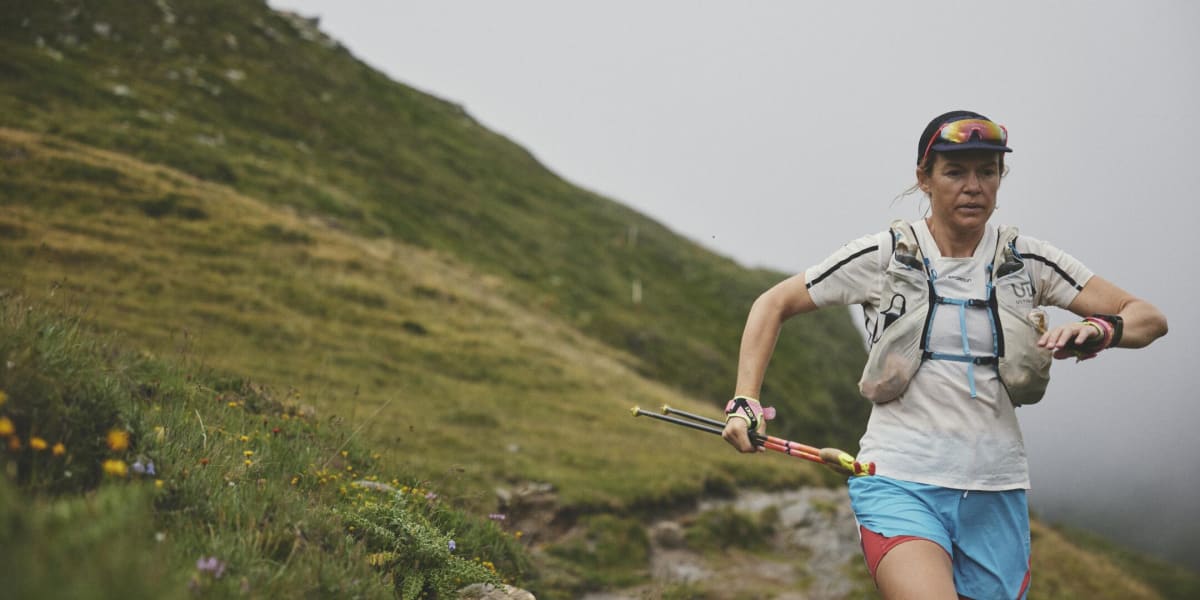
Sophie Woods takes the women's Via Alpina record
From 4 July to 1 August 2026, ultra-trail runner Sophie Woods crossed the Alps from Trieste to Monaco. She covered 2,000 kilometres and roughly 117,000 metres of climbing in 28 days, 17 hours and 59 minutes, the fastest women's time ever recorded on the Via Alpina.
Slovenia, Italy, Austria, Germany, Liechtenstein, Switzerland, France and finally Monaco… That is the long road the New Zealander put herself through this summer. Sophie Woods had planned it carefully, and it paid off. Her husband and a photographer friend, Zoé Salt, were with her throughout. Had this article been written the day she arrived on 1 August, her time of 28 days, 17 hours and 59 minutes would have stood as the overall supported record, men and women combined. But the Via Alpina is a coveted line. On 16 August 2026, 15 days after Woods finished, Swiss runner Frédéric Splendore completed it in the opposite direction, Monaco to Trieste, in 23 days, 11 hours and 42 minutes… What a summer in the Alps! No doubt other trail runners will take up the challenge in the coming years. A quirk of the calendar and the Alpine map: on 28 July, both runners were in the same part of the Hautes-Alpes, around Freissinières, each heading for the opposite end of the range.
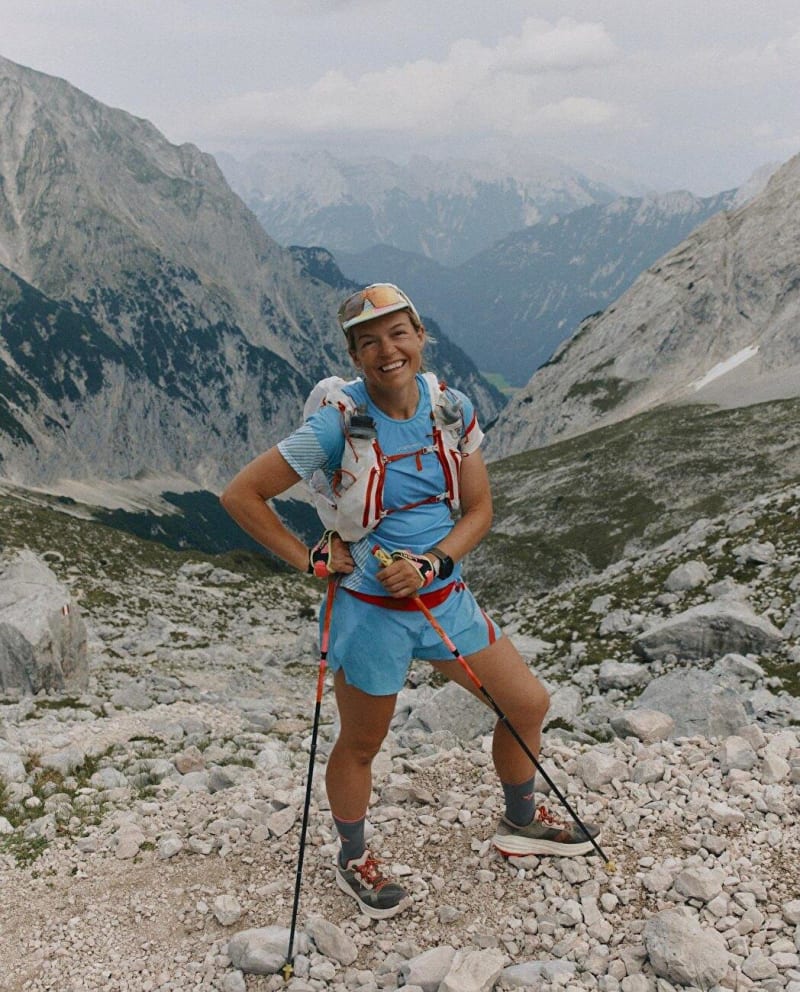 © Zoe Salt Photography, https://www.zoesalt.com/
The record
Woods, a regular on the trail circuit, set off on 4 July in the middle of the night from Muggia, near Trieste. The Via Alpina runs through Italy, Slovenia, Austria, Germany, Liechtenstein, Switzerland and France before reaching Monaco. The route she chose measures around 2,000 kilometres, and the data published after the attempt shows 117,614 metres of positive elevation. George Woods and Zoe Salt met her regularly along the way to hand over food, water and gear. The full documentation of her effort, GPS data included, was submitted to Fastest Known Time, which validated the performance in the "supported" category. To get the record, Woods kept moving 14 to 18 hours a day, averaging 70 kilometres and 4,000 metres of climbing every day. Numbers that make your head spin. All the more so as she had to face the hottest summer in recent memory: heat, thunderstorms, and even detours around forest fires... Eating well and sleeping well mattered every day of this adventure. In an Instagram post about sleep, she left this line: "would I do it again if I had the choice? Absolutely!"
On 1 August, she finally reached Monaco. The previous women's best belonged to Dutch runner Tessa Caspers, with 38 days, 2 hours and 54 minutes. Woods also beats the men's mark set by Jake Catterall in 2024, 35 days, 21 hours and 4 minutes, by more than a week.
A deep ultra résumé
Sophie Woods is no child of the trails who grew up on singletrack. Born in New Zealand, she moved to London at 20. When she started running in her mid-twenties, the distances were short. The 10Ks came, then marathons, before the mountains and ultras gradually took over. After sixteen years in London, she left with her husband to live in a van for several years and roam the European mountains. A choice that already says a lot about her love of the outdoors. Racing as Sophie Grant, her maiden name, Woods became a fixture at the big European ultras: UTMB, Lavaredo Ultra Trail, Transgrancanaria, Diagonale des Fous, Marathon des Sables. Her career is a long list of long-haul experiences. She has represented Great Britain in trail running and won the British skyrunning championship in 2018. She has finished the Tor des Géants three times. In January 2026, just months before the Via Alpina, she made her debut on the Winter Spine Race, around 420 kilometres along Britain's Pennine Way in the dead of winter. On her first attempt, she finished third woman in 117h32.
A stunning result that surely boosted her confidence before she took on the Via Alpina.
More articles

Mount Hiei's marathon monks and their thousand days on foot
The kaihōgyō, the ascetic ordeal of Mount Hiei's monks: a thousand days of walking, prayer and deprivation spread over seven years.
Fri, October 23, 2026

Jennifer Lichter's road from childhood wounds to the Western States record
From a childhood scarred by violence to the Western States record, the singular path of Jennifer Lichter, who won her very first 100-miler.
Fri, October 23, 2026

Gordy Ainsleigh, the man who ran with the horses
The story of Gordy Ainsleigh, who became a Western States pioneer by completing the Tevis Cup on foot in 23:42.
Thu, September 24, 2026