

Launched in 1995 as one of France’s pioneering trail races, the Trail des Templiers went on to become a full-blown festival in Millau. Over three days, 16 race formats and 13,000 runners bring the surrounding Causses to life. Or perhaps the Causses bring the festival to life. For more than 30 years, the Grand Trail des Templiers has brought the weekend to a spectacular close, taking on 80 km and 3,500 m of elevation gain as the world’s best trail runners battle it out and add another chapter to this historic race.
The Festival des Templiers owes its existence to our American cousins. Inspired by their 1991 reporting trips to the United States, where they covered the Western States in California and the Leadville 100 in Colorado, journalist Odile Baudrier and photographer Gilles Bertrand were among the first in France to champion this new discipline. It was not yet called trail running, but over the following decades it would grow into the sport we know today.
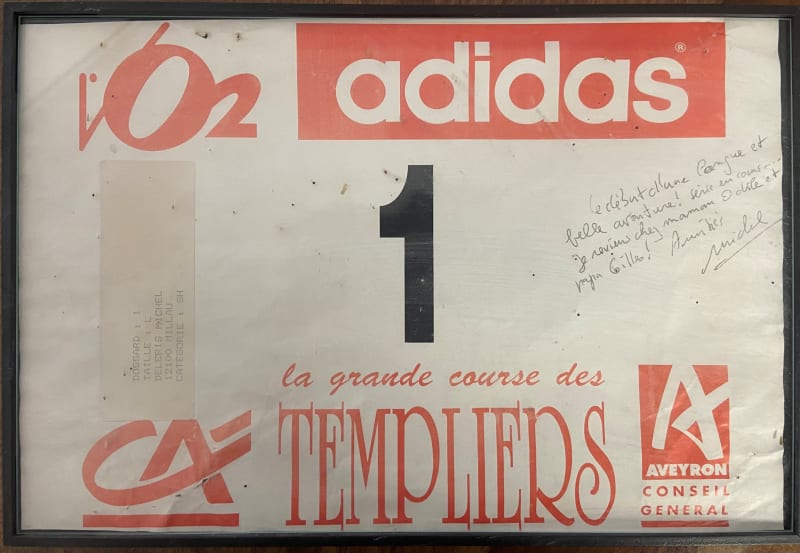
In 1995, Gilles and Odile launched the first edition of an event still completely new to France outside the Alps, right in the heart of the Grands Causses Regional Natural Park in Aveyron: an all-trail race, a wild and authentic adventure run in semi-autonomy. It marked the beginning of a new discipline that did not yet have a name: trail running. It also marked the beginning of the Trail des Templiers success story.
 © Archives Templiers
From Sainte-Eulalie-de-Cournon to Nant, and from Nant to Millau
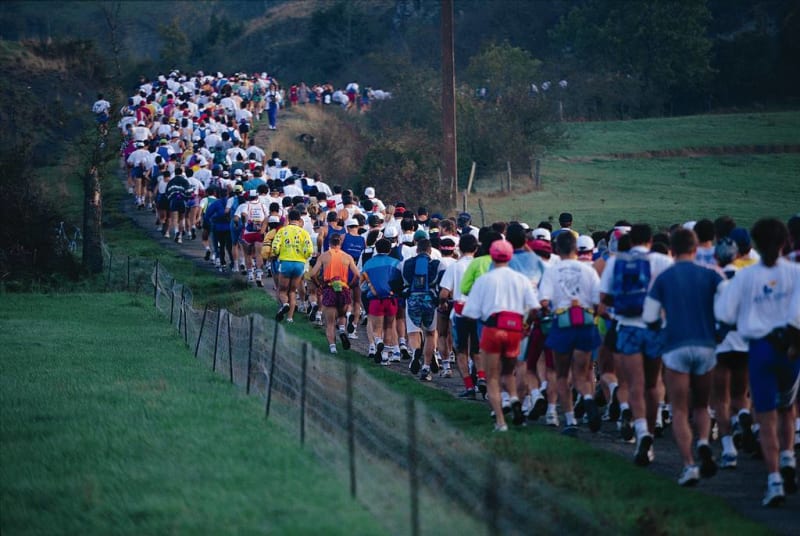
The first edition of the Templiers took place in Sainte-Eulalie-de-Cournon. There was just one distance on the schedule, already an 80 km race, and the fastest of the 500 pioneers received a shepherd’s bag. A far cry from the €69,000 in prize money that the various winners of the 2026 edition will share. Different times, different customs.
 © Archives Templiers
 © Archives Templiers
 © Archives Templiers
 © Archives Templiers
 © Archives Templiers
Two years later, the race moved to Nant, a small village of 400 residents that soon proved too small for an event that kept growing. Still, over 15 years in Nant, some magnificent chapters were written into the Templiers legend.
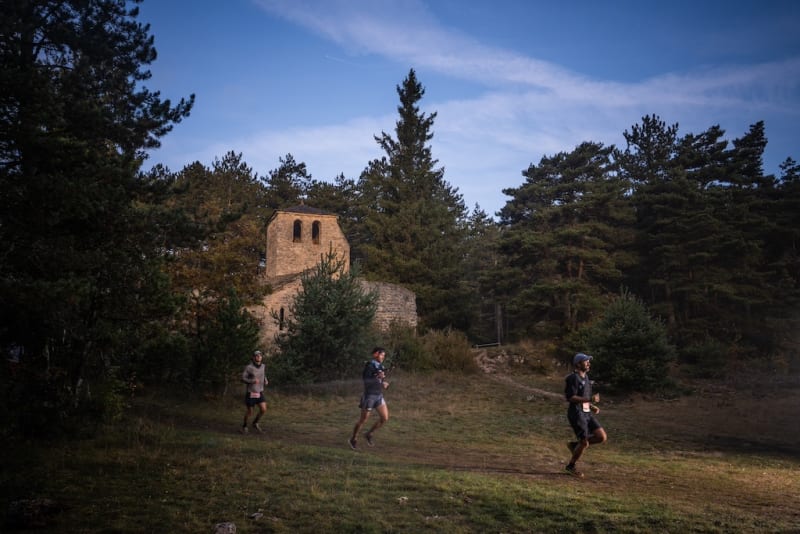
In 2010, what had by then become the Festival des Templiers moved once again, this time to Millau, where the event could easily accommodate its packed schedule of 16 races. From kids’ events to the 100 km race, via the maratrail and shorter trail distances, there is something for everyone: beginners, ultra-trail specialists, women and adaptive athletes.
 © Greg Alric
 © Guillaume Larras
 © Greg Alric
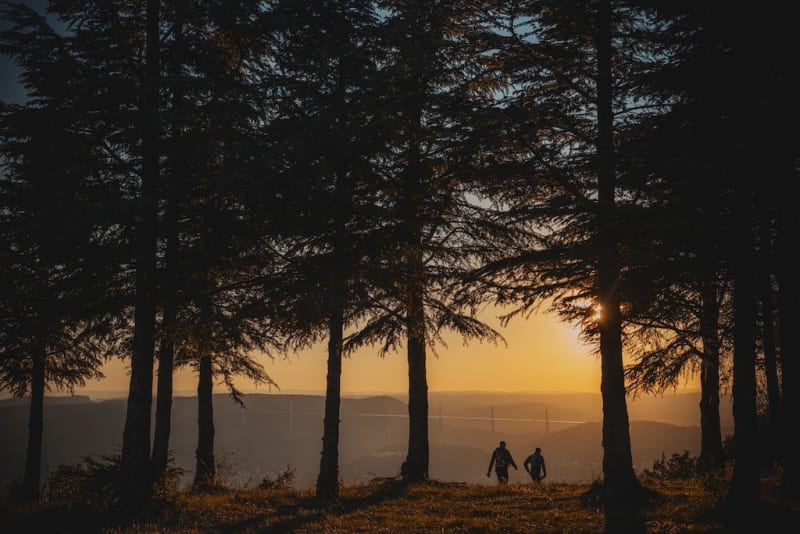
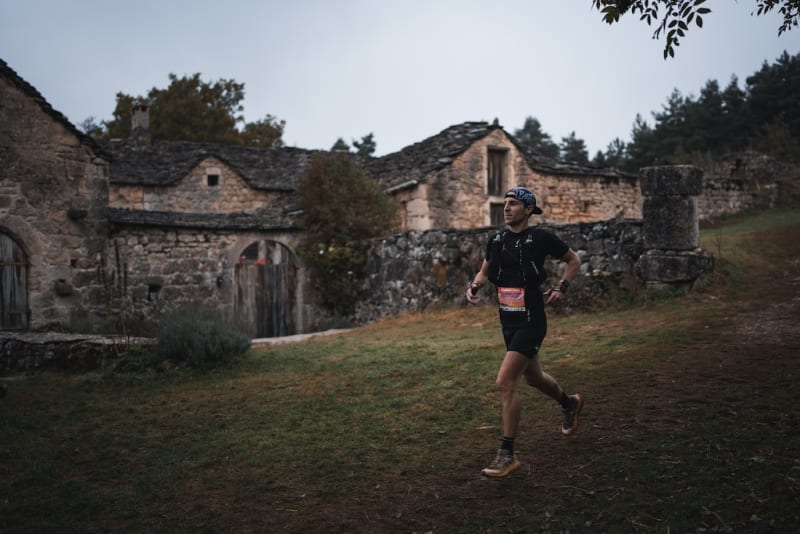
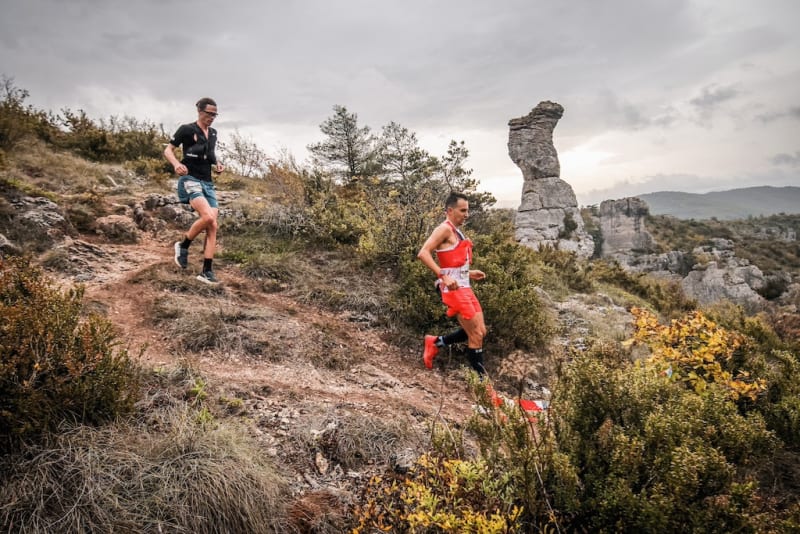
The organizing team has created an atmosphere unique to the event, along with courses that are changed almost every year to showcase the surrounding Causses. From Causses farmhouses to karst formations, spectacular rock faces and remote villages, the race takes runners deep into a protected wilderness. The Cade farm, the Croix de Paulhe, the Grotte du Hibou, the Dourbie gorges and La Pouncho d’Agast are just some of the unforgettable, legendary hotspots found across the various courses.
Scheduled at the end of the season, often on the same weekend as the Grand Raid de La Réunion, the Templiers is the perfect way to round off the trail year in style, surrounded by thousands of fellow enthusiasts.
Sunday’s Grand Trail, the weekend’s headline event
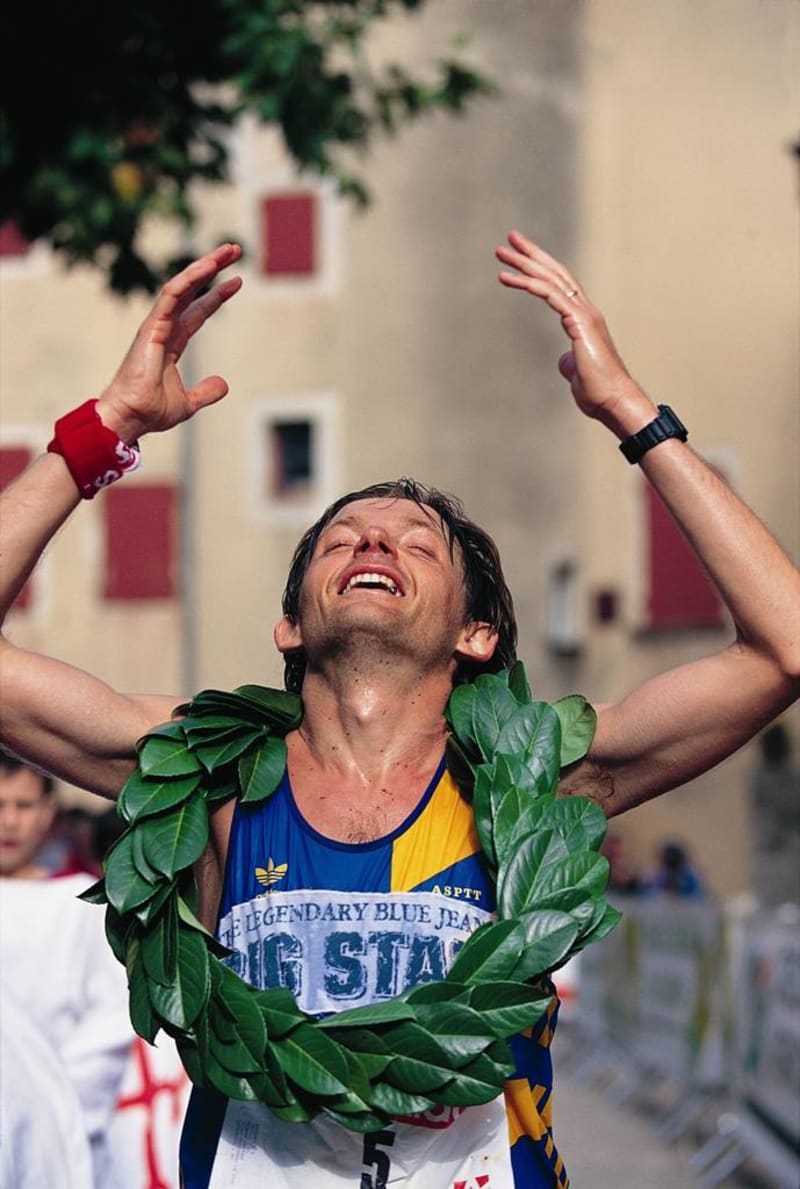
The headline race, the Grand Trail des Templiers, covers around 80 km with 3,500 m of elevation gain and has made the event famous. Every great name in trail running, past and present, has added this race to their résumé. They include pioneer Patrick Renard, with two wins; Gil Besseyre, also a two-time winner; Vincent Delebarre, another two-time winner; Nepal’s Dawa Sherpa; Switzerland’s Christophe Jaquerod, with two victories; and France’s Karine Herry, a nine-time winner of the Grand Trail des Templiers, as well as the 2006 UTMB and the 2006 and 2011 Diagonale des Fous.
 © Yves-Marie Quémener
Another indispensable figure in the race’s history is Frenchman Thomas Lorblanchet, whose four victories remain the record. His 2011 finish is particularly memorable: he took second place behind Britain’s Andy Symonds, hand in hand with Thierry Breuil, who had taken the time after the final descent to put on the Templar accessories: sword, helmet and shield.
From the 2010s onwards, as the field became increasingly international, overseas stars began discovering the charms of the Causses and engaging in fierce battles with France’s best men and women.
 © Cyrille Quintard
 © Cyrille Quintard
 © Cyrille Quintard
 © Cyrille Quintard
 © Cyrille Quintard
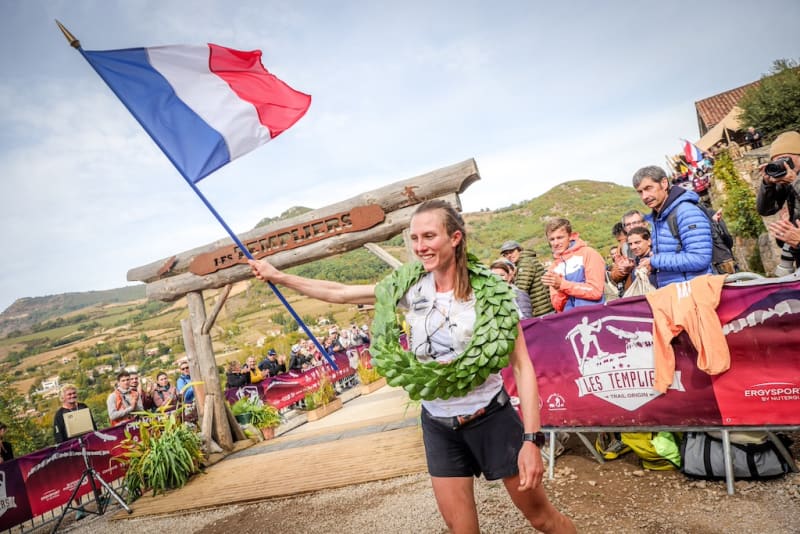
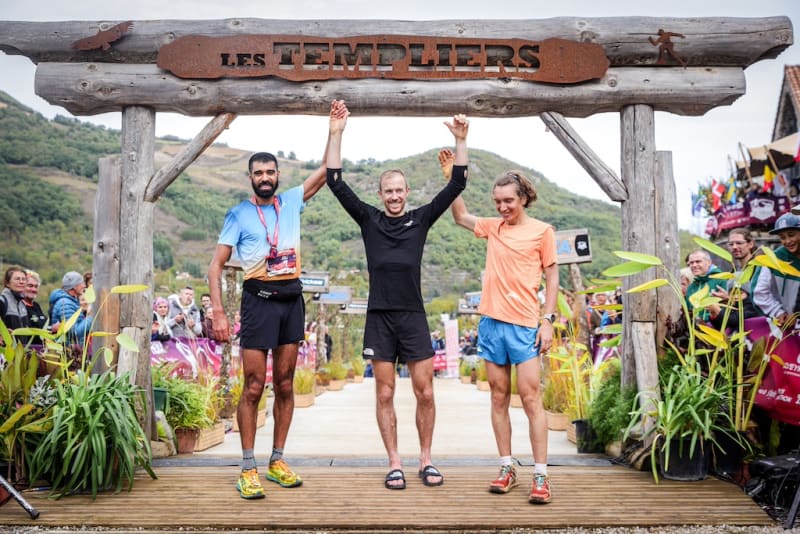
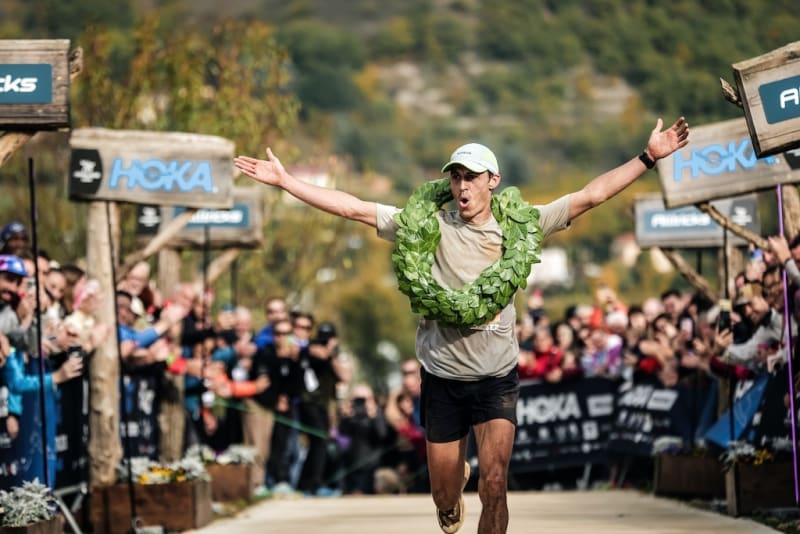
Benoît Cori, a two-time winner, Sébastien Spehler, also a two-time winner, and Maud Gobert passed the laurel crown to Spain’s Núria Picas, a three-time winner, New Zealanders Ruth Croft and Caitlin Fielder, Britain’s Jonathan Albon, a two-time winner, American star Jim Walmsley in 2022, and more recently Thomas Cardin, Pierre Livache, Julie Roux and Camille Bruyas.
Despite approaches from major sports-event companies, the Templiers has remained fiercely independent. Today, it is still a family affair, with Odile Baudrier and Gilles Bertrand’s children, Anaïs and Kevin, involved since they were young. Kevin is now co-director and head of partnerships and development.
 © Cyrille Quintard
The main races at the Festival des Templiers
Grand Trail des Templiers - 80 km / 3,500 m D+
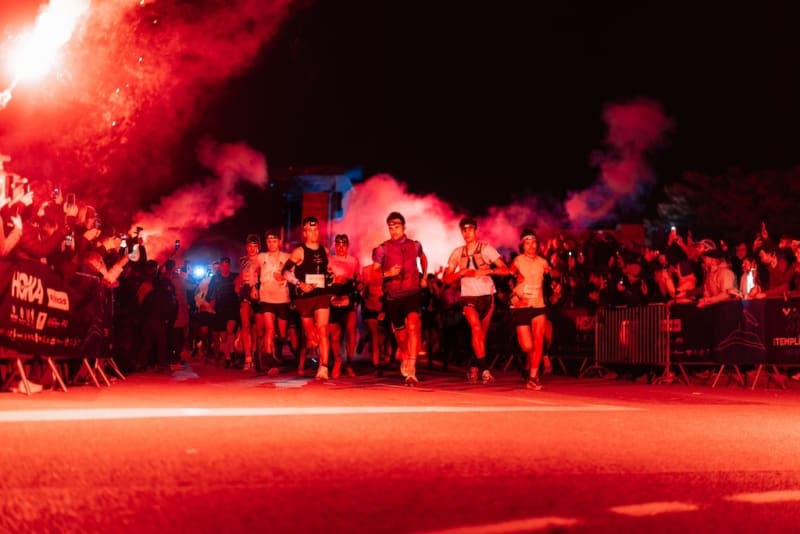
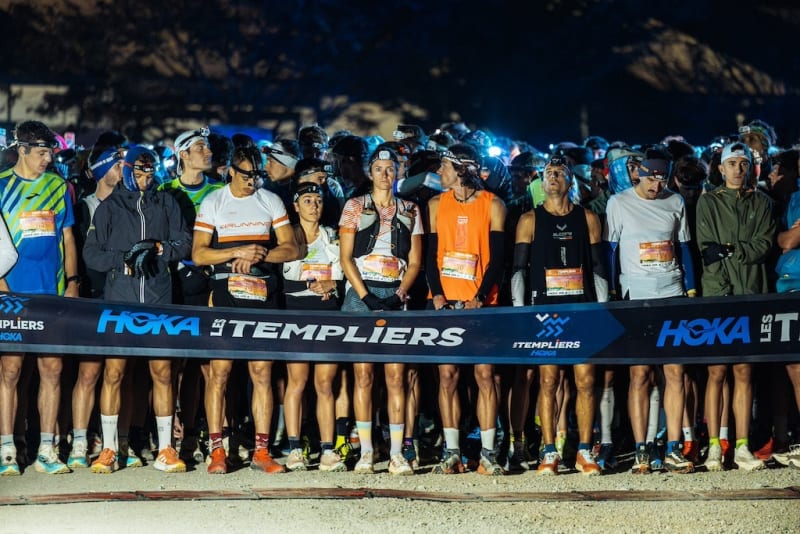
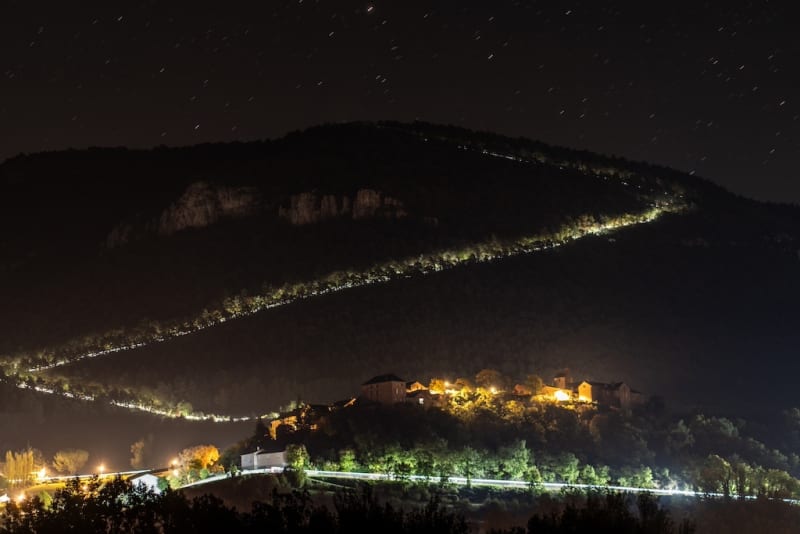
The start in Millau is a unique, deeply emotional experience in the pitch-black night, lit only by flares. The field of 2,500 runners stretches out over the kilometres, especially on the brutal climb to Carbassas, broad but extremely steep, which hauls the pack up onto the Causse Noir.
The race continues along beautiful forest tracks through Betpaumes, Le Sonnac and La Tour. A high-level descent leads towards Peyreleau above the Tarn valley, with the first singletrack section and the first aid station, cheered on by several thousand spectators.
 © Guillaume Salem
The second major challenge is the traverse along the Jonte to the Saint-Michel hermitage, the Saint-Jean-des-Balmes chapel and the Causses village of Saint-André-de-Vézines.
The route then heads south towards Montméjean, the Rajol cliffs and Roquesaltes with its iconic arch, before climbing back onto the Larzac: centuries-old box trees, exposed singletrack and airy sections above the Pompidou cliffs.
Runners then tackle the Dourbie Valley via the La Clapade cliffs, descend the Roubelier towards Massebiau, and finish on the Causse Noir.
A technical descent through the CAF section, the climb to the rocky prow of La Pouncho d’Agast via Le Faux Monnayeur, the Grotte du Hibou, and finally the arch of happiness and deliverance in Millau.
Endurance Trail - 100 km / 4,000 m D+
Three Causses are on the menu: Causse Noir, Causse Méjean and Larzac, along with three valleys: the Dourbie, Jonte and Tarn. The route also passes through numerous medieval Causses villages, including Peyreleau, Le Rozier, Le Truel, Saint-André-de-Vézines, Montméjean, La Roque-Sainte-Marguerite, Pierrefiche and Mas de Bru.
It is an extremely varied course, with singletrack sections that make you feel as though you are disappearing into a wilderness untouched by time.
It begins with a long traverse of the Causse Noir, 20 km to “warm up” and spread the field without any bottlenecks.
The route then moves through the majestic Tarn gorges and along the Balcon du Vertige before descending to the hamlet of Le Truel in the Jonte Valley. From there, another section via La Planque leads to the climb to Espaliès, followed by the descent to the Saint-Michel hermitage.
 © Cyrille Quintard
The route then joins the Intégrale course, following the left bank to the top of the cliffs overlooking the Jonte Valley on a highly technical trail where the pace stays low despite the modest elevation gain. At the famous prehistoric mushroom, runners head for the historic Saint-Jean-des-Balmes chapel and the welcoming village of Saint-André-de-Vézines for the fourth aid station.
Montméjean soon follows, then the climb to Roquesaltes and the technical descent from La Roque-Sainte-Marguerite through the Riou Sec ravine. The route then heads to Millau along the Larzac cornices. It is a breathtaking finish, even at night, high above the Dourbie Valley, which runners must descend and climb back out of at Massebiau to reach Le Cade. The now-iconic descent through the Grotte du Hibou brings the race home.
Marathon des Causses - 33 km / 1,550 m D+
A balanced course that is occasionally wild and technical, opening the door wide to trail running and dreams of bigger adventures. The Causse Noir will reveal all its secrets to runners tackling this marathon, which climbs above the vast cliffs overlooking the valleys before entering the conifer forests and crossing the countless ravines cutting through the plateau. Broad tracks then link up with some of the finest technical trails above the Tarn Valley, leading to Roc Pointu and the beautiful descent to La Cresse.
 © Cyrille Quintard
From there, the route climbs beautifully back onto the plateau via the La Cresse ravine and fine sections through the Canoles, then joins the forest tracks leading to Lauglanou and drops onto the Dourbie cornices, with a descent to Massebiau followed by a technical climb via the Rocher Troué. Unforgettable. The tracks are sandy and rocky, with no shortage of traps or technical sections. The Causse rules here, and it is up to the trail runner to tame it. A superb, highly exposed final section along the cornices, safe but airy, with the Millau Viaduct as a backdrop.
Intégrale des Causses - 60 km / 2,600 m D+
The race starts in the heart of the beautiful village of Peyreleau, well known to the Templiers as the first aid station on the Grand Trail, where the atmosphere is electric on race Sunday. The course begins with a short loop above the village to spread out the field before joining the beautiful track alongside the Jonte at a relaxed pace. Make the most of these two kilometres along the valley floor to admire the giant shapes of the Causse Méjean cliffs emerging from the darkness.
Then comes the famous climb to the Saint-Michel hermitage, up onto the Causse Noir, followed by the equally famous cornice trail, which offers exceptional views over the Jonte Valley once daylight arrives. At the prehistoric mushroom, the course heads for Saint-André-de-Vézines via the Saint-Jean-des-Balmes chapel, along beautiful forest tracks where runners can finally open up their stride.
 © Cyrille Quintard
The route then rejoins the classic Intégrale course through La Roujarie, Saint-André, Montméjean, Roquesaltes and La Roque: all the classics before the Larzac section. The finish remains unchanged, with the full descent to Massebiau through the Roubelier ravine, followed by the climb to Le Cade and, of course, the course high point at La Pouncho d’Agast before the final charge to the finish through the Grotte du Hibou.
La Rock’Voizine - 50.5 km / 1,834 m D+
The new addition to the 2026 schedule. Inspired by the Intégrale des Causses and the Marathon du Larzac, this is the third traverse to be offered as part of the festival. It is an Intégrale across the Causse Noir, starting in Saint-André-de-Vézines, which has welcomed the Templiers for 16 years with true Causses know-how. Three outstanding sites feature on this relatively accessible Rock’Voizine, with manageable elevation gain and a slightly gentler profile than the other Templiers distances:
- Montméjean, the Rajol cliffs and Roquesaltes
- The Caoussou cliffs
- The Boffi cliffs and the famous Boîte aux Lettres
 © Cyrille Quintard
In short, this is the Causse Noir in its purest form, with highly technical sections broken up by transition zones on forest tracks linking the sites of Montplo, Le Maubert, Longuiers, Le Monna and Lauglanou, before the final descent from Carbassas.
Marathon du Larzac - 35 km / 1,450 m D+
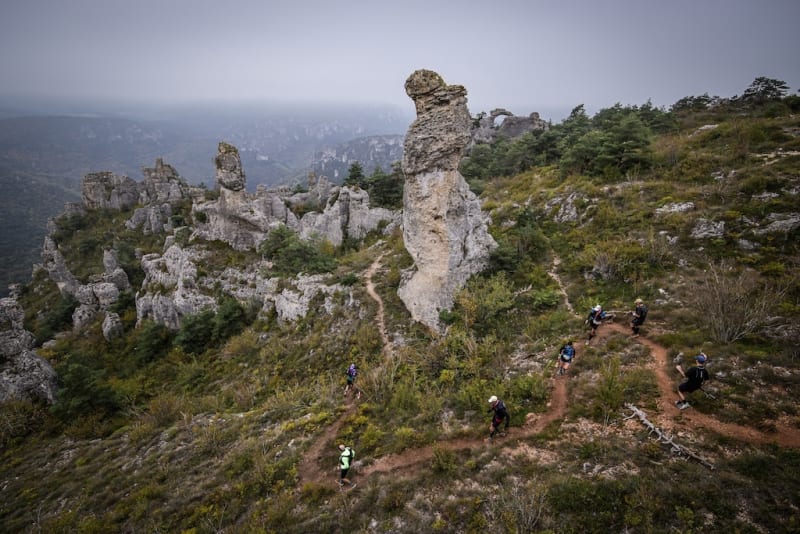
The Marathon du Larzac starts in the hamlet of La Salvage, a peaceful haven at the foot of this Causses estate and its old Templar church. The course begins with a short loop around the estate before heading for Pierrefiche. It then returns to La Salvage for an aid station, before plunging into a beautiful descent through the Laumet ravine and climbing to the La Clapade cornices.
 © Cyrille Quintard
At the Font Longue ravine, the route descends to the trail alongside the Dourbie for 1.5 km, then joins an old local path climbing back onto the Larzac via Grand Camp, with 350 m of elevation gain. At the Mas de Bru farm, runners tackle the descent to Massebiau through the Roubelier ravine.
The finish is unchanged: a direct, steep climb onto the Causse Noir towards the Cade farm, gaining 480 m, where the traditional aid station is set up in the beautiful sheepfold. Then it is on to La Pouncho, its cornice and its orientation table. A quick glance at the view, and it is already time for the famous descent to Millau, passing through the Grotte du Hibou.
La Boffi Fifty - 46.5 km / 2,005 m D+
This middle-distance race is a chance to test yourself before stepping up to the Intégrale or the Templiers. Be warned: the finish is highly technical and rugged, the average pace is low, and a solid level of fitness is required. The race opens proceedings on Saturday, following the easy, runnable Marathon des Causses course, extended by a highly technical and wild loop through the world of the Boffi’s majestic cliffs.
After two kilometres on the road to the hamlet of Carbassas, runners face a hard climb to the top of the Causse Noir. From there, a beautiful traverse heads north before dropping towards Roc Pointu and its technical descent to the village of La Cresse.
The route then climbs through a deeply enclosed valley, with narrow rocky canoles near the top. Back on the plateau, beautiful, sometimes sandy forest tracks offer runners the chance to stretch their legs. It is runnable, easy, time to enjoy and savour the moment.
 © Guillaume Salem
 © Cyrille Quintard
 © Greg Alric
 © Cyrille Quintard
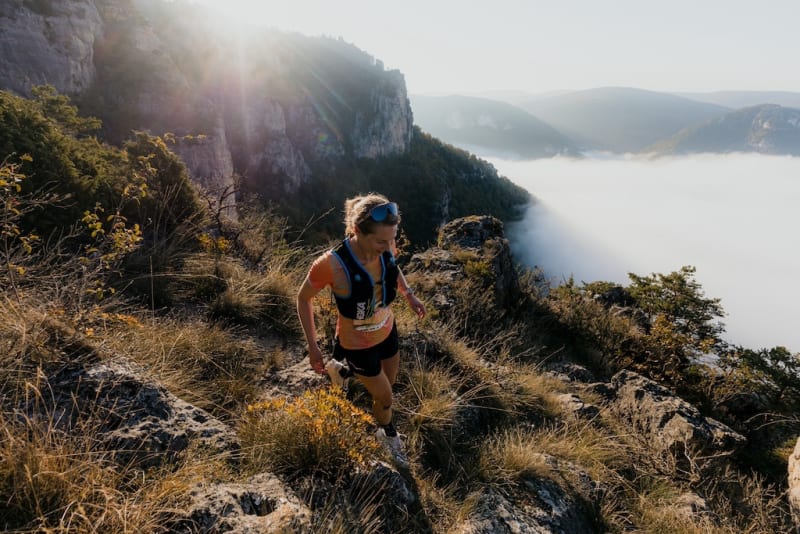
After Lauglanou, runners head towards Longuiers and the immense Boffi cliffs overlooking the Dourbie Gorges. This is high-level trail terrain, with paths typical of the Grands Causses. The landscape changes completely. It is extremely technical, rocky and wild, with the cliffs constantly overhead. Footwork is everything.
There is little running and not much forward progress. But what a setting, what a playground. This course is made for trail runners who like to commit fully on technical ground. After plunging down the Monna ravine, runners climb back to the Cade farm for an aid station before taking on a classic finish through the spectacular landscape of La Pouncho d’Agast and its immense rocky collar.
Also on the schedule:
La Monna Lisa - 31 km / 1,200 m D+
Dourbie Formi - 23 km / 1,230 m D+
La VO2 Trail - 17.8 km / 689 m D+
Les Troubadours - 13.2 km / 570 m D+
La Templière - 7.7 km / 290 m D+
La Junior Trail - 17.8 km / 689 m D+
KD Trail - 7.7 km / 290 m D+
Kinder Trail
Adaptive race
Grand Trail des Templiers roll of honour
1995 | Patrick Renard (France) | Corinne Favre (France) |
1996 | Patrick Michel (France) | Annie Floris (France) |
1997 | Patrick Renard (France) | Karine Herry (France) |
1998 | Jérôme Trottet (France) | Karine Herry (France) |
1999 | Vincent Delebarre (France) | Karine Herry (France) |
2000 | Vincent Delebarre (France) | Ginette Moretto-Rumeau (France) |
2001 | Gil Besseyre (France) | Karine Herry (France) |
2002 | Gil Besseyre & Jérôme Trottet (France) | Karine Herry (France) |
2003 | Gil Besseyre (France) | Karine Herry (France) |
2004 | Olivier Bulle (France) | Karine Herry (France) |
2005 | Dawa Sherpa (Nepal) & Christophe Jaquerod (Switzerland) | Karine Herry (France) |
2006 | Gilles Guichard (France) | Karine Herry (France) |
2007 | Thomas Lorblanchet (France) | Béatrice Fanget (France) |
2008 | Thomas Lorblanchet (France) | Kenza Pedrero (France) |
2009 | Thierry Breuil (France) | Maud Gobert (France) |
2010 | Thomas Lorblanchet (France) | Isabelle Jaussaud-Grenier (France) |
2011 | Andy Symonds (Great Britain) | Maud Gobert (France) |
2012 | Fabien Antolinos (France) | Núria Picas (Spain) |
2013 | Thomas Lorblanchet (France) | Núria Picas (Spain) |
2014 | Benoît Cori (France) | Núria Picas (Spain) |
2015 | Benoît Cori (France) | Ellie Greenwood (Australia) |
2016 | Miguel Heras (Spain) | Jasmin Nunige (Switzerland) |
2017 | Sébastien Spehler (France) | Ruth Croft (New Zealand) |
2018 | Sébastien Spehler (France) | Azara García (Spain) |
2019 | Race cancelled | Race cancelled |
2020 | Race cancelled | Race cancelled |
2021 | Jonathan Albon (Great Britain) | Ruth Croft (New Zealand) |
2022 | Jim Walmsley (USA) | Camille Bruyas (France) |
2023 | Jonathan Albon (Great Britain) | Julie Roux (France) |
2024 | Thomas Cardin (France) | Caitlin Fielder (New Zealand) |
2025 | Pierre Livache (France) | Caitlin Fielder (New Zealand) |

