
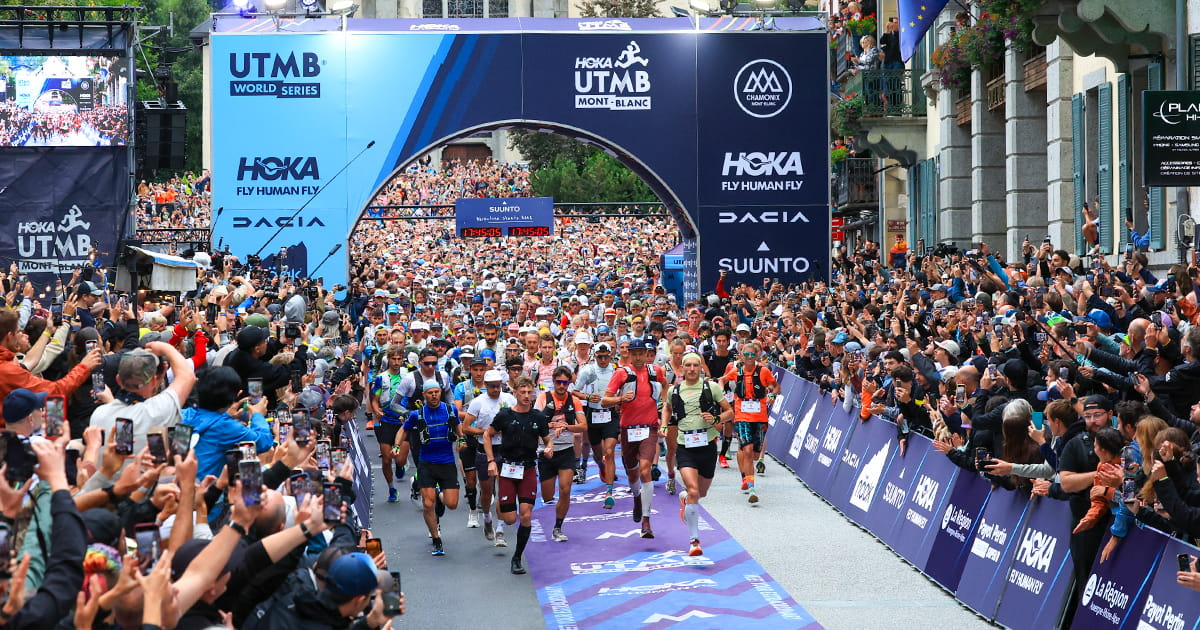
Why mandatory kit is non-negotiable at UTMB in Chamonix
Signing up for a mountain trail, and even more so an ultra like UTMB Mont-Blanc, isn’t something to take lightly (without over-dramatizing it, either). One key to getting it right is anticipating the violent weather swings that can roll in within minutes at high altitude. That’s why the organisers require mandatory kit in your race pack. You might never use it. Or it might save your life.
A scene I witnessed recently in a gondola heading up to the start of a mountain trail at 2,800 m: a runner from the Paris region (but let’s not point fingers) is hit by a panic attack as she sees the steep slopes and jagged terrain unfolding beneath her. As the cabin climbs, it reveals the route she’ll have to tackle: more than 70 km with 3,300 m of vert, much of it above 2,500 m. The poor athlete also hadn’t clocked that it can be blazing hot and sunny in the valley, while that same sun up high feels a lot less warm, and the wind, often present at that altitude, can drop the perceived temperature by several degrees…
A small example of the sometimes surreal behaviour you’ll see in the pack, with newcomers who don’t always grasp what mountain terrain and conditions are really like.
Mountain “guys” and “girls”, and anyone with real experience in this specific environment, know that even the most seasoned can get caught out by fickle, fast-changing weather. You always need to have what it takes with you to react when conditions flip. That’s exactly why the organisation’s mandatory kit matters.
Don’t copy the elites
When you’re heading into the mountains for dozens of hours, as at UTMB Mont-Blanc, spending one or two nights out there, you have to take precautions to protect yourself and move safely, without fear.
Yet the organiser’s mandatory kit is often mocked as a drag on performance. You’ll also hear that the elites don’t play by the same rules. That’s obviously wrong, except that they know how to read the rulebook properly: interpret it without dodging it, and optimise the mandatory list to shave a few grams off their backs. The Kilian Jornet episode at UTMB 2008 was telling. Coming from ski mountaineering, where everyone hunts down every unnecessary gram, the Catalan prodigy was suspected of cheating after his surprise UTMB win. After several in-race checks and another at the finish, his victory was confirmed. Kilian Jornet did have all the mandatory kit on him, but he’d “optimised” it so it interfered as little as possible with his progress.

That elite obsession with minimalism is one of those marginal gains that can make the difference for a podium or a win.
But for most of the field, a few extra grams won’t change much in your final result. So there’s no point copying the elites on that front: you simply don’t have their skills or technique. And you’ll likely spend (a lot) more time than they do in the mountains.
From furnace to snowstorm in a few hours
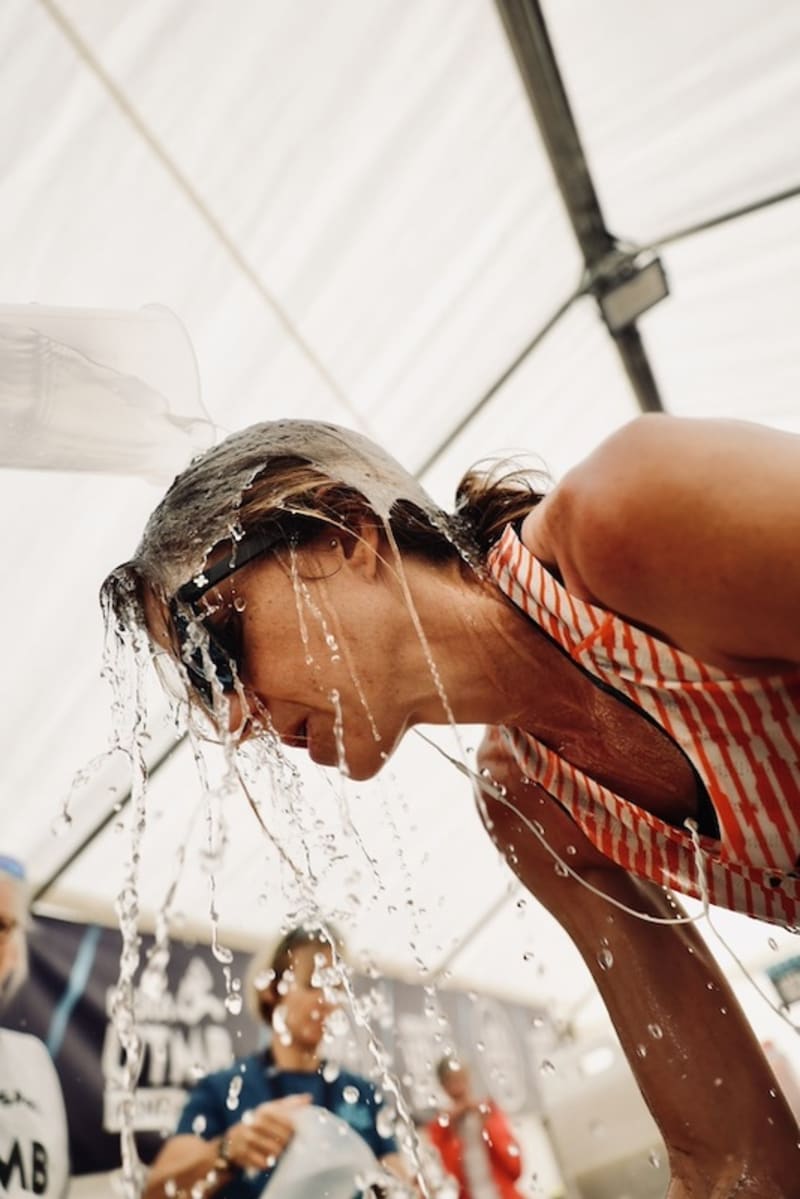
In August in the Mont-Blanc massif, it can be scorching hot (over 30°C), but also bitterly cold (down to a -10°C wind chill above 2,000 m), with rain, hail, and even snow. UTMB Mont-Blanc’s history is dotted with these extreme weather episodes, forcing last-minute adaptations.
The 2010 edition was stopped a few hours after the start for safety reasons linked to the weather. The organisation didn’t want to let runners commit to high mountain terrain as conditions deteriorated. A replacement race was offered the day after the cancellation, shortened to 88 km.
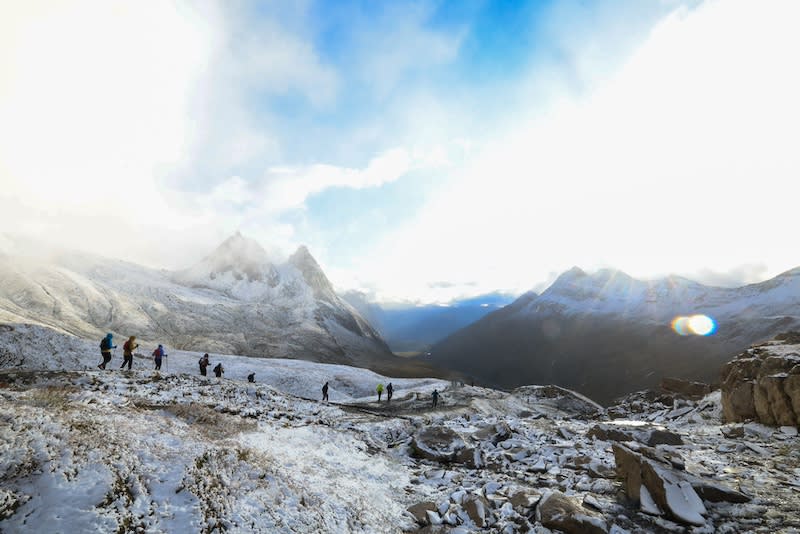
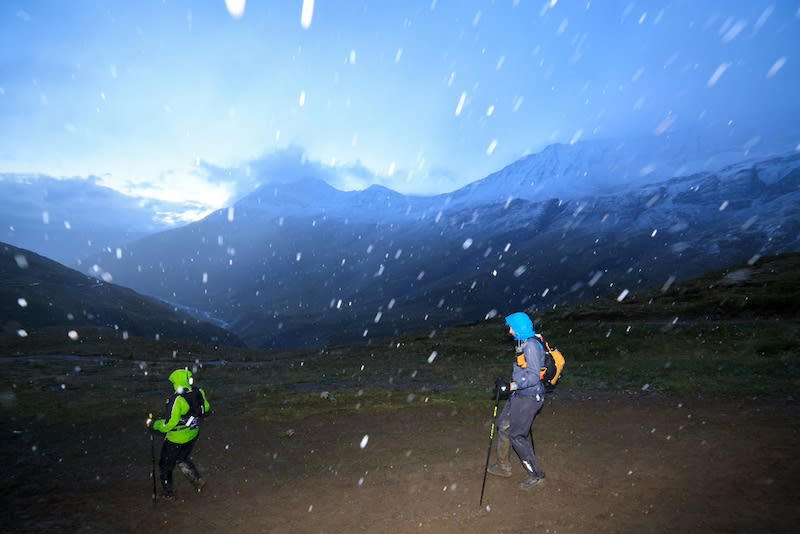
In 2011, with thunderstorms and snowfall on the highest passes, the course was modified and major changes were made: first a 5-hour delayed start, to let the storm pass. Then a reroute in Switzerland, pushing on to Martigny instead of taking the Bovine climb, where safe passage could no longer be guaranteed; then the organisation sent runners straight up to La Flégère, avoiding the Col de la Tête aux Vents, which was too exposed.
 © Franck Oddoux/UTMB Group
 © Franck Oddoux/UTMB Group
It’s not unusual for the climb up Grand Col Ferret (one of the highest points on the course) to be done in snowflakes, sleet, or rain. Just a few hours earlier, you were patiently waiting on Place du Triangle de l’Amitié, baking in the heat.
A “heatwave” or “deep cold” kit can be triggered at the last minute…
Your carried kit needs to let you face any kind of conditions and get through one to two nights out on the course, depending on your pace. If something goes wrong, it also needs to let you wait for help in sufficiently safe conditions (thanks, for example, to the essential emergency blanket).
The mandatory kit list can also be updated before the start, depending on the latest weather forecast. A “cold weather kit” or a “heatwave kit” can be activated. Participants are notified by SMS several hours before the start. Which is why you need to bring all the gear, even if some items end up staying in the drop bag and never get used…
 © UTMB Group
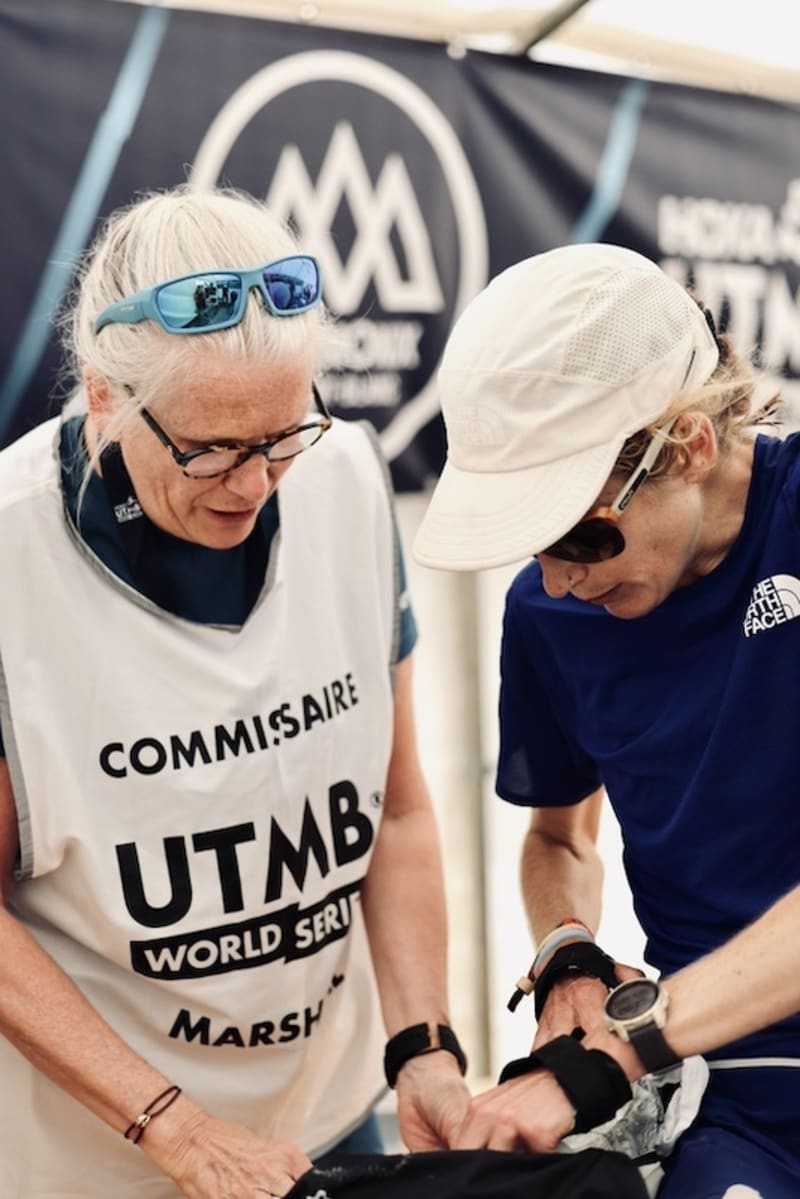
Several bag checks can be carried out on the course in addition to the pre-race check. If a mandatory item is missing, you’ll be hit with a time penalty. The organiser’s list is a vital minimum that every trail runner should adapt to their own abilities.
In this uncertain, fast-changing world of mountain ultra-trail, adaptability is a key part of your performance.
More articles
How to follow UTMB 2026 runners without (too much) damage
Smart ways to follow UTMB Mont-Blanc 2026 with minimal impact: skip the gridlock, use UTMB Mobility, and cheer in the right spots.
Thu, August 20, 2026
Grand Raid Kiprun 3 Vallées Moûtiers: everything you need to know about the July 30 to August 2, 2026 debut
Tarentaise adds a new trail date with the Grand Raid Kiprun 3 Vallées debut, July 30 to August 2, 2026, with seven race formats.
Tue, August 4, 2026