
72 years on, the ASICS SaintéLyon still isn't showing its age
 © Infinity Nine Media / Sebastien Clavel
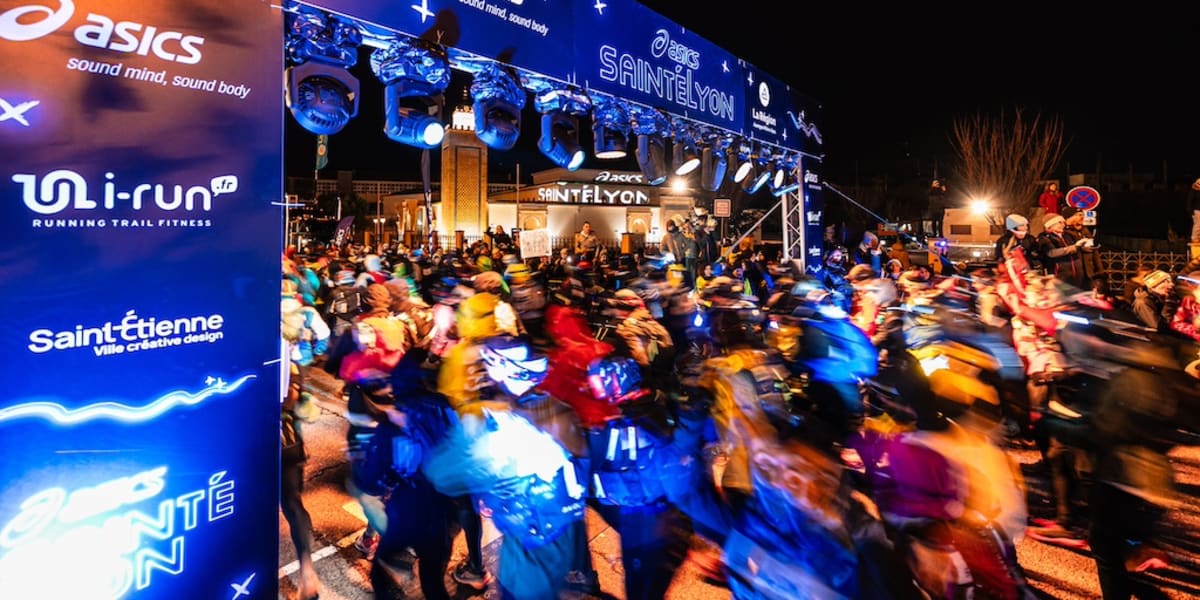
The ASICS SaintéLyon lines up for its 72nd edition on November 28, a landmark in the history of running in France. The pioneer of French trail and nature racing got off to a shaky start and drew a few skeptical looks. It has since dug in for good on the calendar and now pulls in thousands of runners from every background. The 20,000 bibs for the 2026 edition went like hotcakes once again.
The last weekend of November has become a fixture for endurance runners in the broadest sense. Beginners or veterans, road runners or mountain people, triathletes or adventure racers: everyone in the sport converges on the SaintéLyon, nicknamed the Doyenne of Ultra.
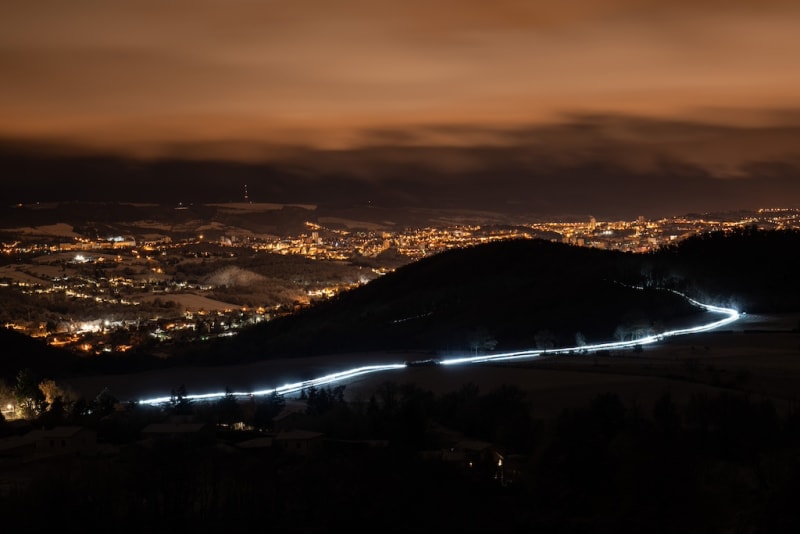
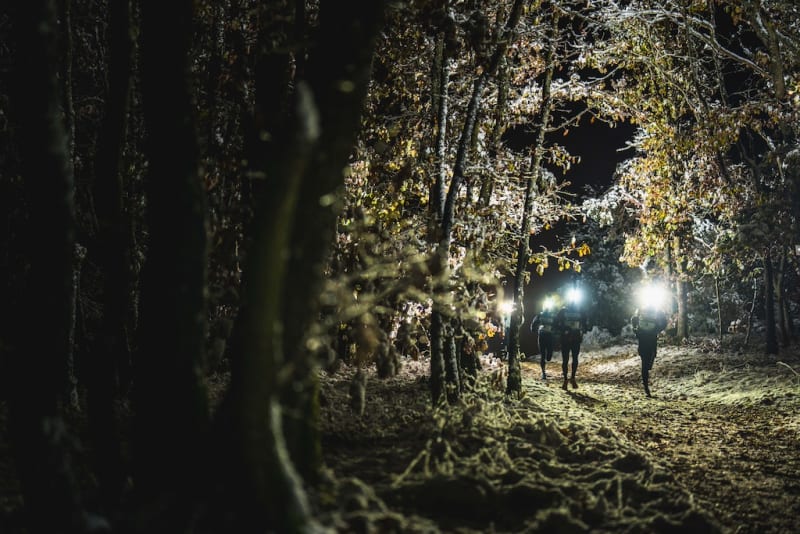
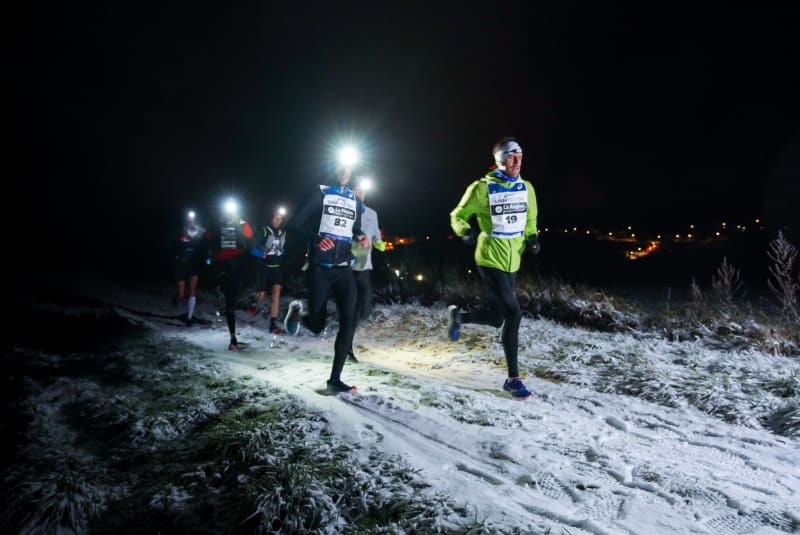
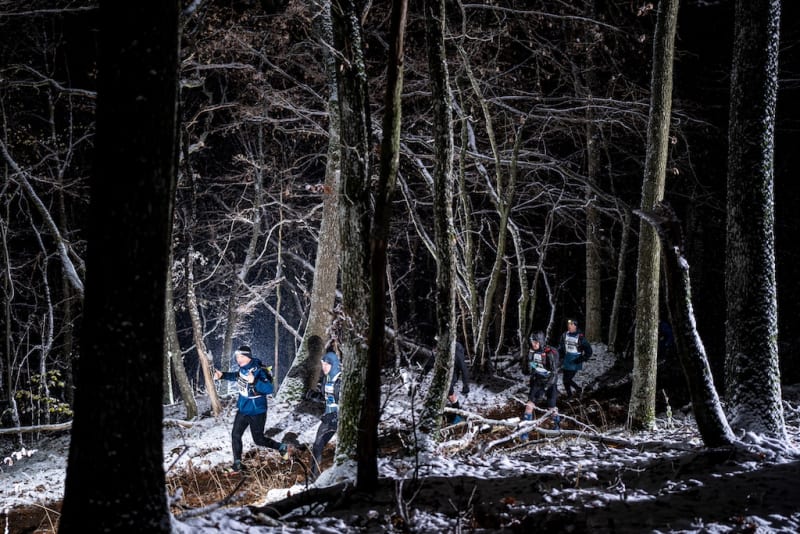
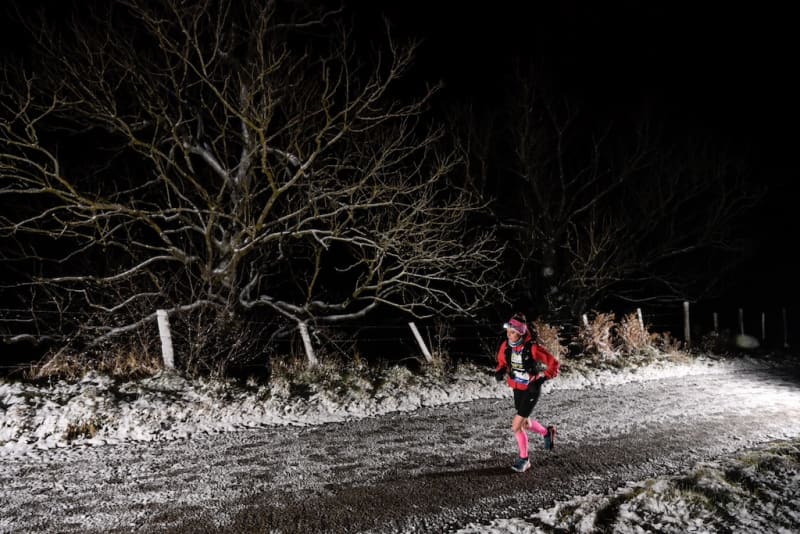
With its clever mix of road, trails, cold, night, rain, mud and other delights, the SaintéLyon has a whiff of adventure that draws people well beyond the running world. That pull makes it the "biggest trail race in France" by number of participants.
 © Peignée Verticale / D. Rosso
 © Infinity Nine Media / Lilian Menetrier
 © Peignée Verticale / A. Mesnage
It began as an untimed walking event, dreamed up by… cyclists
The story of this night-time foot raid, held in early winter over about sixty kilometers originally, is intertwined with that of modern running. It's a long way from the days when organizers from the CT Lyon cycling club cut a path, sometimes on skis (winters were harsher back then), through snow and brambles with a handful of brave hikers, somewhere above Sainte-Catherine. Runners weren't behind this race at all. It was cyclists looking to stay fit over the winter.
In 1951, the "Cyclotouristes Stéphanois" and the "Cyclotourisme Lyonnais" created a 60 km winter hike run over two days, alternating between Saint-Etienne and Lyon along the GR7. The first participants had to get through all 64 km of this night raid.
Only a handful tried it at the time, in mountain boots and backpacks. The raid was spread over two days, with a night in an inn at Sainte-Catherine. The main goal was simply to keep the cycle tourists in shape through the winter season.
Running was banned in the early editions
The event evolved bit by bit and took shape edition after edition. Growing participation led to the raid being timed over a single night, which turned it into a walkers' competition (running meant disqualification) on a 63.2 km course. Nobody imagined it would be possible to link the two big regional cities at a run, non-stop. Within a few years, winning times fell from 9h to 7h30, a symbolic figure: it was the time stagecoaches took to get from Lyon to Saint-Etienne in the last century.
From walking to running
The sometimes extreme conditions, and the night, made it a demanding race. In the late 1970s, off-stadium running and free-style events took off, largely thanks to better-cushioned shoes and the spread of modern training methods. That sounded the death knell for walking.
In 1977, runners were finally allowed to run. The SaintéLyon hit its first participation record with more than 4,000 entrants (walkers and runners). It was also the edition with a record number of DNFs. Only 40% of starters made it to the finish line.
 © Peignée Verticale / D. Rosso
 © Peignée Verticale / A. Mesnage
 © Peignée Verticale / M. Daviet
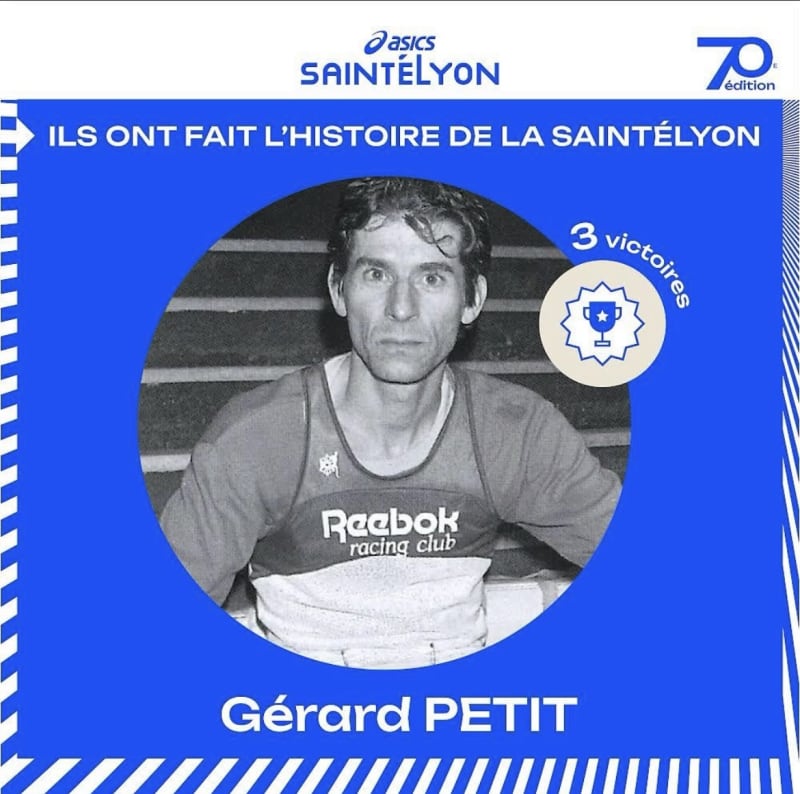
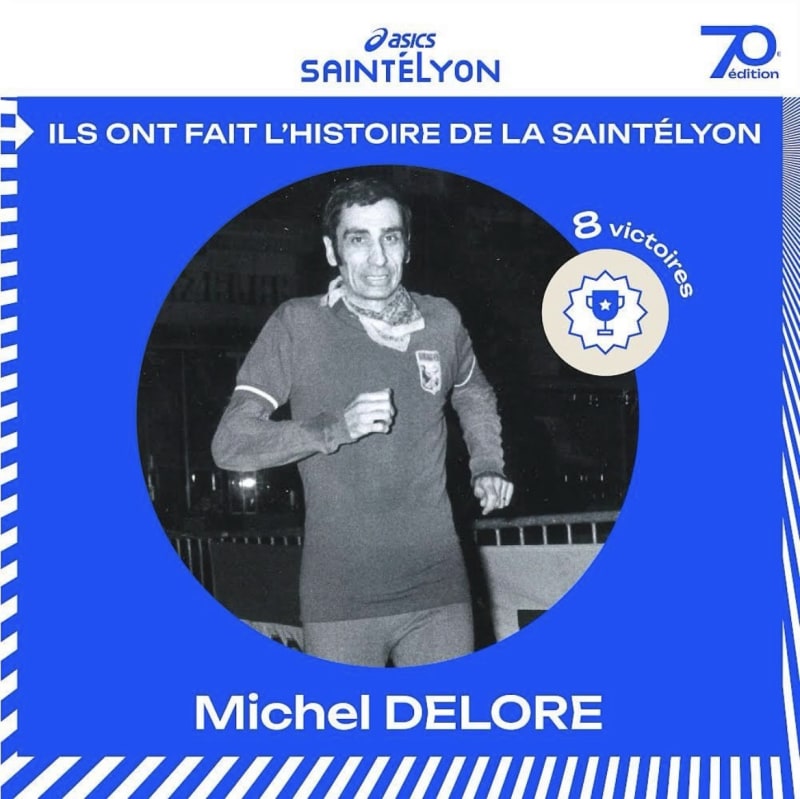
Once the fad and the illusions faded, the SaintéLyon was for a time branded one of the very hard races. Numbers dropped and it became a specialists' affair. Michel Delore was one of them. Athlete, journalist and writer, he won the race eight times between 1970 and 1980, first walking and then running, and set the first running record for the distance in 5h20. Runners like Gérard Petit (4h44) and Maurice Mondon (4h31) then smashed that benchmark one after the other. Gérard Petit still holds the record in the Lyon to Saint-Etienne direction, in 4h47.
 © Extra Sport
 © Extra Sport
The 1990s and 2000s: a turning point in the race's popularity
The 1990 edition left its mark and came to symbolize a transition. At midnight it started snowing at the start in Lyon, and the snow quickly reached 70 cm at the col de la Gachet. In those conditions, there was no way to guarantee rescue services or get supplies to the aid stations. The organizers decided to stop the race at Sainte-Catherine, but 80 runners kept going anyway and crossed the finish line in Saint-Etienne as heroes.
In 1991, the organizers created relay formats. They became hugely popular and let everyone get a feel for the race's quirks and difficulties over shorter stretches than the solo version.
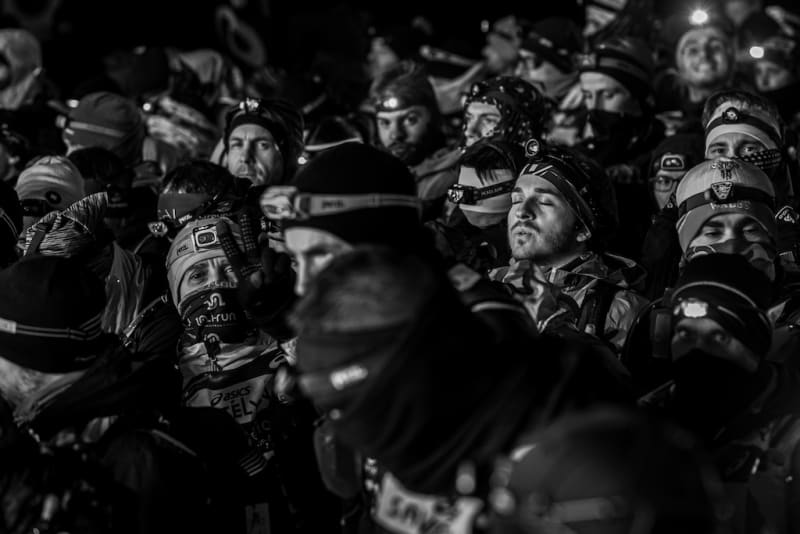 © Infinity Nine Media/ Sébastien Clavel
The race modernized and has since always run between Saint-Etienne and Lyon, with a midnight start and a 15-hour cut-off. Its popularity hasn't dipped over the years, riding the boom in off-stadium running and trail. The arrival of event company Extra Sport in the organization in the early 2000s finished the job of putting the SaintéLyon at the center of the national sporting scene.
More formats, so everyone can taste a bit of adventure
In 2009, the field topped 10,000 runners for the first time. The distance kept stretching, past 60 km, then 70 km, and now nudges 80 km with 2,400 m D+.
In 2010 and 2013, two new, more accessible formats appeared: the SaintExpress (45 km and 1,100 m D+) and the SainteSprint (25 km).
In 2016, the Saintétic arrived as the entry-level race, with 12 km and 275 m D+.
In 2019, the SaintéLyon went the other way and pushed its Ultra format further with the LyonSaintéLyon, a 160 km round trip timed only on the return leg between St Etienne and Lyon.
In 2026, the SaintéVia is born, starting from Mornant, over 36 km and 670 m D+, following the Roman Gier Aqueduct and its 2,000 years of history.
Names from both the road and the trails
With its mixed road and trail profile, the SaintéLyon attracts every type of runner. Some want to leave the tarmac behind, get their feet dirty on the trails and taste a bit of "adventure". Others, regulars of mountain trails, want to take on the "road runners" and work on their speed on a fast course.
On a profile this flat, the "road runners" will certainly have an edge over the "mountain runners". But when conditions turn nasty, with wind, fog, cold, snow, mud or ice, the mountain crowd can sometimes cope better.
I've seen plenty of trail runners show up thinking it would be a walk in the park, and end up finding the SaintéLyon brutally hard, because you're on the gas the whole way and you run almost all of it.
The "pioneers" Michel Delore (eight wins) and Gérard Petit came from road running, as did Jérôme Trottet, five-time winner and the dominant figure of the late 1990s and early 2000s, marathoner Philippe Rémond, winner in 2006, and Brigitte Bec and Denis Morel, who came from the world of 24-hour and 100 km racing.
The "real" trail runners can hold their own, as shown by four wins from former skier Maud Gobert, 2011 trail world champion, second place for Corinne Favre in 2006 and Karine Herry in 2007, and more recently wins for Caroline Chaverot in 2017 and Camille Bruyas in 2019.
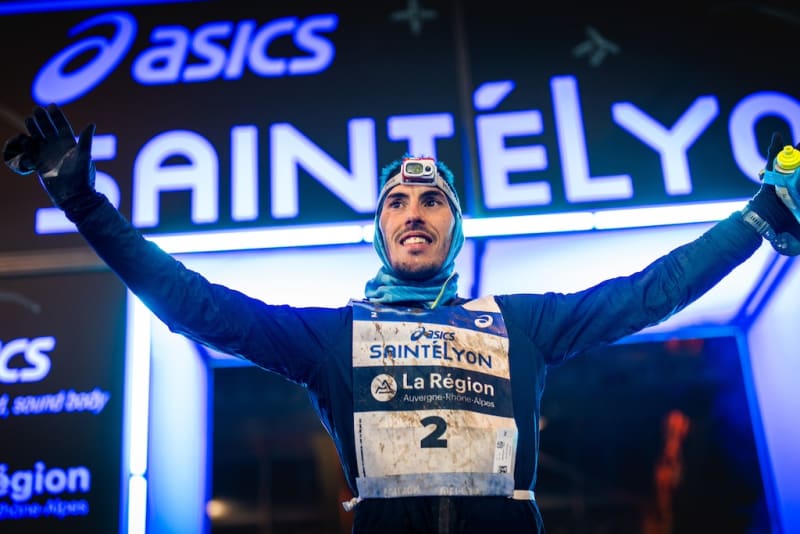 © Lilian Menetrier/ Infinity Nine Media
Still, you need to be able to run fast and for a long time to win the SaintéLyon. Qualities also shown by Emmanuel Gault, Patrick Bringer, Cédric Fleureton, Benoît Cori, Nicolas Martin, Emmanuel Meyssat, Thomas Cardin and Sylvain Cachard, winners of the modern era. With only three foreign winners (Swiss Tsilla Rosell in 2001, Russian Aigul Mingazova in 2018, and Spaniard Andreu Simon Aymerich in 2022), it has to be said that the race remains an essentially French affair.
A new course every year
Another SaintéLyon trademark: the course-setting team insists on changing the route every year, to avoid any monotony and to keep newcomers and regulars guessing. The SaintéLyon may be the Doyenne, but she wants to show she's still nimble, and prove to as many people as possible that she hasn't aged a day despite the years.
SaintéLyon winners since 1993
Year | Men's winner | Women's winner |
1993 | Maurice Mondon | Béatrice Raymann |
1994 | Jean-Franck Proietto | Danielle Bechon |
1995 | Éric Flamand | Valérie Chambry |
1996 | No race | No race |
1997 | Jérôme Trottet | Valérie Chambry |
1998 | No race | No race |
1999 | Jérôme Trottet | Martine Volay |
2000 | No race | No race |
2001 | Jérôme Trottet | Tsilla Rosell (Switzerland) |
2002 | Jérôme Trottet | Brigitte Bec |
2003 | Arnaud Attala | Michèle Leservoisier |
2004 | Gilles Guichard | Lucile Bellotti |
2005 | Jérôme Trottet | Stéphanie Lemée |
2006 | Philippe Rémond | Victoria Pageaud |
2007 | Jean-Franck Proietto | Cathy Dubois |
2008 | Fabien Antolinos | Sonia Furtado |
2009 | Christophe Malardé | Maud Gobert |
2010 | Denis Morel | Maud Gobert |
2011 | Éric Clavery | Séverine Hostier |
2012 | Emmanuel Gault | Cathy Dubois |
2013 | Benoît Cori | Maud Gobert |
2014 | Patrick Bringer | Maud Gobert |
2015 | Benoît Cori and Nicolas Martin | Corail Bugnard |
2016 | Emmanuel Meyssat | Juliette Benedicto |
2017 | Emmanuel Meyssat | Caroline Chaverot |
2018 | Guillaume Porche | Aigul Mingazova (Russia) |
2019 | Cédric Fleureton | Camille Bruyas |
2020 | No race | No race |
2021 | Romain Lieux and Thomas Cardin | Sandrine Fléchet |
2022 | Andreu Simon Aymerich (Spain) | Sarah Vieuille |
2023 | Thomas Cardin | Julie Roux |
2024 | Thomas Cardin | Marie Goncalves |
2025 | Sylvain Cachard | Adeline Martin |