
Strava data suggest trail running builds stronger communities than road running
 © UTMB
As the season approaches its peak, new data from Strava paints a picture of a fast-growing sport in France. More numerous, more active and increasingly female, trail runners are taking to the hills well beyond the traditional circle of seasoned mountain athletes.
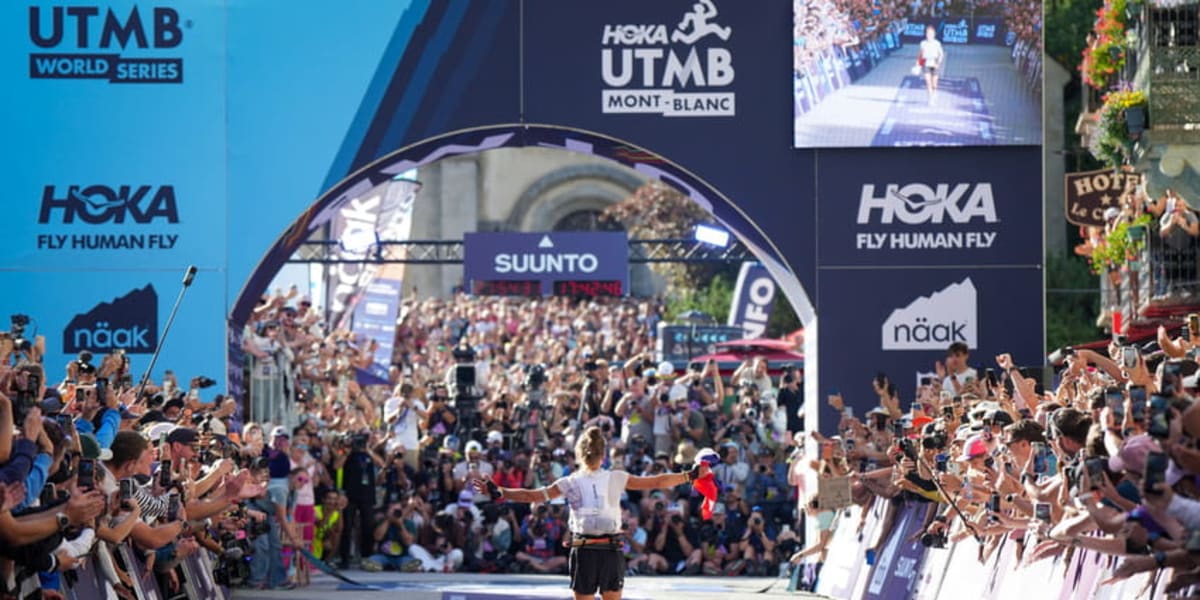
One figure stands out: a trail run is twice as likely to generate engagement, whether through comments or kudos, as a conventional road run. Strava does not explain the gap in this dataset. But it reflects a defining feature of the discipline. Beyond race times and performance, trail running is often about sharing the experience, discovering new places and being part of a community.
Sport is becoming more social
That social dimension extends well beyond trail running. Since the start of the year, more than 185 million hours of activity have been completed in groups on Strava, out of almost 965 million hours recorded in total. In other words, nearly one in every five hours of activity is done with other people. Group sessions also include significantly longer breaks: 33 minutes on average, compared with 11 minutes for solo athletes.
Cycling offers another telling example: a group ride lasts 3 hours 23 minutes on average, compared with 2 hours 2 minutes when riding solo. The difference shows that training with others is not simply about adding more miles. It also changes the time devoted to the activity and its social side.
Athletes are less tied to a single discipline
Another major takeaway is that 33% of athletes have taken up a new type of sport since January. In France, the figure rises to 37%. For trail runners, this move towards greater variety is significant. It points to a less compartmentalised approach to sport, where running, walking, strength training, cycling and swimming can all fit into the same week.
Strava also found that strength training, walking and team sports are particularly concentrated in the early evening, while running and swimming in France see a pronounced peak around lunchtime. Training therefore has to fit around work and the demands of everyday life. Globally, more than one activity in four lasts 30 minutes or less. In France, the proportion is slightly lower, at more than one in five.
Clubs are helping bring people back together
The same shift can be seen in club activity. Millennials, aged between 30 and 45, account for more than 40% of active club members and administrators in France. And when they train in groups, 65% of those activities are carried out mainly with other Millennials.
In trail running, where clubs, local groups and communities have long played an important role, these figures reinforce a broader trend: sport is no longer viewed solely as an individual pursuit measured in miles, elevation gain or finishing times. It is also becoming a place to connect with others.
Ultimately, Strava's data shows an athlete who is less interested in fitting life around training than in fitting training into life. In this new landscape, trail running, with its ability to bring people together on a run, looks particularly well placed to thrive.