
Trail running in the mountains with your dog: how to get into canitrail
By Alexandre Chautemps
Published on Wed, June 24, 2026
Updated on Wed, June 24, 2026
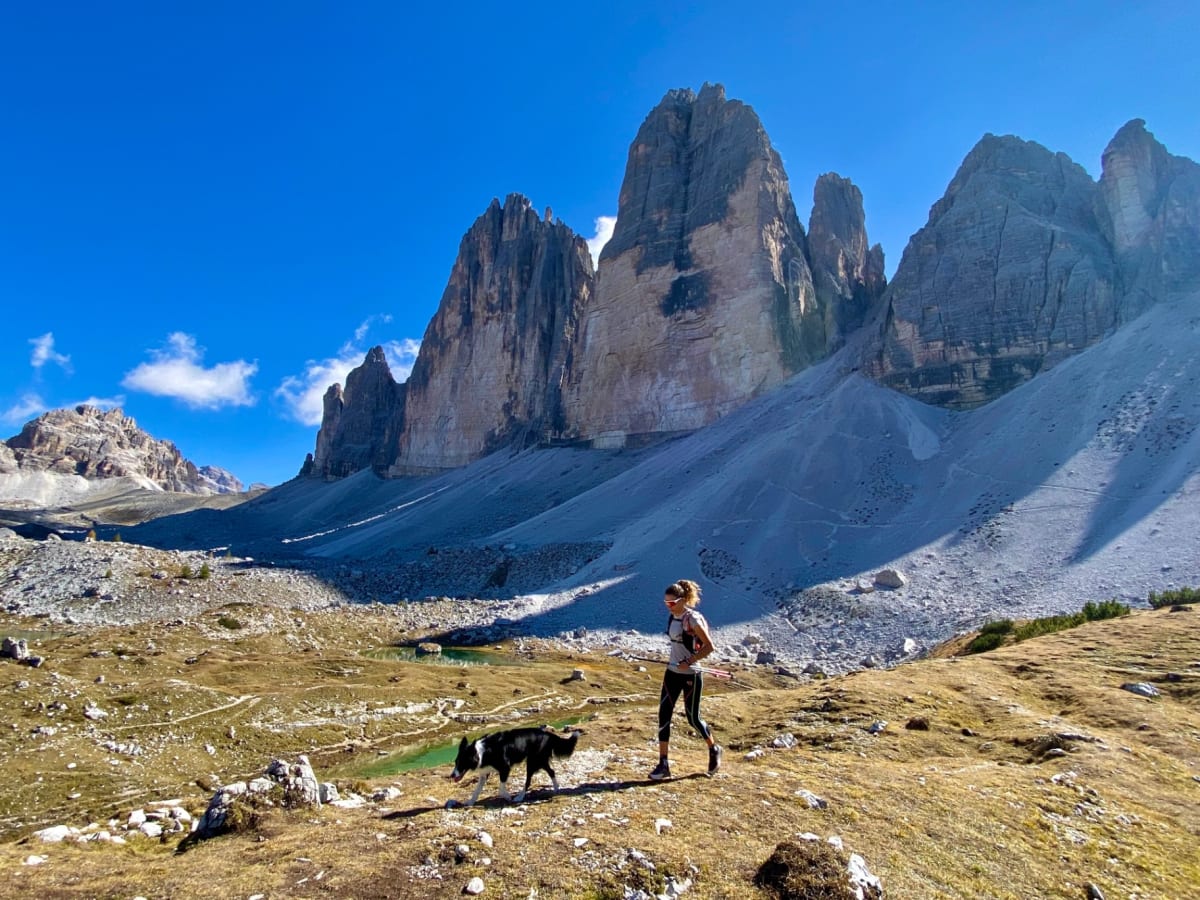
How do you run in the great outdoors with your dog? What precautions should you take in canitrail to respect both your dog and the environment? Tips for trail running with your dog.
If you’re sporty and you love dogs, the ultimate is running with your four-legged companion. Canitrail has everything to like, but it still needs to be done with care—out of respect not only for your dog, but for nature too.
If you haven’t yet, give it a try: spend a little time in the finish area of any trail race in France and watch the crowd. You’ll quickly notice that loads of supporters and runners are accompanied by a dog. And if you know a bit about dog breeds, you’ll soon see that Border Collies and Australian Shepherds are everywhere. How do you explain these two trends? On the one hand, runners find extra motivation—and probably even more enjoyment—when they head out with a companion. The bonus when that companion is a dog is that it’s always excited to get outside, even when it’s raining or freezing! On the other hand, Border Collies and Australian Shepherds are known for their athleticism and love of physical activity. They’ve also been very popular breeds in recent years.
Tip #1: make sure your dog actually likes running
Because animal welfare must come first, it’s essential to make sure your dog truly wants to go running. If you have to drag them off their cushion and pull with all your might once you’ve laced up your trainers, ask yourself whether running is really something your companion enjoys. For them to want to jog with you, the outing has to be pleasant. In general, a dog will be happy to come along if they see it as playtime, a moment of freedom, a chance to sniff, discover new scents, go for a dip… In short, if running is a hobby and a pleasure for you, it needs to be the same for your dog—never a constraint, a source of stress, or synonymous with exhaustion.
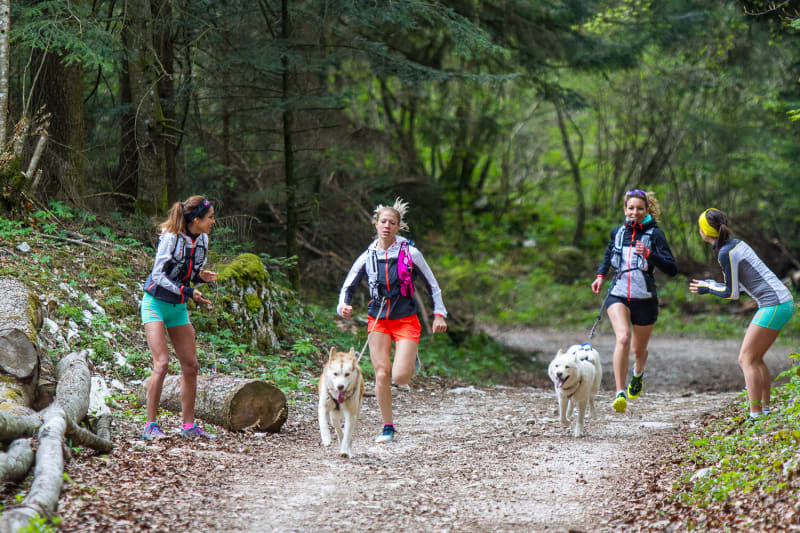
Tip #2: train for trail running with your dog
Start at the right time
When you adopt a puppy, it’s essential to learn about their needs and the rules to follow for training and physical activity. A dog isn’t fully grown until 12 months of age. So you absolutely must wait a year before taking your dog running on trails, otherwise you risk causing joint problems later on. A puppy should be able to walk at their own pace—no more than 15 minutes when they’re very young. You wouldn’t ask a 5-year-old child to run 5 kilometres in the mountains, would you?
Increase the workload gradually
Once your dog is a year old, you can start trail training. Just like with a beginner runner, gradual progress is the key. Start with very short sessions, then slowly increase their duration. Watch out for very high-energy dogs! They may seem to have endless stamina, but you still need to follow a progression and pay close attention to recovery. Don’t hesitate to give your four-legged friend a rest day if you see they’re tired. A dog isn’t necessarily a top-level athlete and, even if they are, they need rest—like any champion who wants to last without getting injured.
Choose routes that suit your dog
Also, choose routes that are suitable for your dog. In summer, when it’s hot, make sure they can drink and wet their paws regularly along the way (lakes, streams…) and try to run in shaded areas. Hydration is important—sometimes even vital—for an active dog. Dogs don’t sweat like we do: they regulate their body temperature by panting and cooling down through their paw pads. That’s why it matters to find water points and let your dog cool off for a few minutes by dipping their paws.
If you’re on technical terrain, watch out for rocks that can damage paw pads and often demand major physical effort from your dog. Where you walk, they often have to jump. The same logic applies in winter when you take your dog out for snow trails or ski touring. Running on snow—especially powder—is very demanding for a dog, all the more so if they’re small or medium-sized and the snow forces them to move forward in bounds.
Adjust the distance if your dog is pulling you
If your dog is pulling you (that’s the whole point of canitrail), factor in the energy this requires and shorten the outing. To understand what it feels like for them to pull you, try it yourself with a friend—pulling them with a rope, especially uphill.
The golden rule? To respect your dog, put yourself in their place to gauge the effort the outing requires.
Tip #3: follow a few canitrail safety basics
Canitrail, derived from canicross, involves running with your dog while connected via a waist belt (for you), a bungee leash (between you and the dog) and a harness (for the dog). You’ll find all the necessary gear in specialist canine sports shops. Choose quality products, because the two of you will spend long hours with the belt, leash and harness.
Nutrition for an athletic dog is fundamental. As with humans, physical activity leads to higher energy expenditure, tissue oxidation, and significant strain on the entire musculoskeletal and tendon system. Adjust their food and fluid intake, don’t hesitate to increase it, and even consider kibble formulated for active dogs. Supplement courses (especially for joints) are far from a luxury once or twice a year.
Recovery after effort should be just as carefully managed as it is for humans. You sometimes get sore muscles or feel wiped out—your dog does too. So follow the same principles you would for a person’s training: recover after a hard effort, either with an ultra-easy session (for a dog, that can be a simple walk) or complete rest. Pay attention to the signs your dog gives you: if you observe them closely, you’ll see whether they’re tired and not motivated to run. In those cases, respect that and let them rest.
Respect for wildlife should be a priority when you run in nature with a dog. Chasing is part of canine instinct, and it can be hard to stop your dog from taking off after a roe deer or a marmot. If your dog is too driven to chase, keep them on a leash—especially in winter, when wild animals need to conserve energy to survive. What’s more, if your dog pursues a chamois, they could very well fall from a great height and get injured (or worse).
Rules and regulations in natural areas sometimes ban dogs entirely (national parks, national nature reserves, etc.). Check before you go running and follow the rules to the letter!